


Combination skin is not confused skin. Sebaceous gland distribution is not uniform—the T-zone has higher gland density, while cheeks have lower density.
WHAT YOU NEED TO KNOW ABOUT Combination Skin
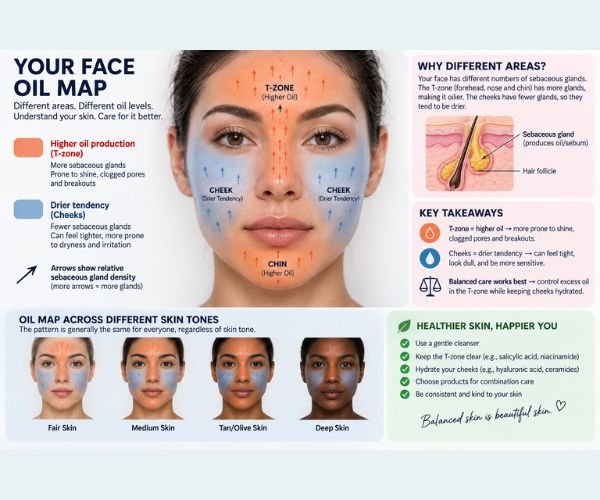
- The T-zone (forehead, nose, chin) has higher concentration of sebaceous glands, making it more prone to shine.
- Cheeks have lower gland density, often appearing drier or less oily due to fewer sebaceous glands.
- A product that aggressively dries the T-zone may compromise barrier function on the cheeks.
- Heavy creams applied to the entire face may trap occlusive lipids and encourage congestion in oily zones.
- A coherent routine treats the face as one integrated system while respecting regional lipid-production differences.
WHAT YOU CAN DO
Use a gentle cleanser for the whole face and choose appropriate hydration. If one area needs additional attention, adjust the amount or application rather than creating two separate routines. For example, apply hydrating serum to cheeks, light moisturizer to entire face.
GIGI TIP: Combination skin does not need more products; it needs smarter distribution of care.
Start your free Smart Skin Scan with GiGi to receive a routine matched to your skin’s needs.











Related posts

2026 Combination Skin: Why It Happens and How to Manage It

Oily forehead, dry cheeks? Learn what causes combination skin, how to identify it, and a simple zone-based routine that works in Egypt’...
Oily Skin: Why Your Face Gets Shiny and How to Control It 2026
Oily skin explained by Glow & Go: learn what causes excess oil, how to control shine, the best ingredients for oily skin, and a sim...
Sensitive Skin in 2026: Causes, Symptoms, and Safe Relief
Does every product sting or burn? Learn what sensitive skin really is, how it differs from allergies, the ingredients to avoid, and a g...

Dry Skin in 2026: Causes, Symptoms, and Proven Solutions
Dry skin explained by Glow & Go: learn why your face feels tight, flaky, or rough, the best barrier-repair ingredients, and a simpl...
Dark Spots and Pigmentation: What Fades Them 2026
Dark spots and pigmentation explained by Glow & Go: learn why pigmentation happens, proven ingredients, sunscreen importance, and h...
Breakouts & Acne: Causes, Treatment & Routine 2026
Breakouts & Acne explained by Glow & Go: discover why breakouts happen, proven ingredients, beginner acne skincare routine, and...
Large Pores and Blackheads: What Actually Works in 2026
Large pores and blackheads can be managed. Learn what causes them, how to treat blackheads, and choose the right routine with Glow &...

Skin Barrier: Signs of Damage and Repair Guide for 2026
Skin Barrier damage can cause stinging, tightness, redness, and breakouts. Discover the signs and simple ways to support healthy skin w...
Fine Lines and Wrinkles: Causes, Care and Tips for 2026
Fine lines and wrinkles? Learn what causes them, how sunscreen and retinol help, and build a simple anti-aging routine with gglow and g...

Uneven Skin Tone: Causes and Ways to Even It Out in 2026
Uneven skin tone? Learn what causes patchy skin, how to even out your complexion safely, which ingredients help, and how gglowandgo can...

Dull Skin: Why Your Skin Looks Tired and How to Glow 2026
Dull Skin can make your complexion look tired and flat. Discover simple ways to restore radiance and choose suitable care with Glow &am...

Redness and Irritation: Causes, Care & Relief 2026
Are you suffering from redness and irritation? Learn about the causes, soothing steps, signs of rosacea, and gentle skincare tips with ...