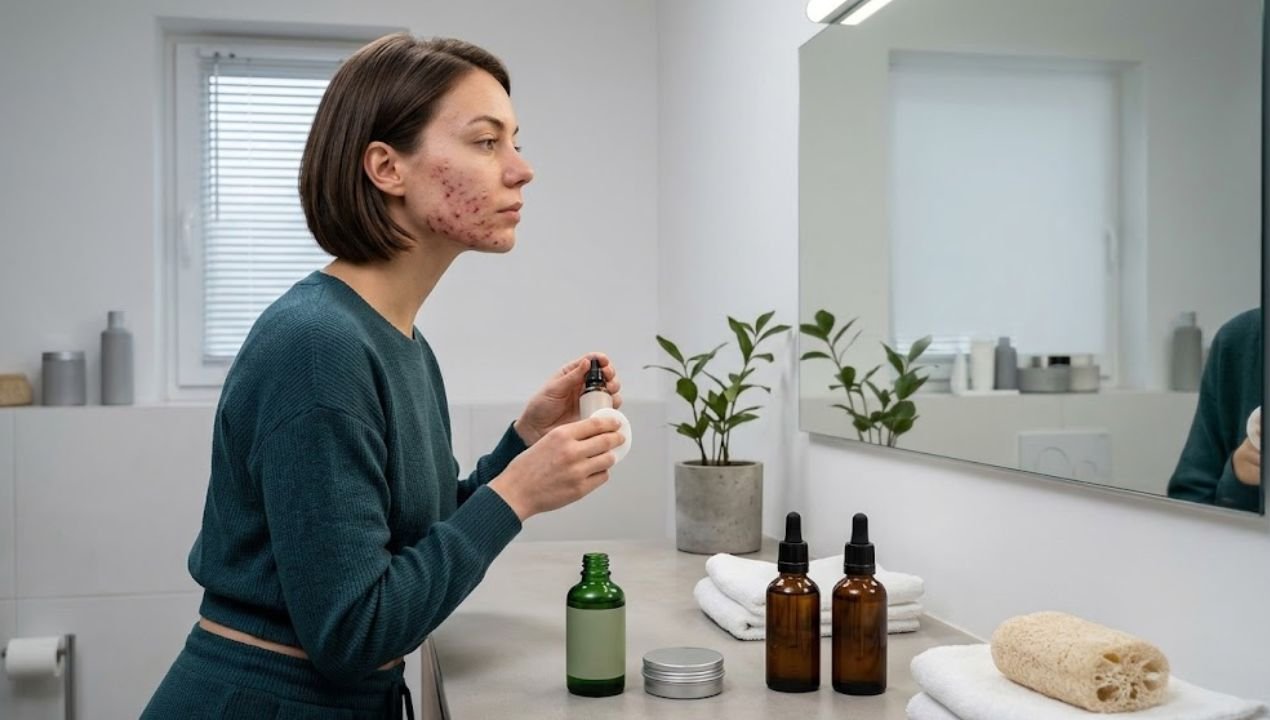
Uneven skin tone? Learn what causes patchy skin, how to even out your complexion safely, which ingredients help, and how gglowandgo can guide your routine.
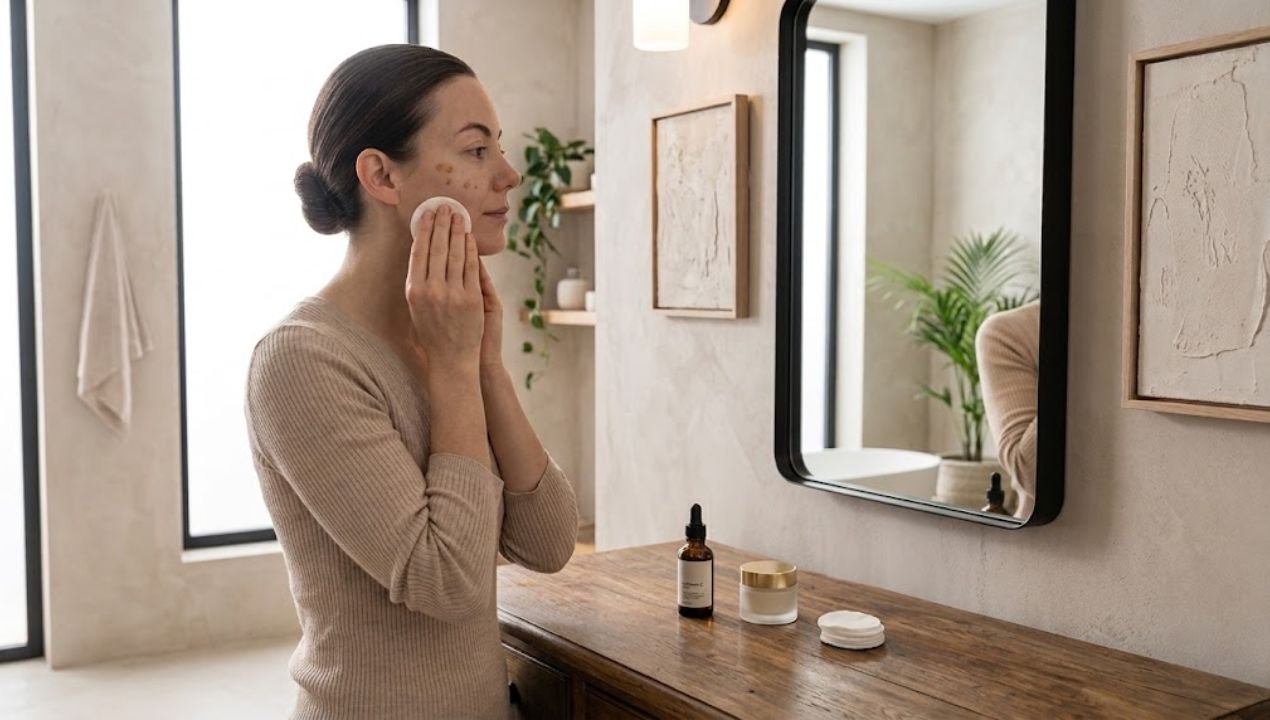
Your skin may look darker around the mouth, uneven across the forehead, or slightly different on one side of your face. You may also notice blotchy areas after acne, hair removal, sun exposure, or irritation. These changes can make your complexion look inconsistent even when the rest of your skin appears healthy.
The good news is that uneven skin tone does not mean your natural skin colour needs to become lighter. The goal is to reduce unwanted patches, prevent new pigmentation, calm redness, and help your complexion look more balanced. This guide explains the common causes, the ingredients that may help, what to avoid, and when professional advice may be necessary.
What Is Uneven Skin Tone?
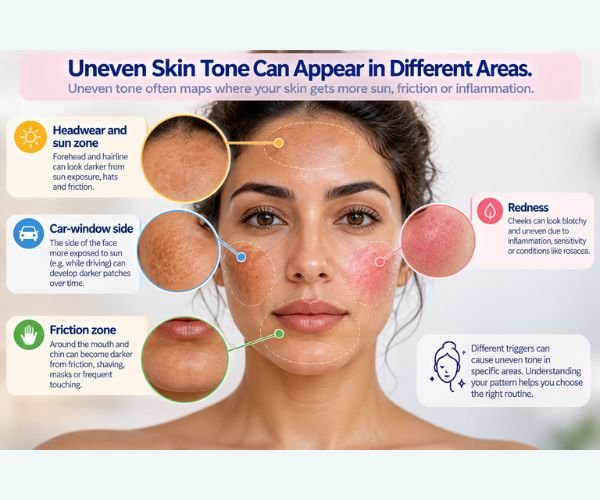
Uneven skin tone describes a complexion where different areas of the face have noticeably different colours. Some areas may look darker, redder, duller, or slightly more grey or yellow than the surrounding skin.
It is different from dark spots, which are usually individual marks, and dull skin, which describes an overall lack of radiance. With uneven skin tone, the difference is usually spread across specific zones or patches of the face.
Darkness around the mouth or chin can develop after repeated friction, lip licking, hair removal, irritation, or sun exposure. Hormonal changes can also contribute to pigmentation in this area.
A Darker Forehead or Hairline
The forehead and hairline may become darker because of sun exposure, sweat, friction from headwear, or certain hair products. Sunscreen is also often missed around these edges.
One Side of the Face Looks Darker
If one cheek appears darker than the other, uneven sun exposure may be involved. Spending long periods beside a car window or working near a bright window can expose one side of the face more consistently.
Brown Patches or Blotchy Redness
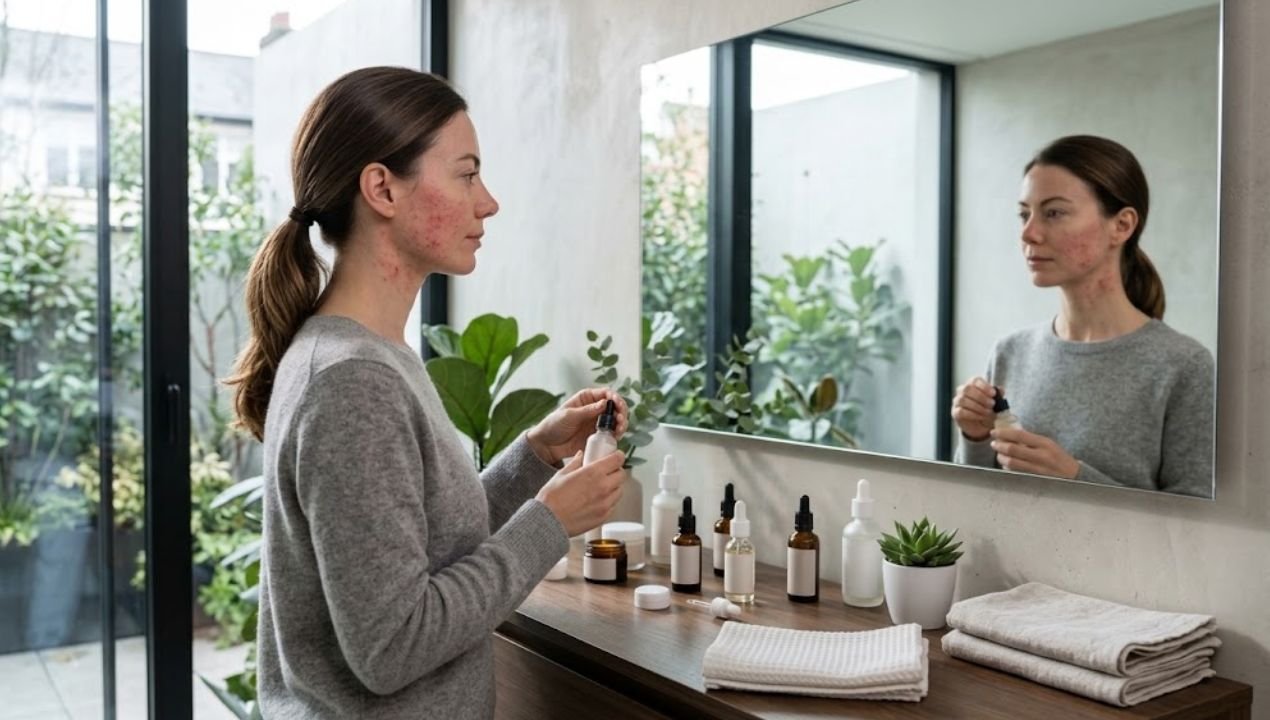
Large symmetrical brown patches may be associated with melasma, while pink or red areas can result from irritation, sensitivity, or rosacea. These patterns can require different approaches.
Velvety Dark Areas
Thick, velvety dark skin around the neck, underarms, or other folds can sometimes be associated with acanthosis nigricans. This pattern should be evaluated by a doctor rather than treated as ordinary pigmentation.
Read also about:
Dark Spots, Dull Skin, and Uneven Skin Tone: What’s the Difference?
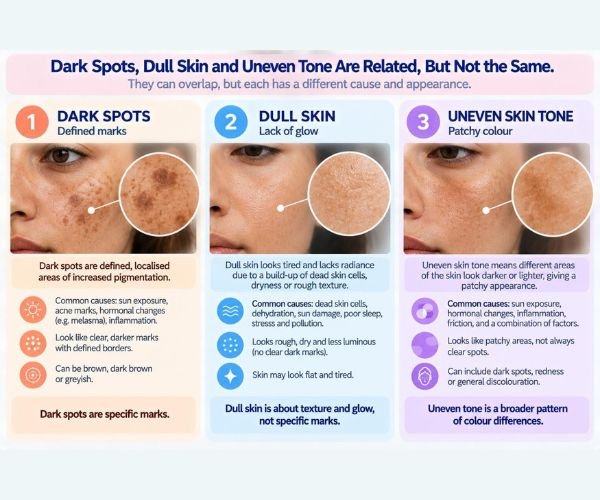
Dark spots, dull skin, and uneven skin tone can look similar, but they describe different skin concerns. Understanding the difference can help you choose the right skincare approach.
Dark Spots
Dark spots are specific, darker marks caused by increased pigmentation, often linked to sun exposure, hormonal changes, or inflammation.
Dull Skin
Dull skin looks tired and lacks radiance, often due to dead skin cells, dryness, poor sleep, stress, or buildup.
Uneven Skin Tone
Uneven skin tone refers to areas of different colour across the skin and can appear as patches, redness, or darker areas.
Why Does Uneven Skin Tone Happen?
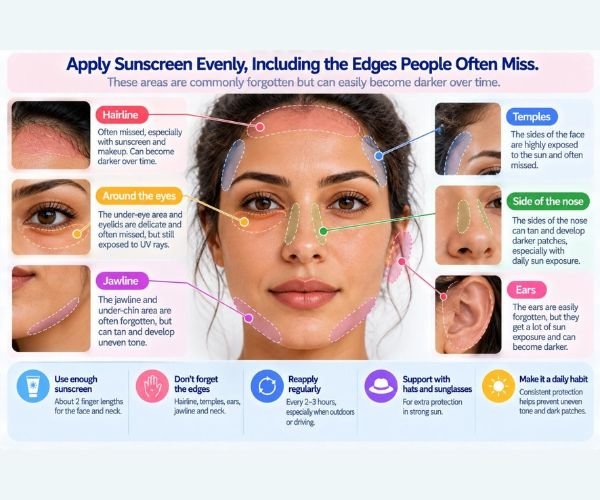
Uneven skin tone usually develops because certain areas experience more sun exposure, inflammation, friction, or hormonal changes than others. Understanding the trigger is important because treating the colour without addressing its cause can allow the problem to return.
Uneven Sun Exposure
Sun exposure is one of the most important causes of pigmentation. UV radiation stimulates melanin production, and repeated exposure can gradually make some areas darker than others.
The problem is not limited to obvious sunburn. Areas such as the hairline, jawline, ears, and sides of the face may receive sunlight while being missed during sunscreen application.
Inflammation and Friction
Inflammation can trigger extra melanin production, especially in medium and darker skin tones. This process is known as post-inflammatory hyperpigmentation, or PIH.
Acne, eczema, irritated skincare, threading, waxing, plucking, rubbing, and harsh exfoliation can all contribute. Repeated friction around the mouth or forehead may gradually leave those areas darker.
Hormonal Changes
Hormonal changes can make pigment-producing cells more reactive. This is one reason melasma may develop or become more noticeable during certain hormonal periods.
Redness and Sensitivity
Not every uneven complexion is caused by brown pigment. Redness from irritation, sensitive skin, or rosacea can create visible colour differences across the face. Treating redness aggressively can sometimes create additional pigmentation.
Dehydration and Texture
Dry or rough areas reflect light differently from smoother skin. This can make the complexion appear more uneven even when there is not a major difference in pigmentation.
What makes your skin tone uneven in Egypt?
Strong sun, heat, commuting, driving beside windows, hair removal, headwear friction, and unregulated whitening products can all contribute. Hot weather may also make existing pigmentation more noticeable, while irritation from aggressive skincare can create new dark patches.
Want to understand what your skin needs?
Take the GG Skin Quiz to identify your skin type and main concern.

How to Even Out Skin Tone Safely

The safest approach to uneven skin tone focuses on prevention first, followed by gradual treatment. Trying to remove pigmentation as quickly as possible can backfire if the skin becomes irritated.
Make Sunscreen a Daily Step
Broad-spectrum sunscreen is the foundation of any routine targeting uneven tone. Apply it evenly across the entire face, including the forehead, hairline, jawline, ears, and other easily missed areas.
Tinted sunscreen containing iron oxides can provide additional protection from visible light and can immediately make the complexion look more balanced.
Reduce Friction
Avoid repeatedly rubbing your face, resting your chin on your hand, or using rough towels and scrubs. After threading or waxing, keep the area moisturized and protected from the sun.
Choose One Tone-Evening Active
You do not need several strong ingredients at once. Starting with one suitable active makes it easier to monitor your skin and reduces the risk of irritation.
Ingredients That May Help Uneven Skin Tone
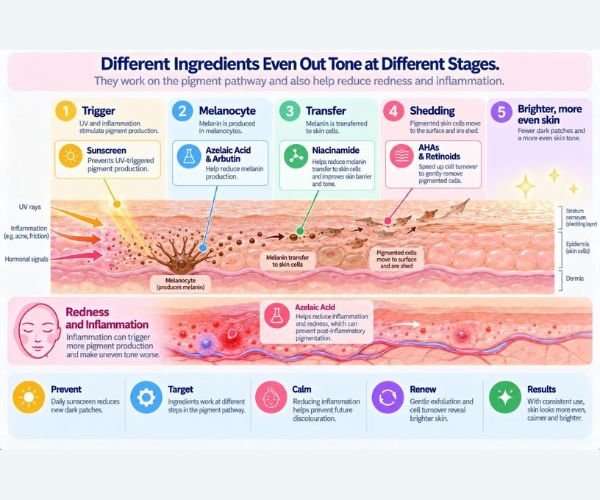
Different ingredients work in different ways. Some reduce pigment formation, some support the skin barrier, and others help improve the appearance of accumulated surface pigment.
Niacinamide
Niacinamide can help reduce the transfer of pigment within the skin while supporting the skin barrier. It is often a practical starting ingredient for beginners because it can fit into many routines.
Azelaic Acid
Azelaic acid can help with pigmentation while also calming inflammation. This makes it particularly useful when uneven skin tone includes both brown marks and redness. Introduce it gradually if your skin is sensitive.
Vitamin C
Vitamin C provides antioxidant protection and can support a brighter, more even-looking complexion. It is commonly used in the morning underneath sunscreen.
Alpha Arbutin
Alpha arbutin can help reduce pigment-forming activity and may be useful for mild areas of brown discoloration. It is generally considered a gentler option for people beginning a tone-evening routine.
AHAs and Retinoids
Lactic or glycolic acid can help improve the appearance of uneven texture and pigmentation by increasing surface cell turnover. Retinoids can also support cell turnover and improve pigmentation over time.
However, both can irritate the skin if introduced too aggressively. Irritation itself can worsen pigmentation, so gradual use is especially important for darker skin tones.
What Should You Avoid?
When treating uneven skin tone, aggressive methods can create the exact problem you are trying to solve.
- Do not scrub dark areas aggressively.
- Avoid lemon juice, baking soda, vinegar, or other harsh home remedies.
- Do not start several strong active ingredients at once.
- Avoid unregulated or unlabelled whitening creams.
- Do not use steroid creams on your face without medical guidance.
- Avoid applying strong actives immediately after threading or waxing.
- Do not skip sunscreen while treating pigmentation.
Some unregulated whitening products may contain ingredients such as steroids or mercury and can cause unwanted effects including skin thinning, persistent redness, rebound pigmentation, or unusual discoloration.
The goal should always be even skin, not lighter skin.
How to Build a Routine for Uneven Skin Tone
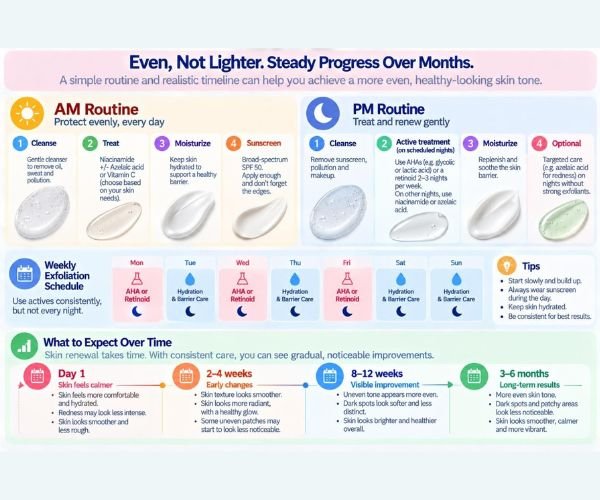
A simple routine is usually easier to maintain and less likely to cause irritation.
Morning Routine
Start with a gentle cleanser, followed by one treatment such as vitamin C or niacinamide. Apply moisturizer if needed, then finish with a broad-spectrum SPF 30+ sunscreen.
A tinted sunscreen can be particularly useful when pigmentation is a major concern because it can provide visible-light protection while also visually evening the complexion.
Evening Routine
Cleanse gently and apply either azelaic acid or niacinamide. If your skin tolerates the routine well, a mild AHA once or twice weekly can be considered.
Retinoids can be introduced later when appropriate, but avoid combining several potentially irritating treatments at the beginning.
Give Your Skin Time
Treating uneven skin tone is a gradual process. Changing products every few days makes it difficult to know what works and increases the chance of irritation.
Take photos in the same lighting every few weeks instead of judging your progress from day to day.
Need a routine based on your skin type?
Use the GG Skin Quiz to find your skin concern and suitable routine.
How Long Does It Take to Even Out Skin Tone?
The timeline depends on the cause, depth of pigmentation, skin type, and consistency of your routine.
- Immediately: Tinted sunscreen can create a more even-looking complexion.
- 2–4 weeks: Redness and irritation may become calmer after removing triggers.
- 8–12 weeks: Consistent sunscreen and suitable tone-evening ingredients may produce noticeable improvement.
- 3–6 months: Deeper pigmentation and long-standing patches can take considerably longer.
- Ongoing: Sunscreen and trigger control remain important for preventing pigmentation from returning.
Melasma and other persistent pigmentation conditions may require professional treatment and long-term management.
When Should You See a Dermatologist?
Not every dark patch is ordinary pigmentation. Professional evaluation is recommended when the pattern is unusual, persistent, or changing.
See a dermatologist or doctor if you notice:
- Thick, velvety dark skin on the neck or skin folds.
- Large, symmetrical brown patches on the cheeks, forehead, or upper lip.
- Redness, thinning, bumps, or darkening after using whitening or steroid creams.
- Blue-grey or unusual discoloration after using a lightening product.
- A spot that changes in size, shape, or colour, bleeds, or becomes persistently itchy.
- Uneven skin tone that does not improve after around three months of consistent care and sun protection.
- A need for prescription treatments, chemical peels, lasers, or other professional procedures.
F&Q
What causes uneven skin tone?
The most common causes include uneven sun exposure, inflammation, friction, acne, irritation, hair removal, hormonal changes, and conditions such as melasma or rosacea.
Why is the skin around my mouth darker?
Darkness around the mouth can result from friction, lip licking, hair removal, irritation, sun exposure, or hormonal factors. It is not usually related to poor hygiene.
Can I even out my skin tone without whitening creams?
Yes. Daily sunscreen, gentle skincare, niacinamide, azelaic acid, vitamin C, and carefully introduced exfoliation can help improve uneven skin tone without trying to change your natural skin colour.
Does sunscreen help uneven skin tone?
Yes. Consistent broad-spectrum sunscreen helps prevent additional pigmentation. Tinted sunscreen with iron oxides may provide additional protection from visible light and can immediately make the complexion appear more even.
Why is one side of my face darker?
Uneven sun exposure is one possible explanation. Sitting beside a car window or working next to a window can expose one side of the face more frequently than the other.
Which ingredient is best for uneven skin tone?
There is no single best ingredient for everyone. Niacinamide and azelaic acid are useful gentle options, while vitamin C, alpha arbutin, AHAs, or retinoids may be appropriate depending on the cause and skin tolerance.
How long does it take to even out skin tone?
Many people need around 8–12 weeks to notice meaningful improvement with consistent sunscreen and appropriate skincare. Deeper pigmentation and melasma can take several months or require professional treatment.
Are mixed whitening creams safe?
Unregulated whitening creams can contain undeclared or inappropriate ingredients, including steroids or mercury. They may cause irritation, skin thinning, rebound pigmentation, or unusual discoloration and should be avoided.
Conclusion
Uneven skin tone can develop when different areas of the face experience more sun, friction, inflammation, hormonal changes, or irritation. The most important steps are protecting the entire face from the sun, reducing unnecessary friction, supporting the skin barrier, and introducing suitable tone-evening ingredients gradually rather than trying aggressive whitening methods.
The goal is not to make your natural skin colour lighter, but to create a more balanced and healthy-looking complexion. gglowandgo can help you start by identifying your skin type and main concern through the Skin Quiz, while persistent, unusual, or changing pigmentation should be evaluated by a dermatologist.