Dark spots and pigmentation explained by Glow & Go: learn why pigmentation happens, proven ingredients, sunscreen importance, and how to fade dark spots safely.
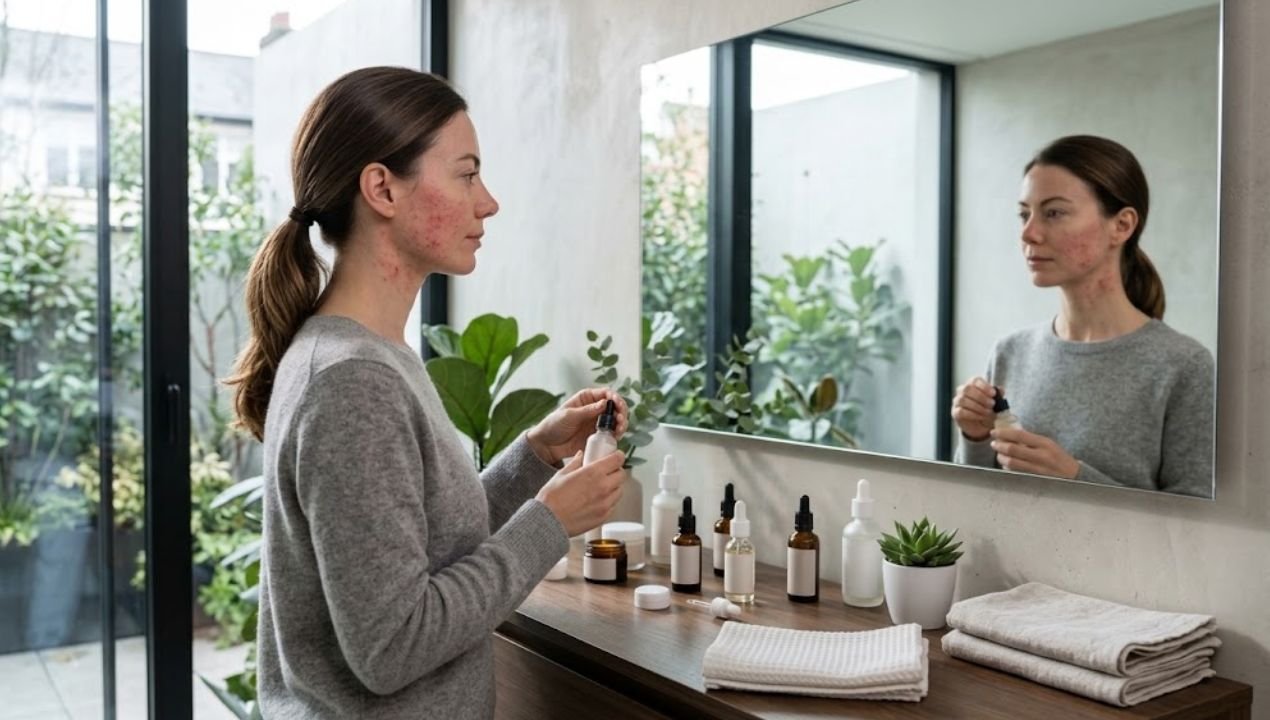
The pimple healed weeks ago, but the dark mark it left behind is still there. You tried a brightening serum, but the spot barely changed. This is a common problem because fading pigmentation is not only about what you apply at night — it is also about protecting your skin from the triggers that keep dark spots active.
This guide explains what causes dark spots and pigmentation, which ingredients can help, and how to build a simple routine for Egyptian skin without irritating your skin.
What Happens Inside Your Skin When Dark Spots Form?
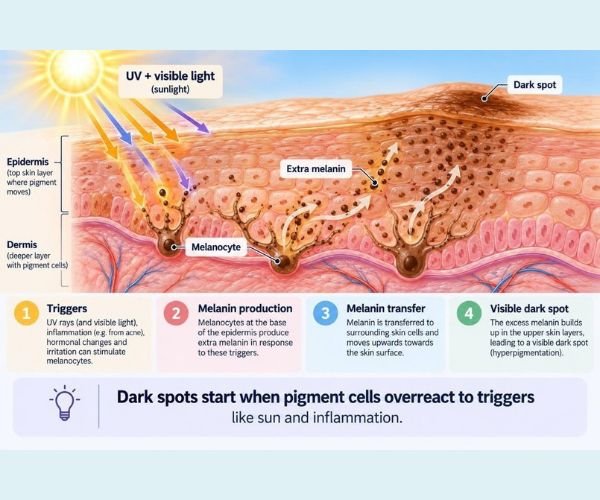
Dark spots start beneath the skin surface when pigment cells called melanocytes produce extra melanin in one area. This can happen after sun exposure, inflammation from acne, or hormonal changes.
In Egypt, strong sunlight can keep pigmentation active even when you are using brightening products. That is why treatment is not only about fading existing spots — it is also about preventing new pigment from forming.
Read also about :-
What Are Dark Spots and Pigmentation?
Pigmentation refers to the natural color of your skin, which comes from a pigment called melanin. Melanin is produced by cells called melanocytes and helps protect the skin from UV damage.
Hyperpigmentation happens when extra melanin collects in one area, making that part of the skin appear darker than the surrounding skin.
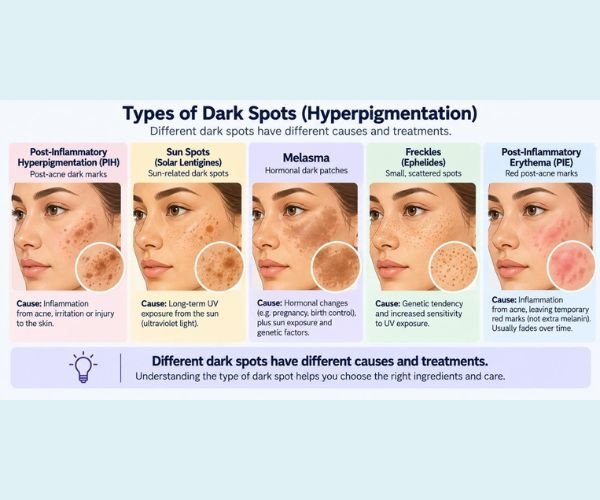
Not all dark spots are the same. Understanding the type of pigmentation helps you choose the right approach.
| Type | What It Looks Like | Common Cause |
|---|---|---|
| Post-inflammatory hyperpigmentation (PIH) | Flat brown or dark marks left after acne, scratches, or irritation | Inflammation triggers extra melanin production |
| Sun spots (solar lentigines) | Small defined brown spots on exposed areas | Long-term sun exposure |
| Melasma | Larger symmetrical brown or grey-brown patches on cheeks, forehead, upper lip, or nose | Hormones, sun exposure, visible light, and genetics |
| Freckles | Small light-brown spots that become darker in summer | Genetics and sun exposure |
| Post-acne red marks (PIE) | Pink or red flat marks | Blood vessel changes after inflammation, not pigment |
A simple check can help: brown or dark marks are usually pigmentation, while pink or red marks behave differently because they are related to redness rather than melanin.
Why Do Dark Spots Happen? The Main Causes of Pigmentation
Sun Exposure (UV and Visible Light)
Sun exposure is one of the biggest triggers of pigmentation. UV rays activate melanocytes, causing them to produce more melanin.
Visible light can also worsen pigmentation, especially in darker skin tones and melasma-prone skin.
Inflammation
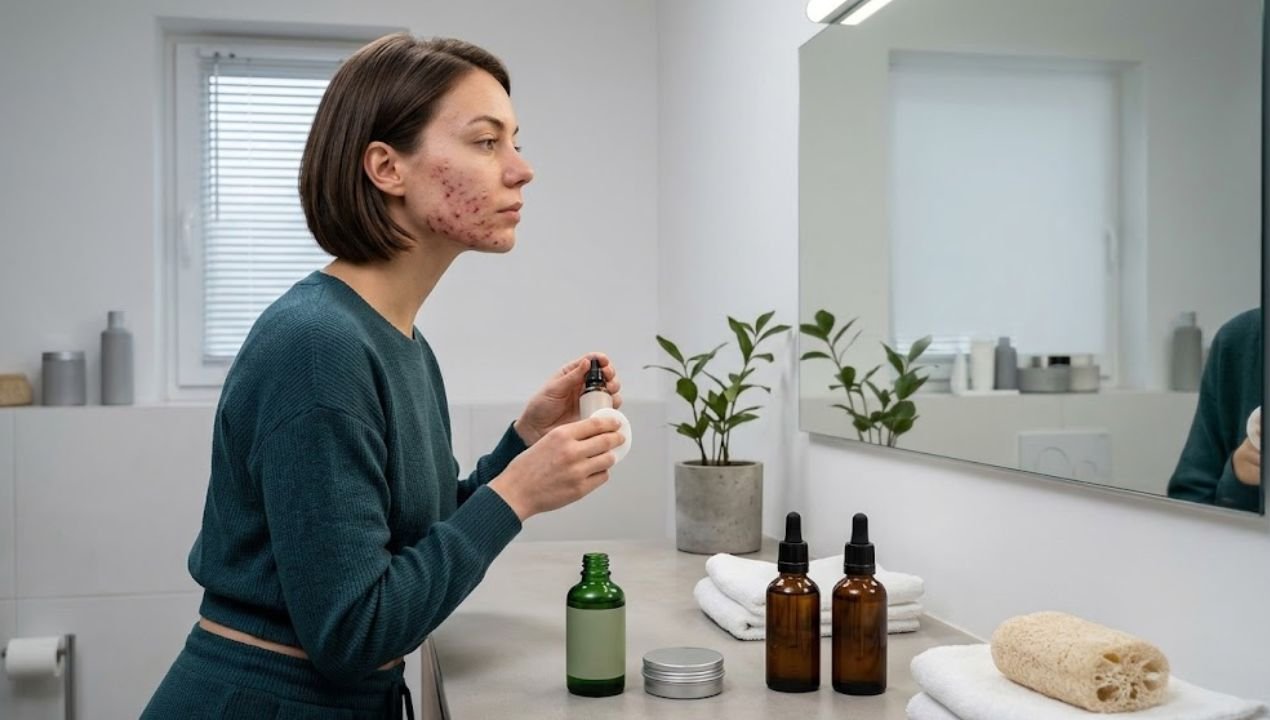
Acne, irritation, burns, waxing, or picking pimples can activate melanocytes and create post-inflammatory hyperpigmentation.
This is why preventing irritation is an important part of any pigmentation routine.
Hormones
Hormonal changes can make melanocytes more reactive. This is one reason melasma may appear during pregnancy or with hormonal changes.
Genetics and Skin Tone
Medium and darker skin tones, including many Egyptian skin types, can be more likely to develop pigmentation after inflammation or sun exposure.
Simply put:
Trigger → melanocytes become overactive → extra melanin → dark spot.
Treatment works by reducing triggers, calming pigment production, and supporting healthy skin renewal.
Why Dark Spots and Pigmentation Are Common in Egypt
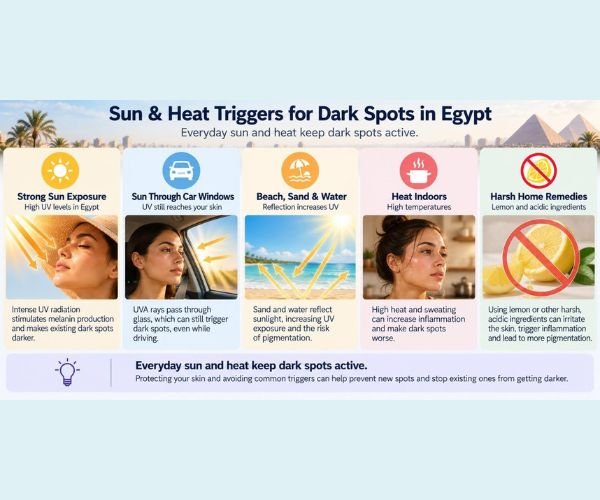
Pigmentation is a common skin concern in Egypt because environmental factors can keep melanocytes active.
Strong Sun Exposure
Daily activities like walking, driving, or sitting near windows add up to regular UV exposure.
Summer and Heat
Beach days, sand and water reflection, sweating, and frequent sunscreen removal can make spots appear darker.
Heat may also worsen certain types of pigmentation, especially melasma.
Breakouts During Hot Weather
More summer breakouts can lead to more post-acne marks.
Irritating Home Remedies
Lemon, baking soda, and unclear “whitening” products can irritate the skin and potentially worsen pigmentation.
The Science Behind Fading Dark Spots
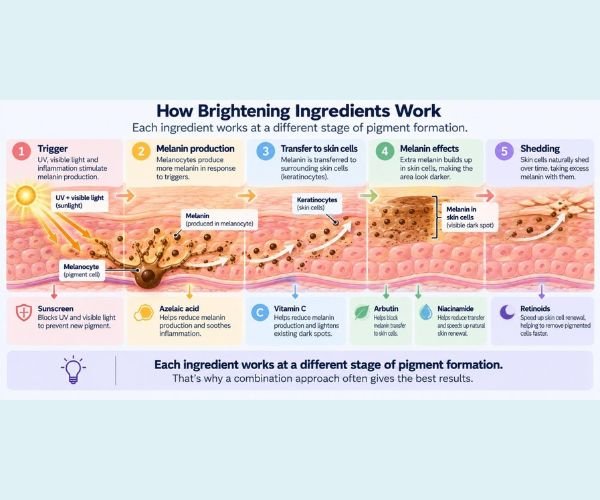
Different ingredients work at different stages of pigment formation. The goal is not to use many products, but to choose effective ingredients and use them consistently.
Sunscreen
Sunscreen is the foundation of any pigmentation treatment.
Broad-spectrum SPF 30+ helps prevent UV-triggered pigment production. Tinted sunscreens containing iron oxides can also help protect against visible light, which may be important for melasma.
Azelaic Acid
Azelaic acid helps reduce pigment production and calm inflammation.
It can be useful for post-acne marks and acne-prone skin.
Niacinamide
Niacinamide helps reduce pigment transfer between skin cells and supports the skin barrier.
Vitamin C
Vitamin C is an antioxidant that supports brighter-looking skin and helps protect against environmental damage.
Retinoids
Retinoids help increase skin cell turnover, allowing pigmented cells to shed gradually.
Alpha Arbutin
Alpha arbutin helps reduce melanin production by affecting tyrosinase activity.
Tranexamic Acid
Topical tranexamic acid may help with stubborn pigmentation, especially melasma, but professional guidance may be useful.
Glow & Go helps you understand your skin needs and create a routine that matches your pigmentation concerns.

Common Myths and Mistakes About Dark Spots
Myth: Lemon Lightens Dark Spots
Lemon can irritate the skin, especially with sun exposure, and irritation may lead to more pigmentation.
Myth: Sunscreen Is Only Needed at the Beach
Daily sun exposure can keep dark spots active. Sunscreen is an everyday step, especially in Egypt’s climate.
Myth: Strong Peels Work Faster
Over-exfoliation can damage the skin barrier and trigger more inflammation.
Myth: Dark Spots Need “Whitening” Products
Unregulated products may contain unsafe ingredients. Choose products with clear ingredient lists.
Myth: Acne Marks Are Always Scars
Many flat brown acne marks are post-inflammatory hyperpigmentation, not permanent scars.
How to Fade Dark Spots Safely
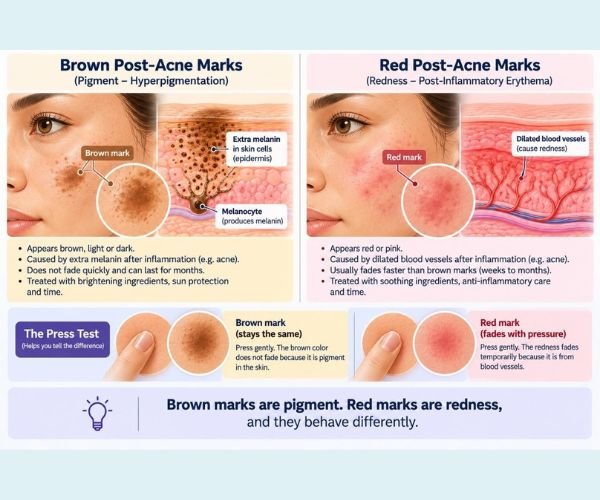
Identify the Type of Mark
First, understand whether you have brown pigmentation, red marks, sun spots, or possible melasma.
Use Sunscreen Daily
Apply broad-spectrum SPF 30+ every morning. Reapply when spending extended time outdoors.
Add One Brightening Active
Beginners can start with ingredients such as:
- Azelaic acid
- Niacinamide
- Vitamin C
Introduce one new product at a time.
Protect Your Skin Barrier
A gentle cleanser and moisturizer help reduce irritation and support healthier skin.
Avoid Picking Pimples
Every irritated or squeezed breakout can increase the chance of a dark mark.
Want a routine based on your skin type and pigmentation concern? The Glow & Go Skin Quiz helps identify your needs and guides you toward a routine that fits your skin.
How to Build a Routine for Dark Spots
Morning Routine
- Gentle cleanser
- Vitamin C or niacinamide
- Moisturizer
- Broad-spectrum SPF 30+ sunscreen
Evening Routine
- Gentle cleanser
- Azelaic acid or retinoid
- Moisturizer
What NOT to Do When You Have Dark Spots
Avoid:
- Lemon, baking soda, or DIY treatments
- Unlabeled whitening creams
- Steroid creams without medical advice
- Over-exfoliating
- Using several new actives at the same time
- Skipping sunscreen
How Long Does It Take to Fade Dark Spots?
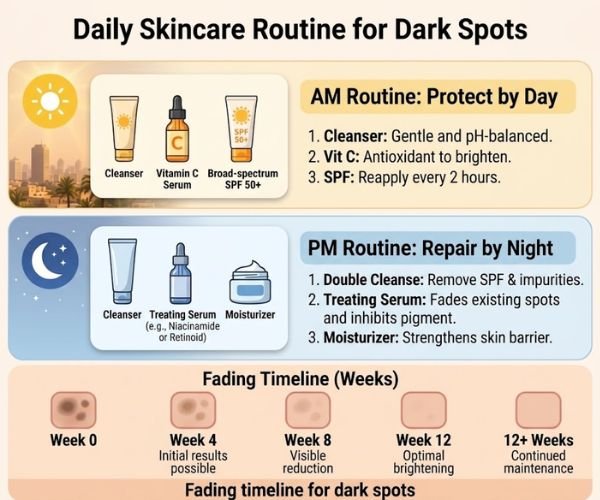
Dark spots need patience because skin renewal takes time.
- Weeks 1–4: Skin may look brighter, but spots may not change significantly.
- Weeks 8–12: Many superficial spots may begin to fade.
- 3–6 months or longer: Deeper pigmentation and melasma may take more time.
Results vary depending on the type of pigmentation and consistency of your routine.
When Should You See a Dermatologist for Pigmentation?
Consider professional advice if you have:
- Large symmetrical patches that may indicate melasma
- Spots that change shape, color, or size
- Pigmentation that does not improve after three months
- Pigmentation linked to medication
- Interest in stronger treatments such as hydroquinone or procedures
F&Q
What causes Dark Spots and Pigmentation?
Dark spots usually happen when melanocytes produce extra melanin due to sun exposure, inflammation, or hormonal changes.
Can dark spots disappear on their own?
Some post-acne marks may fade gradually over time, especially with sunscreen. Other types may need active treatment.
Does sunscreen really help pigmentation?
Yes. Sunscreen is one of the most important steps because it prevents triggers that make pigmentation darker.
What is the best ingredient for dark spots for beginners?
Azelaic acid and niacinamide are gentle options for many beginners. Vitamin C and retinoids can also help when introduced carefully.
Is it melasma or post-acne marks?
Post-acne marks usually appear where pimples were. Melasma often appears as larger symmetrical patches on areas like the cheeks and forehead.
Does lemon lighten dark spots?
No. Lemon can irritate the skin and may worsen pigmentation.
Conclusion
Understanding dark spots and pigmentation helps you treat the real causes instead of searching for quick fixes. Protecting your skin with sunscreen, choosing proven ingredients, and maintaining a consistent routine are the foundation for improving uneven skin tone.