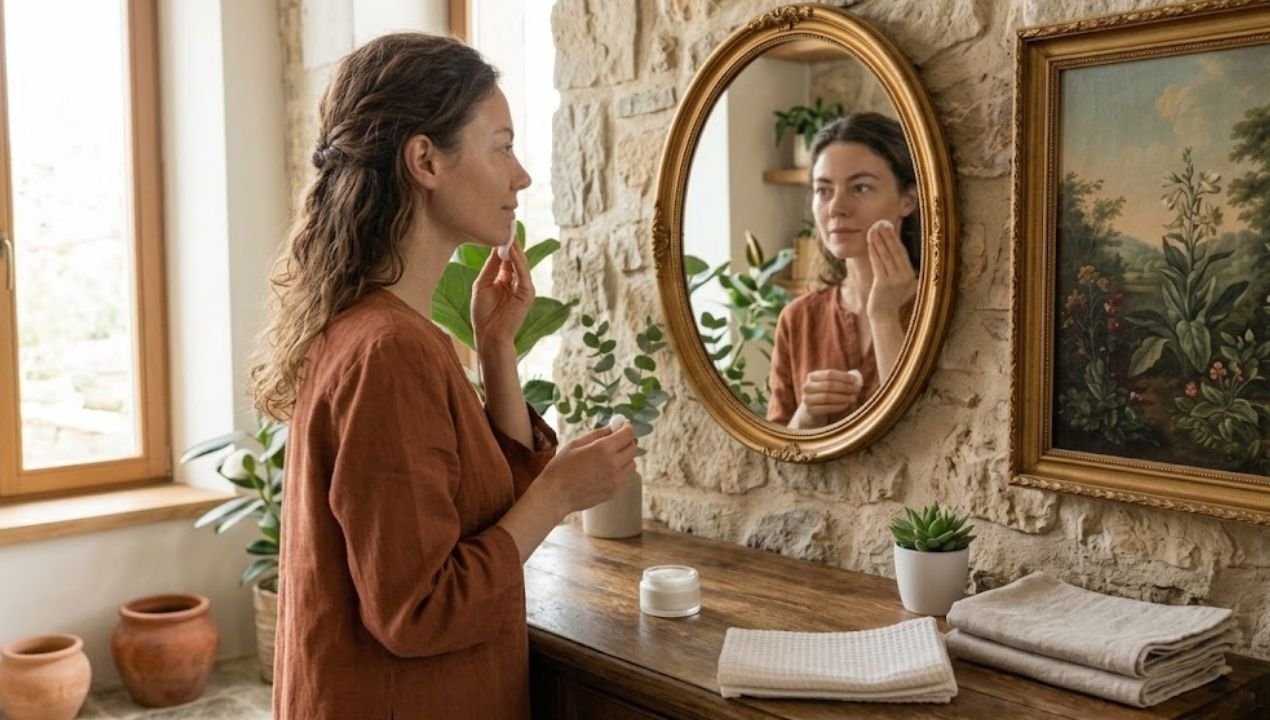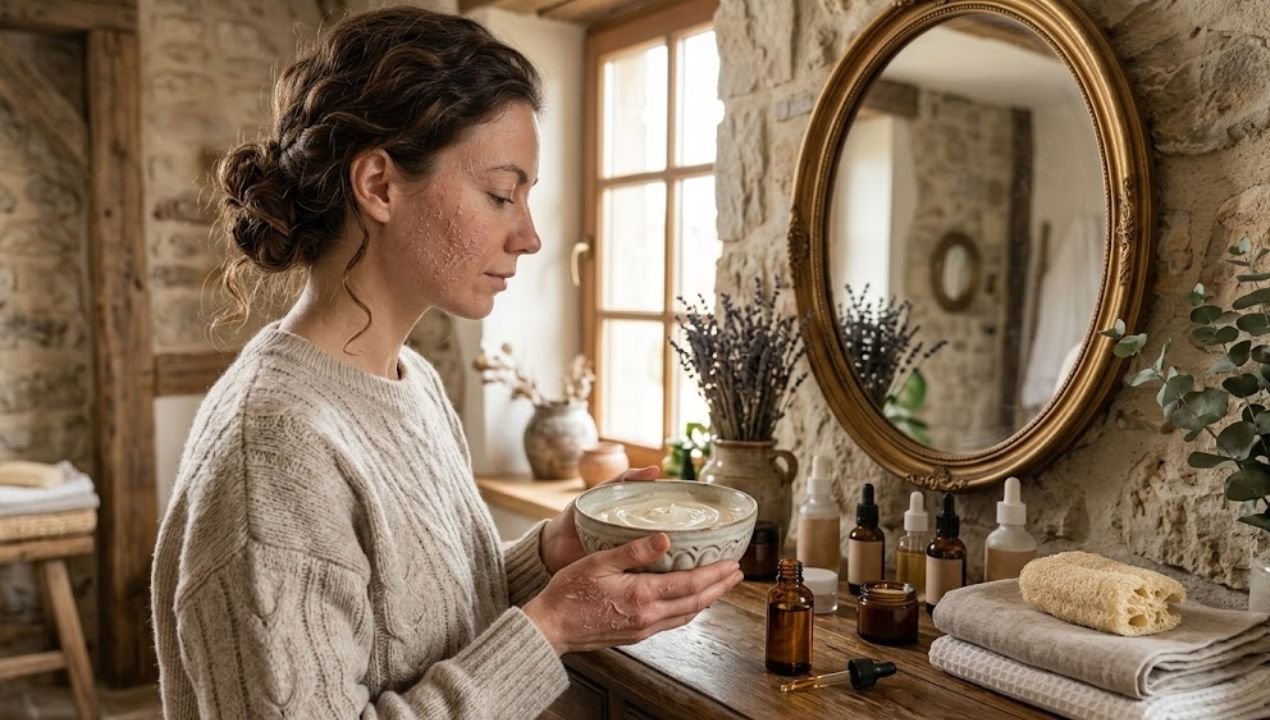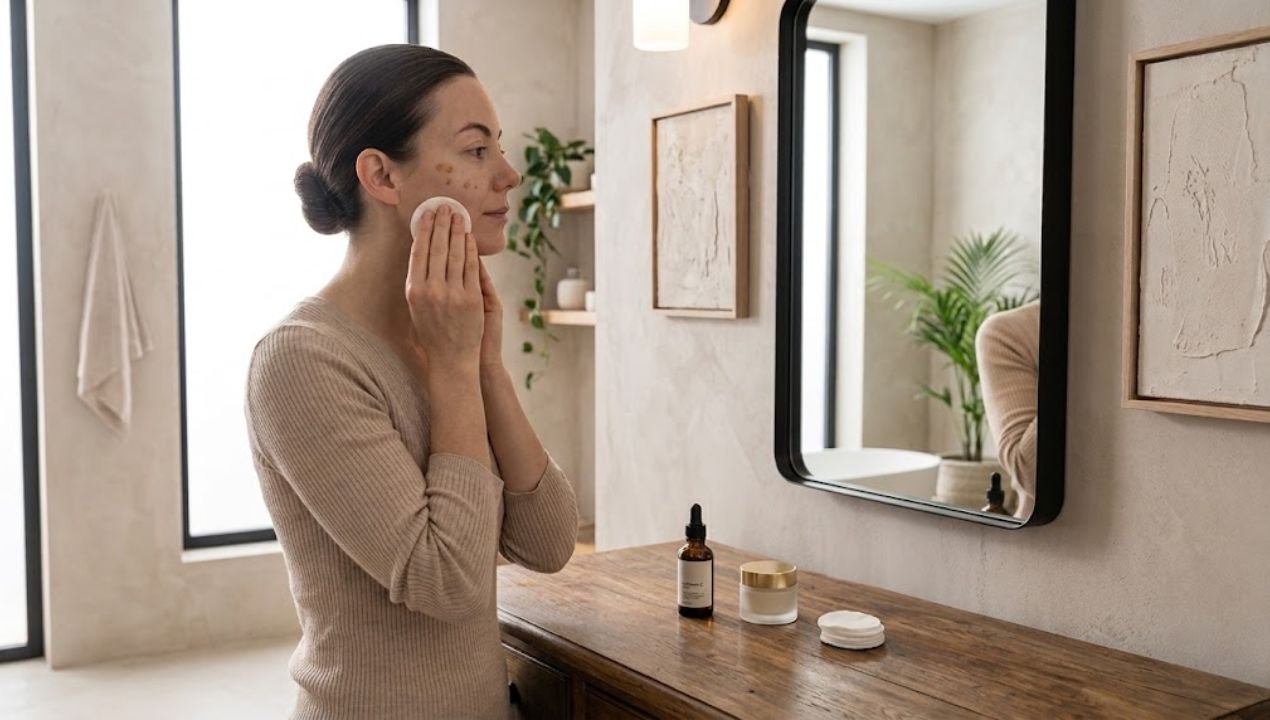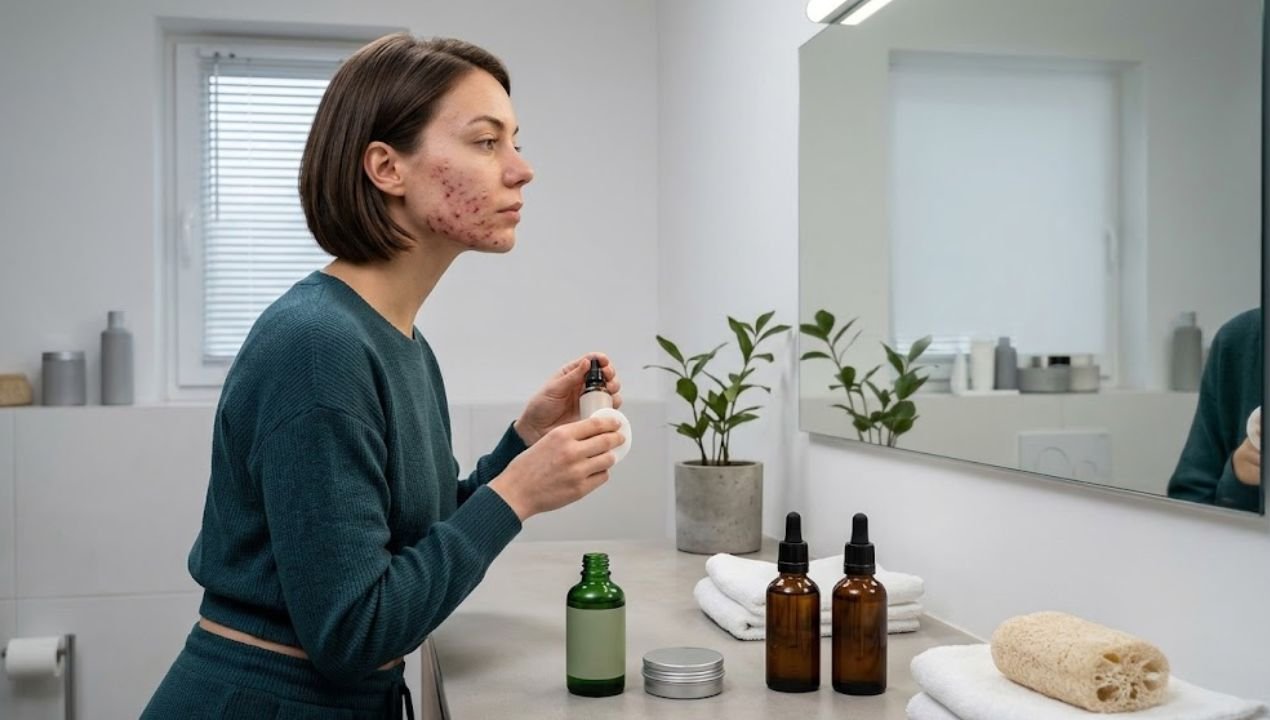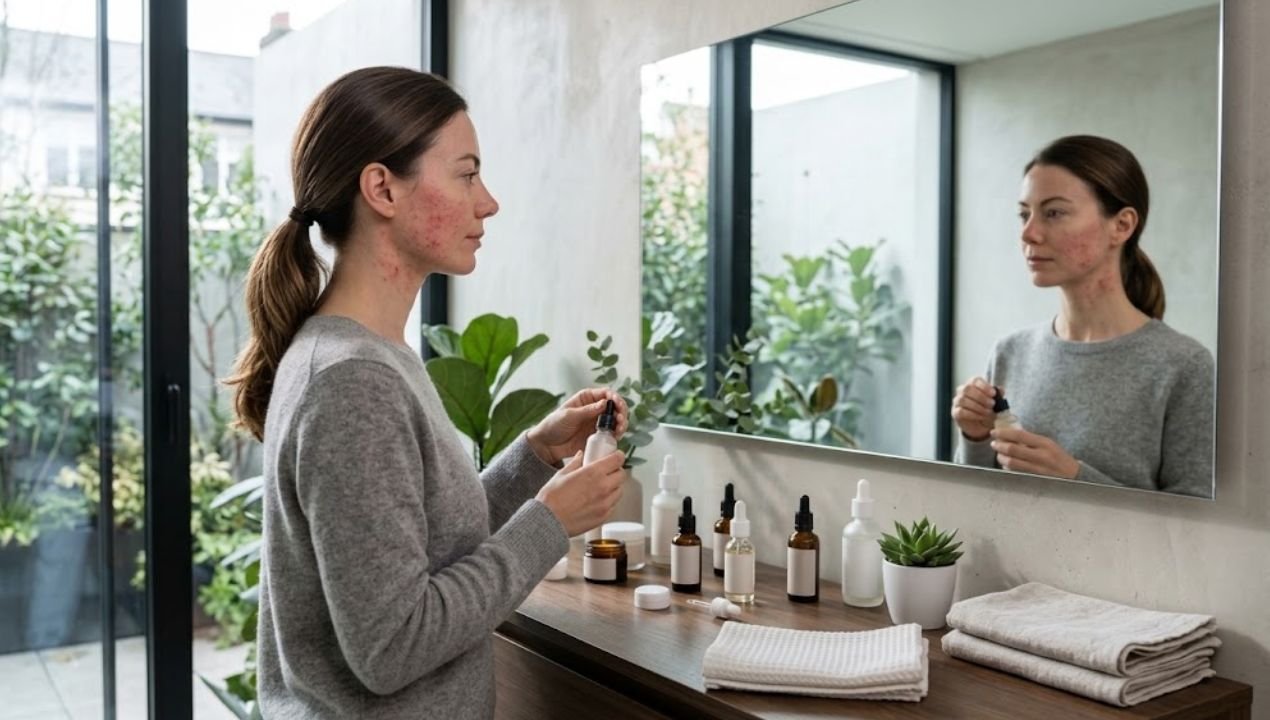
Does every product sting or burn? Learn what sensitive skin really is, how it differs from allergies, the ingredients to avoid, and a gentle routine for Egypt’s climate.
You try a new cream that everyone recommends, and within seconds your face starts stinging, feeling hot, or turning red. You switch to another product, and the same thing happens again.
Soon it feels like your skin is “allergic to everything.” But sensitive skin is usually not an allergy to every product. It is often skin that has become overwhelmed and reacts too easily.
The solution is not always finding more products. Sometimes it is using fewer, gentler products and giving your skin barrier time to recover.
This guide explains what sensitive skin really is, how it differs from allergies and other skin conditions, what triggers it in Egypt, which ingredients can help, and how to build a simple routine for calmer skin.
What Is Sensitive Skin, Exactly?
Sensitive skin is skin that reacts with uncomfortable sensations such as:
- Stinging
- Burning
- Itching
- Tightness
- Tingling or discomfort
These reactions can happen from things that normally should not cause problems, such as skincare products, water, heat, cold, wind, or pollution.
Sensitive skin may look completely normal. Unlike some skin conditions, the main sign is often what you feel, not always what you see.
Sensitive skin is not a disease by itself. It is a state of reactive skin, but it can sometimes be connected to conditions such as rosacea or eczema.
Read also about:
Sensitive Skin vs. Sensitized Skin: What Is the Difference?
These terms are often confused.
Naturally Sensitive Skin
Some people naturally have skin that reacts easily because of genetics, thinner skin, or a family history of eczema, allergies, or rosacea.
Sensitized Skin
Sensitized skin was not always reactive but became sensitive because of external stress.
Common causes include:
- Over-exfoliating
- Using too many active ingredients
- Harsh cleansers
- Sun damage
- Frequent product changes
The good news is that sensitized skin can often improve by repairing the skin barrier.
Sensitive Skin vs. Allergy vs. Other Skin Conditions
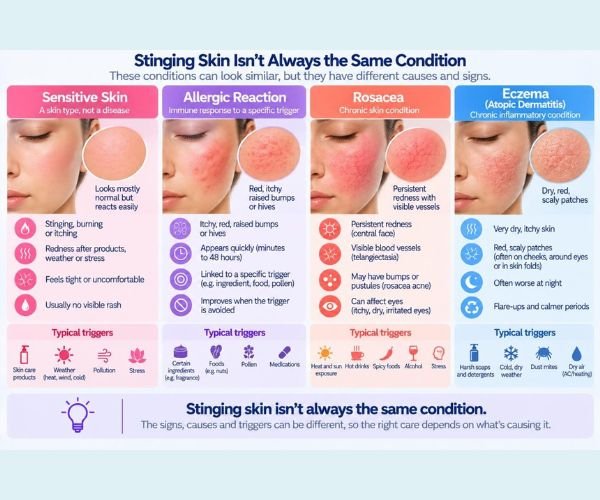
Not every reaction is an allergy.
| Condition | What It Feels or Looks Like | What Is Happening |
|---|---|---|
| Sensitive skin | Stinging, burning, tightness, discomfort | Weak barrier and reactive nerves |
| Irritant reaction | Redness, dryness, peeling after a harsh product | Product directly irritates the skin |
| Allergic contact dermatitis | Itchy rash, swelling, small blisters | Immune reaction to a specific ingredient |
| Rosacea | Persistent redness, flushing, visible blood vessels | Chronic inflammatory condition |
| Eczema | Dry, itchy, scaly, cracked patches | Barrier and immune condition |
Sensitive skin feels reactive. An allergy is an immune response to a specific ingredient.
Why Does Sensitive Skin Happen?
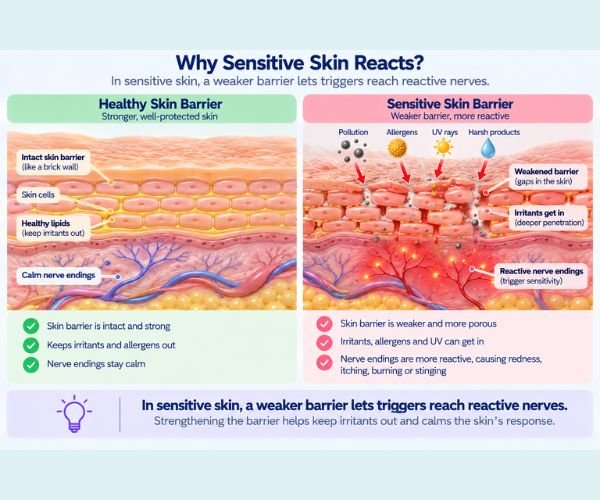
A Weakened Skin Barrier
The outer layer of your skin works like a protective wall.
Skin cells act like bricks, while lipids such as ceramides act like the mortar holding everything together.
When this barrier becomes damaged:
- Irritants enter more easily.
- Water escapes faster.
- Products may reach sensitive nerve endings and cause burning or stinging.
More Reactive Nerve Endings
Sensitive skin often has nerves that respond more strongly to triggers.
This explains why your skin may burn even when it looks normal.
Low-Grade Inflammation
Repeated irritation can keep the skin in a constant state of mild inflammation, making future reactions easier.
Genetics and Skin Conditions
A history of eczema, allergies, or rosacea can increase the chance of sensitive skin.
Over-Treatment
One of the most common modern causes is using too many strong products:
- Multiple acids
- Retinoids
- Scrubs
- Peel pads
- Harsh toners
Think of sensitive skin like a smoke alarm that reacts too easily. The goal is to calm the alarm and rebuild the protective walls.
Sensitive Skin in Egypt: What Makes It Worse?
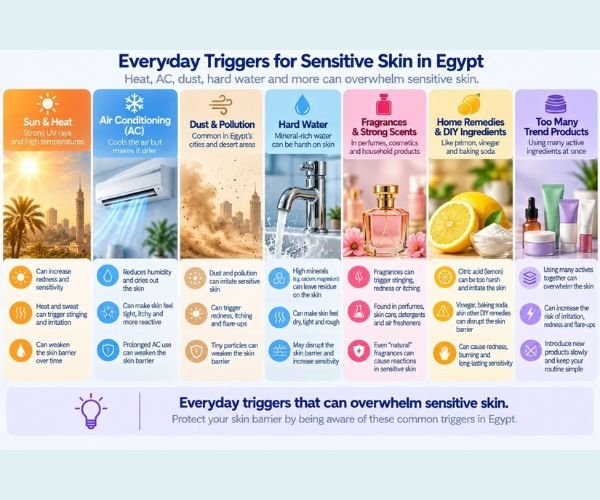
Egypt’s climate and daily habits can increase sensitivity.
Heat and Sun
Strong sunlight and high temperatures can trigger redness, stinging, and irritation.
Sun damage can weaken the skin barrier directly.
Air Conditioning
Long hours under AC can dry the skin and increase moisture loss.
Dust and Khamaseen Winds
Wind and dust can irritate already reactive skin.
Hard Water
Mineral-rich water may contribute to irritation, especially for sensitive or eczema-prone skin.
Fragrances and Home Remedies
Common triggers include:
- Strong perfumes
- Essential oils
- Lemon
- Vinegar
- Unlabeled mixed creams
Trend-Based Skincare Routines
Using too many active ingredients because of social media trends can quickly overwhelm the skin.
The Science Behind Calming Sensitive Skin
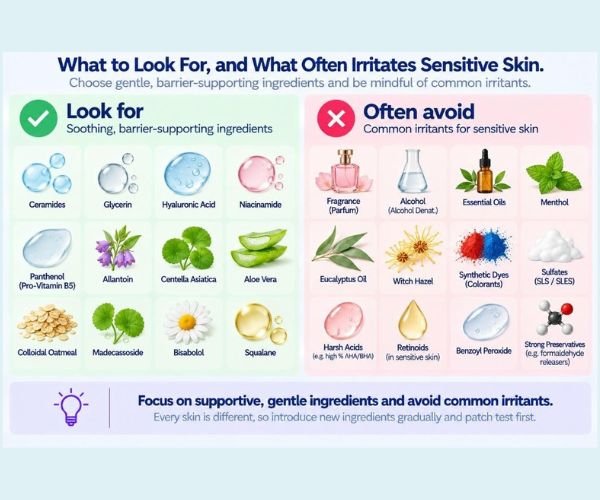
The best approach focuses on three goals:
- Remove triggers.
- Repair the skin barrier.
- Calm inflammation.
Ceramides
Ceramides help rebuild the skin barrier and reduce moisture loss.
Glycerin
Glycerin attracts water and supports hydration.
Panthenol (Vitamin B5)
Panthenol helps hydrate, soothe, and support barrier recovery.
Colloidal Oatmeal
Colloidal oatmeal helps calm irritation and itching.
Niacinamide
Low concentrations of niacinamide may support the barrier and reduce redness.
Highly reactive skin may prefer lower concentrations.
Centella Asiatica and Allantoin
These soothing ingredients can support irritated and recovering skin.
Mineral Sunscreen
Sunscreens containing zinc oxide or titanium dioxide are often better tolerated by sensitive skin.
Common Sensitive Skin Myths and Mistakes
Myth: Natural Products Are Always Safer
Natural ingredients like essential oils and citrus can still irritate sensitive skin.
Myth: Sensitive Skin Means You Are Allergic to Everything
Most reactions are related to barrier damage and increased sensitivity, not true allergies.
Myth: Tingling Means the Product Is Working
Burning and stinging are warning signs, not proof that a product is effective.
Myth: Sensitive Skin Cannot Use Active Ingredients
Once the barrier improves, some actives can be introduced slowly.
Myth: Hypoallergenic Means Zero Reaction
Always check ingredients and patch test new products.
What You Can Actually Do About Sensitive Skin
Simplify Your Routine
Start with three basic steps:
- Gentle cleanser
- Barrier-repair moisturizer
- Sunscreen
Pause Strong Actives
Stop using:
- Strong acids
- Retinoids
- Scrubs
- Peel pads
for a few weeks while your skin calms.
Choose Fragrance-Free Products
Short ingredient lists are often easier for sensitive skin.
Moisturize Regularly
Look for ingredients like:
- Ceramides
- Glycerin
- Panthenol
- Colloidal oatmeal
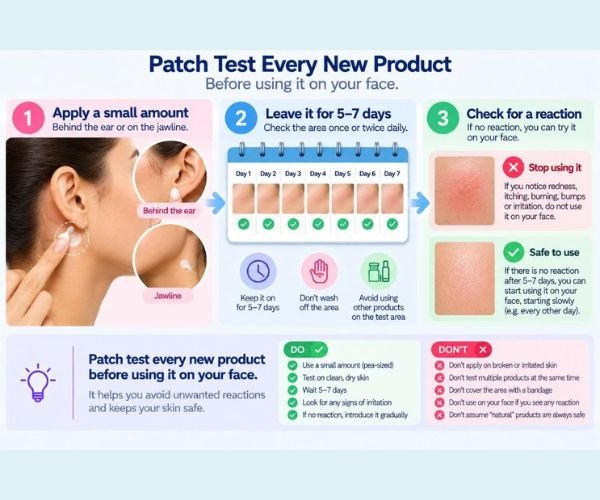
Patch Test New Products
Before applying a new product everywhere:
- Apply a small amount behind your ear or on your jaw.
- Repeat for 5–7 days.
- Watch for redness, burning, itching, or bumps.
Ingredients Sensitive Skin Should Often Avoid
Be careful with:
- Fragrance and parfum
- Essential oils
- High amounts of denatured alcohol
- Strong acids
- Physical scrubs
- Menthol
- Camphor
- Eucalyptus
- Peppermint
- High-strength vitamin C
How to Build a Routine for Sensitive Skin
Morning Routine
- Gentle cleanser or lukewarm water
- Soothing serum (optional)
- Fragrance-free barrier moisturizer
- Mineral SPF 30+ sunscreen
Evening Routine
- Gentle non-foaming cleanser
- Barrier-supporting moisturizer
After your skin becomes calm, introduce one active ingredient at a time.
Sensitive skin usually benefits from fewer products used consistently.
What NOT to Do When You Have Sensitive Skin
Avoid:
- Trying several new products at once.
- Using fragranced creams.
- Applying lemon or vinegar.
- Scrubbing your skin.
- Using hot water.
- Continuing products that burn or sting.
- Using steroid creams without medical guidance.
How Long Does It Take to Calm Sensitive Skin?
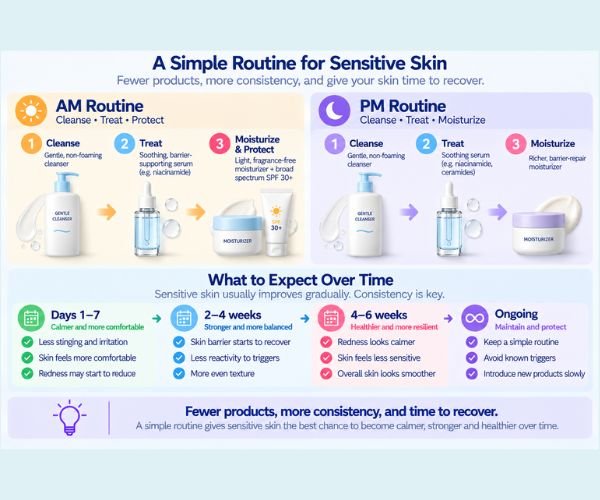
Recovery depends on how damaged the barrier is.
- Days 1–7: Stinging may begin to reduce with a simple routine.
- 2–4 weeks: The skin barrier starts improving.
- 4–6 weeks: Many sensitized skin concerns become calmer.
- Ongoing: Naturally sensitive skin needs consistent gentle care.
Want a routine designed for your exact skin type? The Glow & Go Skin Quiz helps identify your skin type and main concern, then guides you toward a suitable routine.

When Should You See a Dermatologist?
Seek professional advice if you have:
- Persistent redness or flushing.
- Spreading or blistering rashes.
- Severe itching.
- Swelling of the lips, eyes, or face.
- Cracked, painful patches.
- Sensitivity that does not improve after 4–6 weeks.
A dermatologist can identify whether the issue is sensitivity, allergy, rosacea, eczema, or another condition.
F&Q
What is sensitive skin?
Sensitive skin reacts with stinging, burning, itching, or tightness to products, weather, or environmental triggers.
How do I know if I have sensitive skin?
If many products burn, your skin reacts to weather changes, or it often feels tight and irritated, you may have sensitive skin.
Is sensitive skin the same as an allergy?
No. Sensitive skin is general reactivity, while an allergy is an immune reaction to a specific ingredient.
What ingredients should sensitive skin avoid?
Fragrance, essential oils, strong acids, harsh scrubs, and irritating cooling ingredients are common triggers.
What moisturizer is best for sensitive skin?
A fragrance-free moisturizer with ceramides, glycerin, panthenol, or colloidal oatmeal is often suitable.
Which sunscreen is best for sensitive skin?
Mineral sunscreens containing zinc oxide or titanium dioxide are often better tolerated.
Can sensitive skin use active ingredients?
Yes, but introduce them slowly after the skin barrier improves.
When should I see a dermatologist?
For persistent redness, swelling, spreading rashes, severe itching, or reactions that do not improve.
Conclusion
Sensitive skin does not mean your skin is weak forever. It usually means your skin barrier needs support and fewer triggers.
A simple routine with gentle cleansing, barrier-supporting ingredients, and daily sunscreen can help your skin become calmer and more comfortable.
Glow & Go helps you understand your skin needs and create a routine that matches your concerns.