Breakouts & Acne explained by Glow & Go: discover why breakouts happen, proven ingredients, beginner acne skincare routine, and how to manage acne-prone skin safely.
You follow a skincare routine, wash your face regularly, and try different products, but Breakouts & Acne keep coming back. The reason is usually not dirty skin or poor hygiene. Acne starts inside the pore when oil, dead skin cells, bacteria, and inflammation combine.
This guide explains why breakouts happen, which ingredients can help, and how beginners can build a simple acne skincare routine that supports healthier-looking skin.
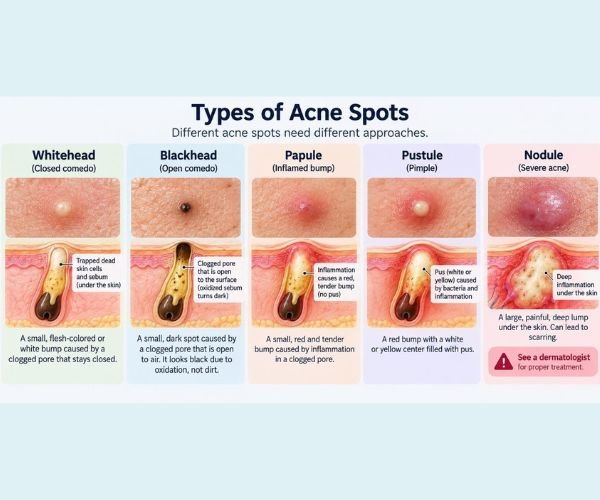
Acne, also known as acne vulgaris, is a common skin condition that affects hair follicles and sebaceous glands. A breakout happens when acne spots appear or become more active.
Acne does not look the same for everyone. Different types of acne include:
| Type | What It Looks Like | What Happens |
|---|---|---|
| Whiteheads | Small white or skin-colored bumps | A closed pore blocked by oil and dead skin cells |
| Blackheads | Small dark dots | An open clogged pore where oil reacts with air |
| Papules | Red raised bumps | A clogged pore becomes inflamed |
| Pustules | Red spots with white centers | Inflamed acne containing pus |
| Nodules and cysts | Large painful bumps | Deep inflammation that may require dermatologist care |
Knowing your acne type helps you choose the right approach. A routine for blackheads and whiteheads is different from a routine for painful, deep acne.
Read also about:-
Why Do Breakouts Happen? The 4 Main Causes of Acne
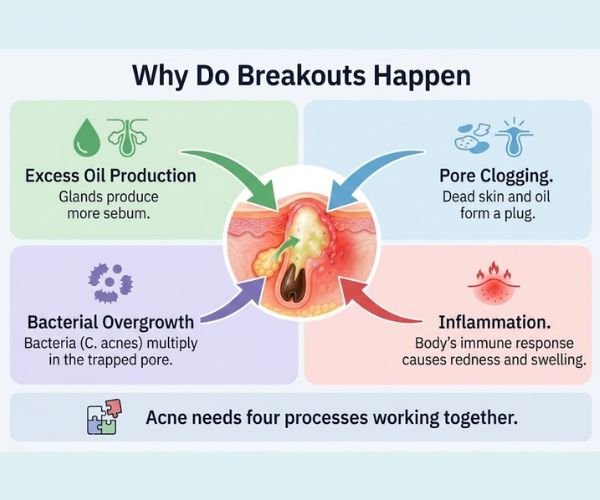
Many people ask, “Why do I keep breaking out?” Acne usually develops because four main processes happen together.
Excess Oil (Sebum)
Sebum is a natural oil produced by sebaceous glands to protect the skin. However, excess oil can contribute to clogged pores when combined with dead skin cells.
Hormonal changes can increase sebum production, which is why acne often appears during teenage years and may continue into adulthood.
Clogged Pores
Healthy skin naturally removes dead skin cells. In acne-prone skin, these cells may stick together with oil and create a blockage called a microcomedone.
This process begins before a visible pimple appears, which is why breakouts may seem to appear suddenly.
Cutibacterium Acnes (C. acnes)
C. acnes is naturally found on everyone’s skin. It does not mean the skin is dirty.
However, when trapped inside a clogged pore, it can contribute to inflammation and worsen acne.
Inflammation
The immune system reacts to blocked pores and bacterial activity, causing redness, swelling, and discomfort.
Inflammation can also contribute to post-acne marks, known as post-inflammatory hyperpigmentation.
Not sure what your skin actually needs? The Glow & Go Skin Quiz helps identify your skin type and main concern, then guides you toward a routine designed for your needs.

What Happens Inside Your Skin When Breakouts Begin?
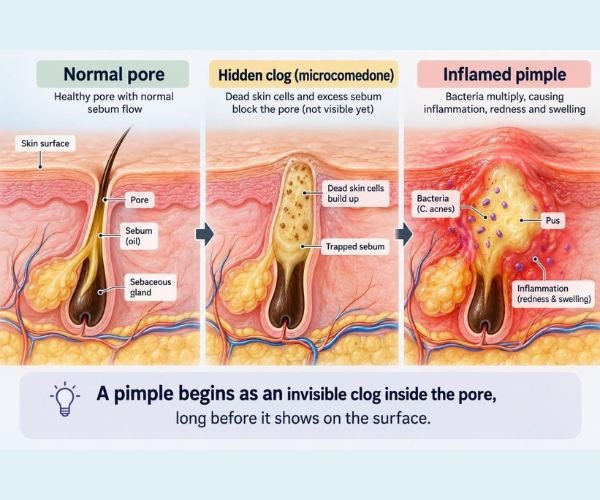
A pimple does not appear suddenly on the surface. The process often starts weeks earlier inside the pore. When excess sebum mixes with dead skin cells, the pore can become blocked and create a microcomedone.
Over time, C. acnes activity and inflammation can turn this invisible clog into a visible acne spot. Understanding this process helps explain why quick fixes often fail and why a consistent routine is important.
Acne and Breakouts in Egypt: What Can Make Them Worse?
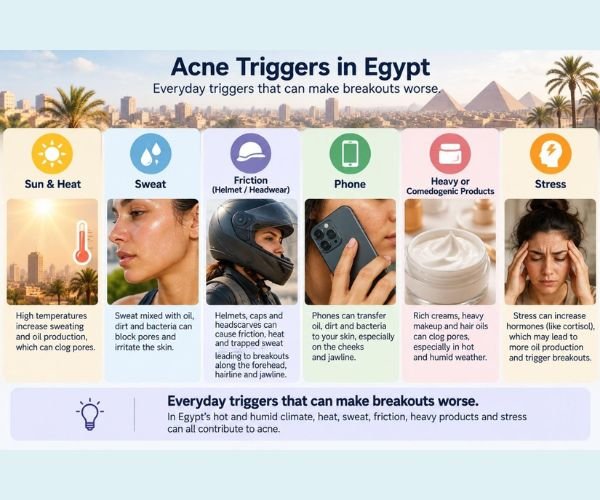
The causes of acne are biological, but daily conditions can increase the chance of flare-ups. Egypt’s heat, humidity, and lifestyle factors can affect acne-prone skin.
Heat, Humidity, and Sweat
Hot weather can increase sweating, especially during summer. Sweat trapped under masks, headwear, helmets, or other contact areas may irritate acne-prone skin.
Heavy Products
Heavy creams, makeup, or unsuitable skincare products may contribute to clogged pores.
Choosing non-comedogenic products can help reduce the risk of pore blockage.
Friction and Touching
Frequent touching, phone contact, and pressure on the skin can increase irritation.
Picking Pimples
Squeezing or picking pimples can push inflammation deeper into the skin and increase the chance of scars and dark marks.
How to Treat Acne: Ingredients That Actually Help
The best acne routine is not about using many products. It is about choosing ingredients that target the causes of acne and using them consistently.
Benzoyl Peroxide
Benzoyl peroxide helps reduce C. acnes bacteria and is often useful for red, inflamed pimples.
Adapalene
Adapalene is a retinoid that helps regulate skin cell turnover and prevent clogged pores from forming.
It can be useful for blackheads, whiteheads, and mild to moderate acne.
Salicylic Acid
Salicylic acid is an oil-soluble ingredient that helps loosen clogged pores.
It is commonly used for oily skin with blackheads and whiteheads.
Azelaic Acid
Azelaic acid helps calm inflammation and supports the appearance of post-acne marks.
Niacinamide
Niacinamide supports the skin barrier and may help reduce redness and excess oil.
Common Acne Mistakes That Can Make Breakouts Worse
Over-Washing Your Face
Acne is not caused by dirty skin. Washing too aggressively can damage the skin barrier and increase irritation.
Skipping Moisturizer
Even oily acne-prone skin needs hydration. A lightweight non-comedogenic moisturizer can help maintain the skin barrier.
Using Toothpaste or DIY Treatments
Toothpaste, lemon, and similar remedies can irritate the skin and may increase dark marks.
Changing Products Too Quickly
Acne treatments need time. Switching products constantly makes it difficult to know what works.
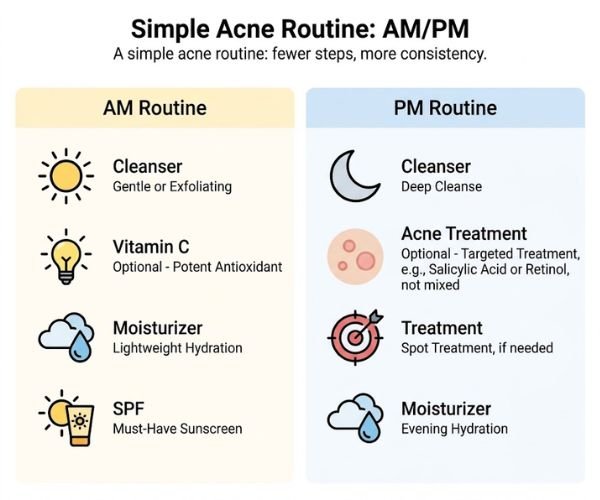
How to Build an Acne Skincare Routine for Beginners
A simple routine is often easier to maintain and more effective.
Morning Routine
- Gentle cleanser
- Optional treatment ingredient
- Lightweight moisturizer
- Sunscreen SPF 30+
Evening Routine
- Gentle cleanser
- One main acne active:
- Benzoyl peroxide
- Adapalene
- Salicylic acid
- Moisturizer
Not sure which routine fits your skin? The Glow & Go Skin Quiz helps you understand your skin type and create a routine that matches your acne concerns.
What Not to Do When You Have Breakouts
Avoid these common mistakes:
- Do not pick or squeeze pimples.
- Do not use harsh physical scrubs.
- Do not start multiple acne treatments at the same time.
- Do not skip sunscreen.
- Do not use steroid creams without professional advice.
- Do not take antibiotics without medical guidance.
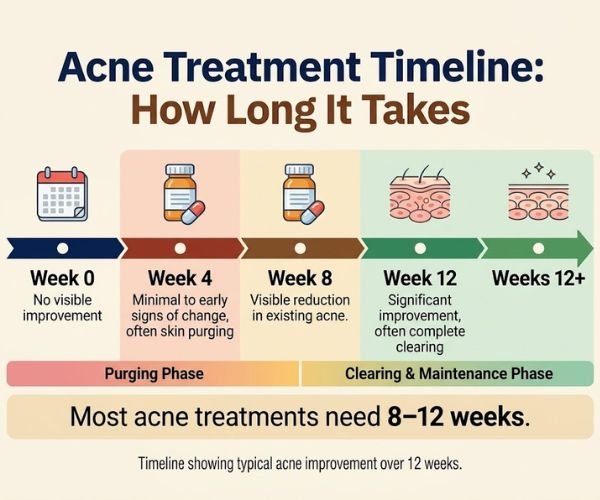
How Long Does Acne Treatment Take to Work?
Acne treatment requires patience because skin changes happen gradually.
- Weeks 1–2: Skin may adjust and dryness may appear.
- Weeks 4–6: Early improvement may start.
- Weeks 8–12: More noticeable improvement is usually seen.
Post-acne dark marks may take longer to fade even after active acne improves.
When Should You See a Dermatologist for Acne?
Professional advice may be helpful if you have:
- Deep painful nodules or cysts
- Acne that leaves scars
- No improvement after around three months of consistent treatment
- Sudden severe adult acne
- Acne affecting your confidence or daily life
A dermatologist can recommend treatments based on your specific skin condition.
F&Q
What causes Breakouts & Acne?
Breakouts & Acne happen when excess oil, clogged pores, C. acnes bacteria, and inflammation combine inside the hair follicle.
Can I get rid of acne in one week?
No. Most acne treatments need several weeks of consistent use before noticeable improvement appears.
Should oily acne-prone skin use moisturizer?
Yes. A lightweight non-comedogenic moisturizer helps support the skin barrier and reduce irritation.
Is benzoyl peroxide or salicylic acid better?
Benzoyl peroxide is often useful for inflamed pimples, while salicylic acid helps with clogged pores and blackheads.
Why do I break out more in summer?
Heat, sweat, friction, and heavier products can make acne worse during hot weather.
Does toothpaste work on pimples?
No. Toothpaste can irritate the skin and may increase redness and dark marks.
Conclusion
Understanding Breakouts & Acne helps you focus on the real causes instead of relying on quick fixes. A consistent routine with proven ingredients, moisturizer, and sunscreen can support healthier-looking skin over time.
Glow & Go helps you understand your skin needs and create a routine that matches your concerns.