Are you suffering from redness and irritation? Learn about the causes, soothing steps, signs of rosacea, and gentle skincare tips with gglowandgo for healthier skin.
Your face may suddenly become red, hot, or uncomfortable after using a new serum, spending time in the sun, or being exposed to heat. Sometimes the cause is obvious, while other times the redness appears for no apparent reason. Using more skincare products to address the problem may actually increase irritation.
Understanding the cause is the first step toward calming your skin. This guide explains common causes of redness and irritation, how to distinguish between irritation and rosacea, ingredients that support the skin barrier, what to avoid, and when to consult a dermatologist if redness persists.
[this-toc]
What causes redness and irritation?
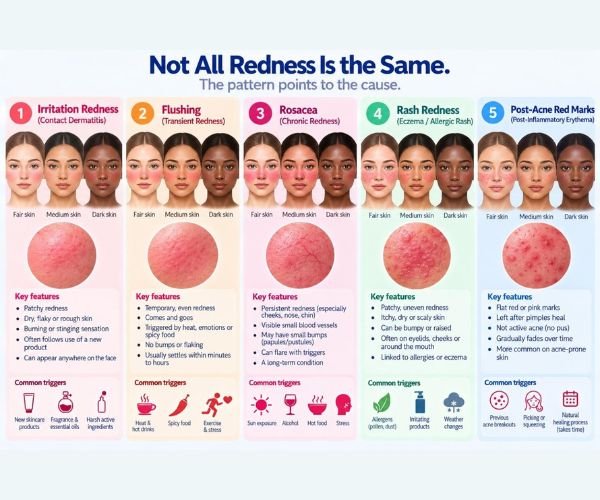
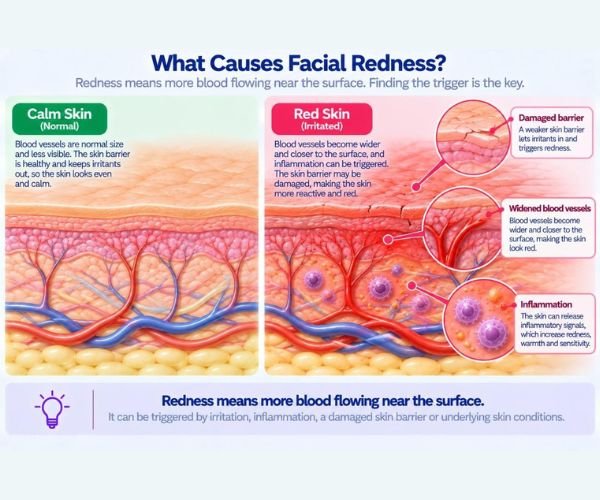
Redness and irritation often occur together, but they are not exactly the same. Redness, also known as erythema, occurs when blood vessels near the skin’s surface dilate, increasing blood flow and making the skin appear red or flushed. Irritation, on the other hand, is the skin’s reaction to something that bothers or irritates it, and may cause burning, stinging, dryness, tightness, or peeling.
Redness may occur temporarily after heat exposure or exercise, while irritation may persist until the cause is gone and the skin barrier recovers. Understanding the pattern of these symptoms helps determine the cause of your skin’s reaction.
Read also about:-
Sensitive Skin: Is It a Skin Type or a Condition? (2026)
Overuse of active skincare ingredients
Overuse of acids, retinoids, exfoliants, peeling pads, or concentrated vitamin C can weaken the skin barrier. When this happens, the skin may become red, dry, tight, or unusually sensitive, and products that were previously comfortable may begin to cause a stinging sensation.
Heat, sun, and cleaning
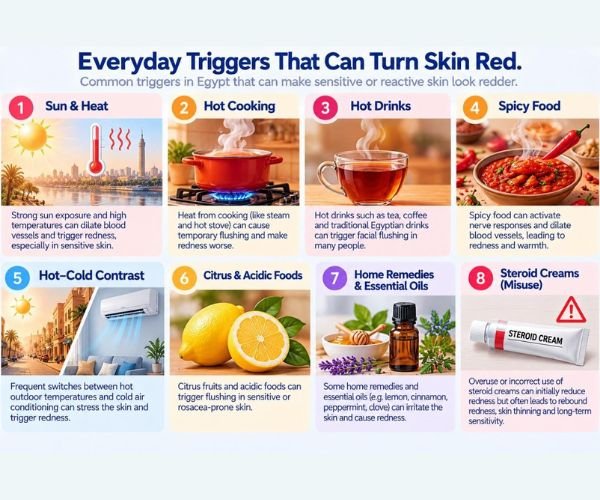
High temperatures can cause blood vessels to dilate and result in temporary redness. Hot weather, direct sunlight, hot showers, exercise, spicy foods, and hot drinks can all trigger redness, especially if the skin is already sensitive or prone to rosacea.
Contact dermatitis
Contact dermatitis can occur when the skin reacts to a product or one of its components. Irritant contact dermatitis results from direct irritation, while allergic contact dermatitis involves an immune response and may cause a rash accompanied by itching, swelling, or redness after exposure.
Rosacea
Rosacea is a chronic inflammatory skin condition that typically affects the mid-face. It may cause persistent redness, recurring flare-ups, visible blood vessels, or acne-like pimples. Because these symptoms can resemble normal irritation, a proper diagnosis is essential.
Misuse of steroid creams
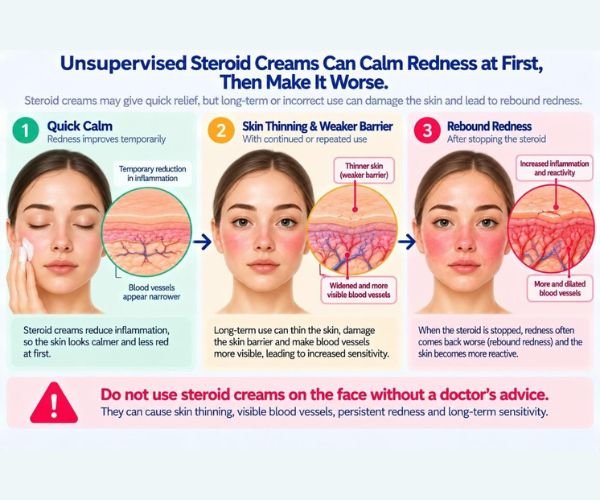
Steroid creams can temporarily reduce inflammation, but using them on the face without medical supervision can lead to unwanted side effects, including persistent redness and other skin changes. Redness that appears after repeated steroid use should be examined by a dermatologist.
Not sure what your skin needs? Take the GG Skin test to discover your skin type and its main problem.

Redness and irritation in Egypt: Common causes
The Egyptian climate can expose the skin to several factors that may cause or worsen redness and irritation. Strong sun and high temperatures can cause redness, dryness, and sun-induced irritation, while moving between hot outdoor weather and heavily air-conditioned spaces can contribute to increased dryness.
Daily habits can also play a role. Hot drinks, spicy foods, cooking at high temperatures, dust, and wind can all cause facial redness in some people. These factors are more noticeable when the skin barrier is already weakened.
Home remedies are another concern. Applying lemon, vinegar, toothpaste, garlic, or essential oils directly to irritated skin can cause further irritation rather than soothe it. The same applies to over-the-top skincare routines promoted on social media, which combine numerous exfoliating products or active ingredients.
How to safely soothe redness and irritation
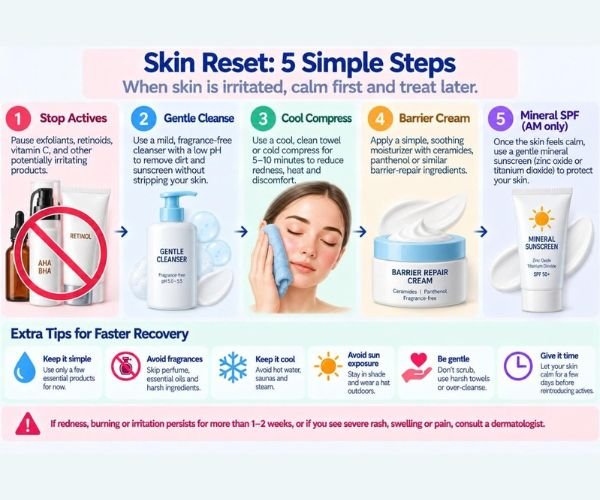
When your skin becomes red or inflamed, the best approach is usually to simplify your skincare routine rather than adding more treatments. The goal is to eliminate the causative agent, support the skin barrier, alleviate discomfort, and protect the skin from further irritation.
Avoid potential irritants
Stop using acids, retinoids, exfoliants, peeling pads, concentrated vitamin C, and new products if you experience burning, stinging, peeling, or noticeable redness on your skin. Continuing to use an irritating product may delay healing.
Clean gently
Use a gentle, fragrance-free cleanser with lukewarm water. Avoid scrubbing, rough towels, brushes, and very hot water. If your skin is very dry or you’re experiencing discomfort, unnecessary cleansing can strain your skin barrier.
Moisturizing and protecting
A fragrance-free moisturizer can help reduce dryness and support skin barrier repair. Look for ingredients like ceramides, glycerin, and panthenol. During the day, use a broad-spectrum sunscreen and minimize direct sun exposure as much as possible.
Ingredients that may help reduce redness
The appropriate ingredients depend on the cause of the redness and your skin’s current state. Some ingredients are best suited for repairing the skin barrier, while others are not recommended until the active irritation has subsided.
Ceramides
Ceramides help support the skin barrier and reduce moisture loss. They are particularly beneficial when redness is accompanied by dryness, tightness, or irritation resulting from overtreatment.
Panthenol and colloidal oatmeal
Panthenol helps to moisturize and soothe the skin. Colloidal oatmeal is commonly used in products designed for dry, irritated, or itchy skin, and may provide additional support for soothing the skin.
Azelaic acid
Azelaic acid has anti-inflammatory properties and may be helpful for certain types of persistent redness and rosacea symptoms. However, it may cause a temporary stinging sensation, so it’s best to use it gradually after the acute irritation has subsided.
Niacinamide
Niacinamide can support the skin barrier and may help reduce the appearance of persistent redness. Low, gentle concentrations may be easier on sensitive skin, while high concentrations may cause redness or irritation in some people.
What should you avoid when your face is red?
When redness and irritation are already present, some common skincare habits can make the situation worse.
- Avoid using physical exfoliants and harsh peels.
- Stop using products that cause burns or stings.
- Avoid launching too many new products at once.
- Do not apply lemon, vinegar, toothpaste, or essential oils to irritated skin.
- Avoid taking very hot showers, saunas, and direct exposure to heat.
- Do not apply ice directly to the skin.
- Avoid products with strong fragrances if they cause irritation.
- Never use steroid creams on your face without medical advice.
Following a simple routine that focuses on gentle cleansing, moisturizing and sun protection can give irritated skin the time it needs to recover.
How to build a simple routine to treat redness
morning
Start with lukewarm water or a gentle fragrance-free cleanser. Once the skin is calm, you can introduce one suitable treatment, such as niacinamide or azelaic acid. Follow with a barrier-supporting moisturizer and broad-spectrum SPF 30 or higher.
Evening
Cleanse gently without rubbing or scrubbing. Apply a fragrance-free moisturizer containing barrier-supporting ingredients. If your skin has recovered, introduce treatments gradually instead of combining multiple active ingredients.
Give Your Skin Time to Recover
One of the most common mistakes is changing products too quickly. If redness is caused by irritation, giving the skin time to recover can be more useful than trying another active ingredient.
Want a routine matched to your skin? Discover your skin type and main concern with the GG Skin Quiz .
How Long Does Redness and Irritation Take to Calm?
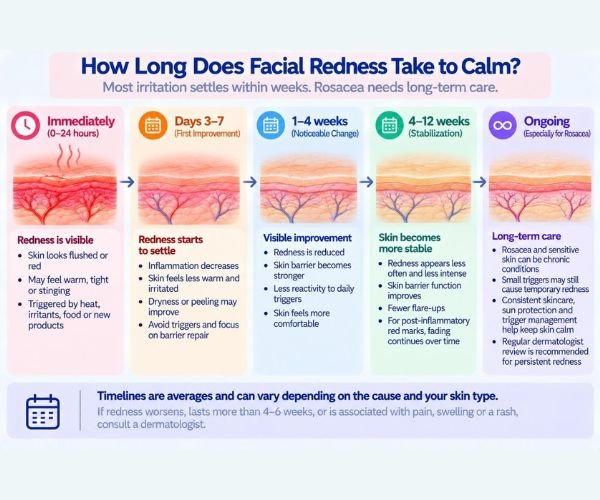
Recovery time depends on the cause and severity of the problem. Temporary flushing caused by heat or exercise may disappear relatively quickly after the trigger ends. Mild product-related irritation can start improving after the irritating product is stopped, but the skin barrier may need several weeks to fully recover.
Persistent redness caused by rosacea is different. Rosacea is a chronic condition that can be managed with appropriate treatment, but it may continue without proper care. Steroid-related skin changes can also take longer to improve and should be assessed by a dermatologist.
When Should You See a Dermatologist?
Persistent redness should not always be treated as ordinary sensitivity. A dermatologist can help identify whether the problem is irritation, rosacea, dermatitis, or another skin condition.
Professional evaluation is particularly important if you experience:
- Persistent redness on the cheeks, nose, chin, or forehead.
- Visible blood vessels or repeated flushing.
- Acne-like bumps combined with ongoing redness.
- Redness or bumps after using steroid creams.
- An itchy rash that spreads, swells, or blisters.
- Painful, hot, swollen skin with fever or pus.
- Redness that does not improve after a simple routine.
- Burning, redness, or irritation affecting the eyes.
Sudden swelling of the face, lips, or eyes accompanied by difficulty breathing requires immediate medical attention.
F&Q
What causes redness on the face?
Redness and irritation can be caused by skincare products, over-exfoliation, skin barrier damage, heat, sun exposure, flushing, contact dermatitis, rosacea, and inappropriate steroid cream use. The duration and accompanying symptoms can help identify the possible cause.
How can I calm irritated skin quickly?
Stop active ingredients and newly introduced products, cleanse gently, apply a fragrance-free moisturizer, and protect your skin from the sun. A cool, damp compressor can also temporarily soothe heat and discomfort.
Is my red face rosacea or irritation?
Irritation often follows the use of a specific product or skincare routine and may improve after the trigger is removed. Rosacea can cause persistent redness in the center of the face, recurrent facial flushing, visible blood vessels, or acne-like pimples, and requires medical diagnosis.
Can steroid creams cause facial redness?
Yes. Unsupervised or prolonged use of steroid creams on the face can lead to unwanted skin changes, including persistent redness and rebound rash. Steroids should only be used on the face under medical supervision.
What ingredients help reduce redness?
Ceramides, panthenol, and colloidal oatmeal can support irritated skin and rebuild its protective barrier. Azelaic acid may help alleviate some types of persistent redness, while niacinamide can support the skin barrier when tolerated.
Why does my face turn red in the heat?
Exposure to heat can cause blood vessels near the skin’s surface to dilate, resulting in temporary redness. People prone to rosacea may experience more intense or longer-lasting redness after heat exposure.
Does the appearance of redness differ on darker skin?
Yes. The inflammation may appear brown, purple, gray, or darker than bright red on some medium and dark skin tones. Therefore, focusing only on bright redness can make it easy to overlook the irritation.
When should I visit a dermatologist for treatment of redness?
Consult a dermatologist if the redness persists, recurs, is accompanied by visible blood vessels or bumps, occurs after using steroid creams, spreads, causes swelling, or affects the eyes. Severe swelling, difficulty breathing, fever, or signs of infection require immediate medical attention.
conclusion
Redness and irritation can have many causes, ranging from overuse of potent skincare ingredients and damage to the skin barrier, to heat, sun exposure, contact dermatitis, rosacea, and the inappropriate use of steroids. Instead of adding more products, start by identifying the trigger, simplifying your routine, supporting your skin barrier, and protecting your skin from further irritation.
Understanding the cause makes it easier to choose the right care and know when to consult a specialist. With the Glow & Go app , you can use skin testing to determine your skin type and main concern before exploring suitable routine and product options, while persistent or concerning redness should always be evaluated by a dermatologist.