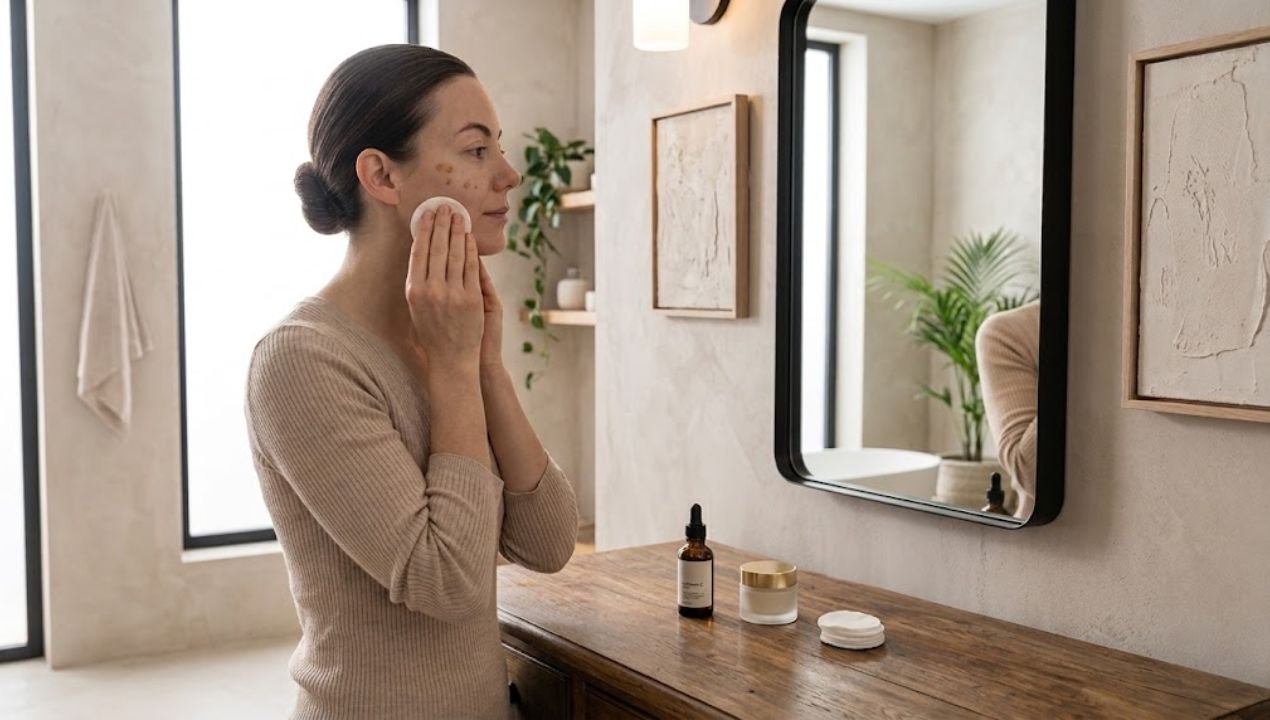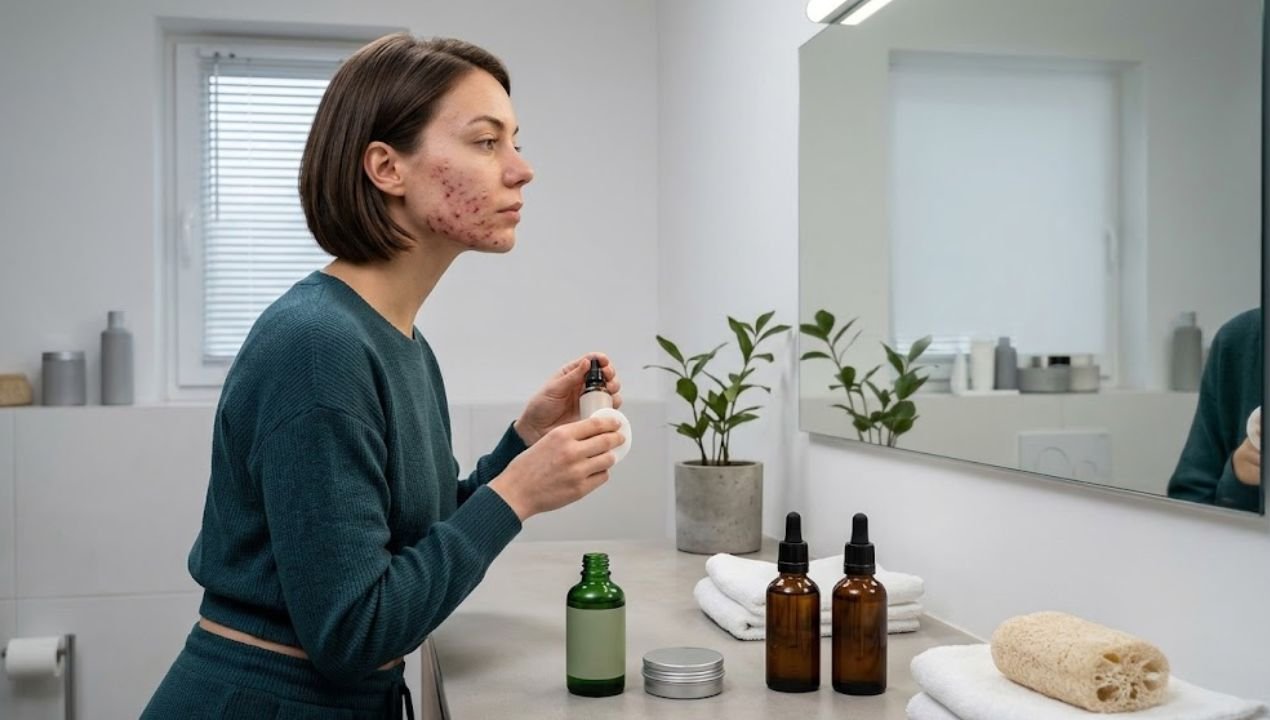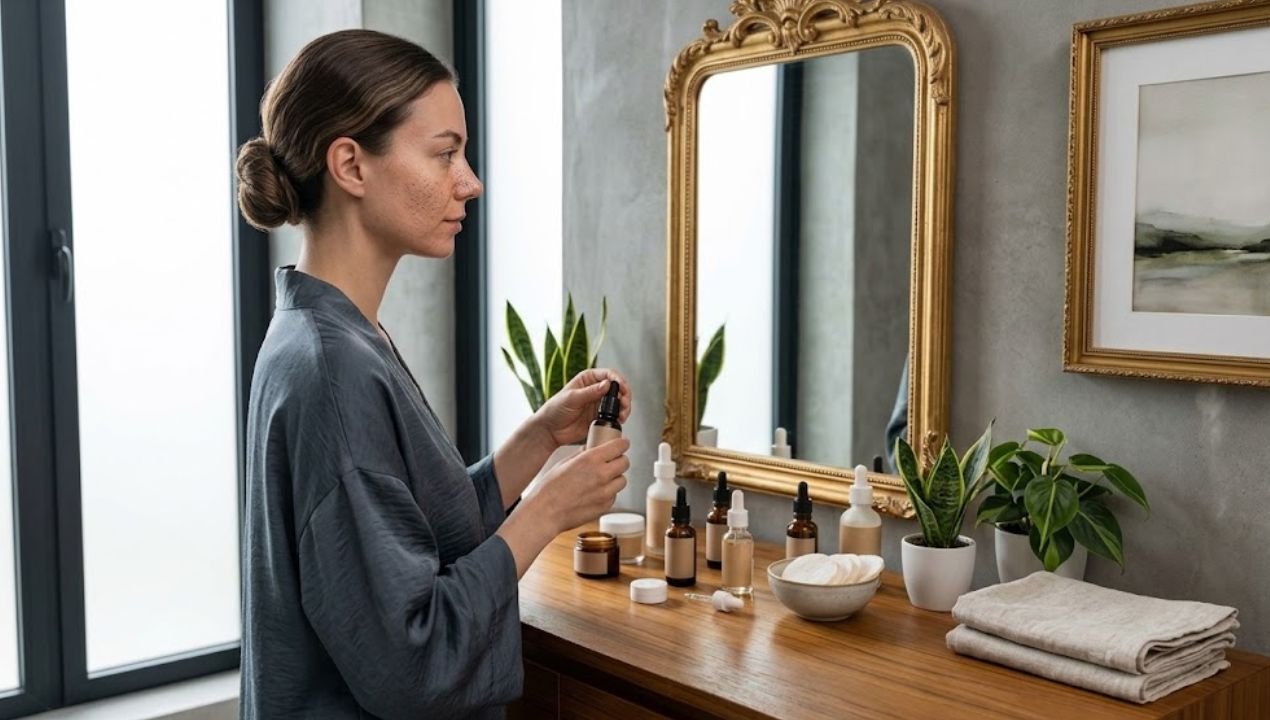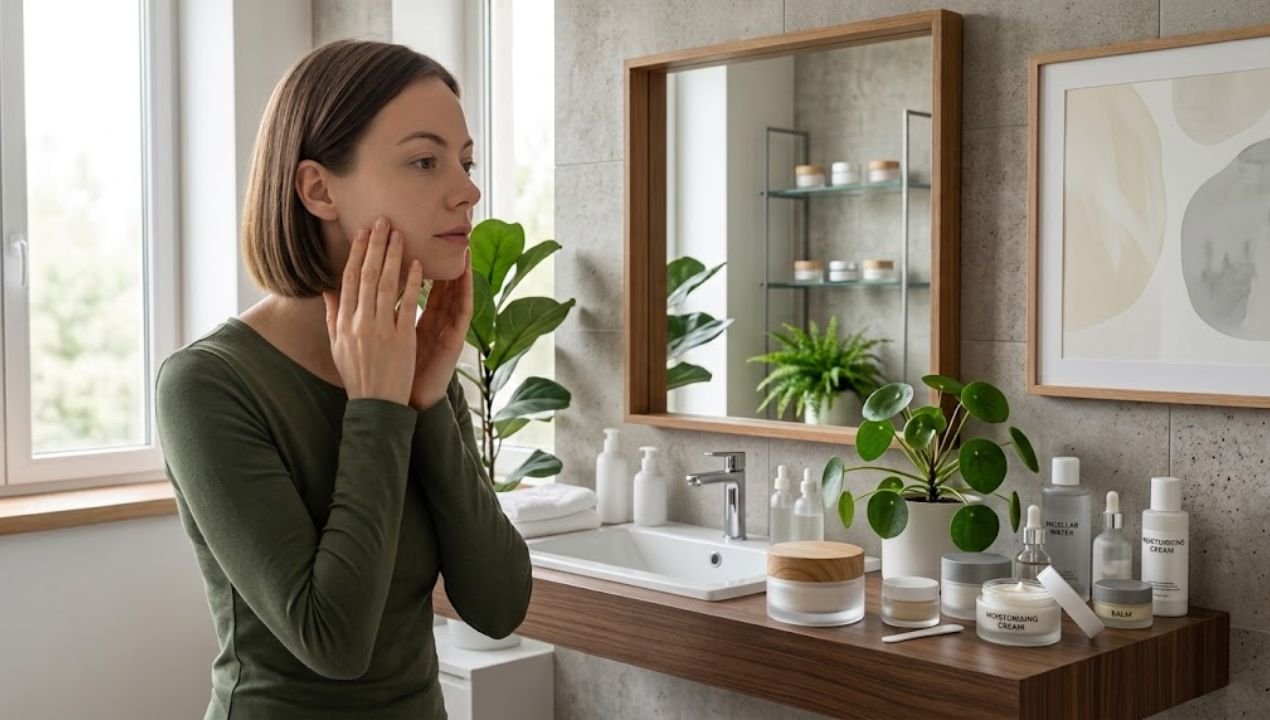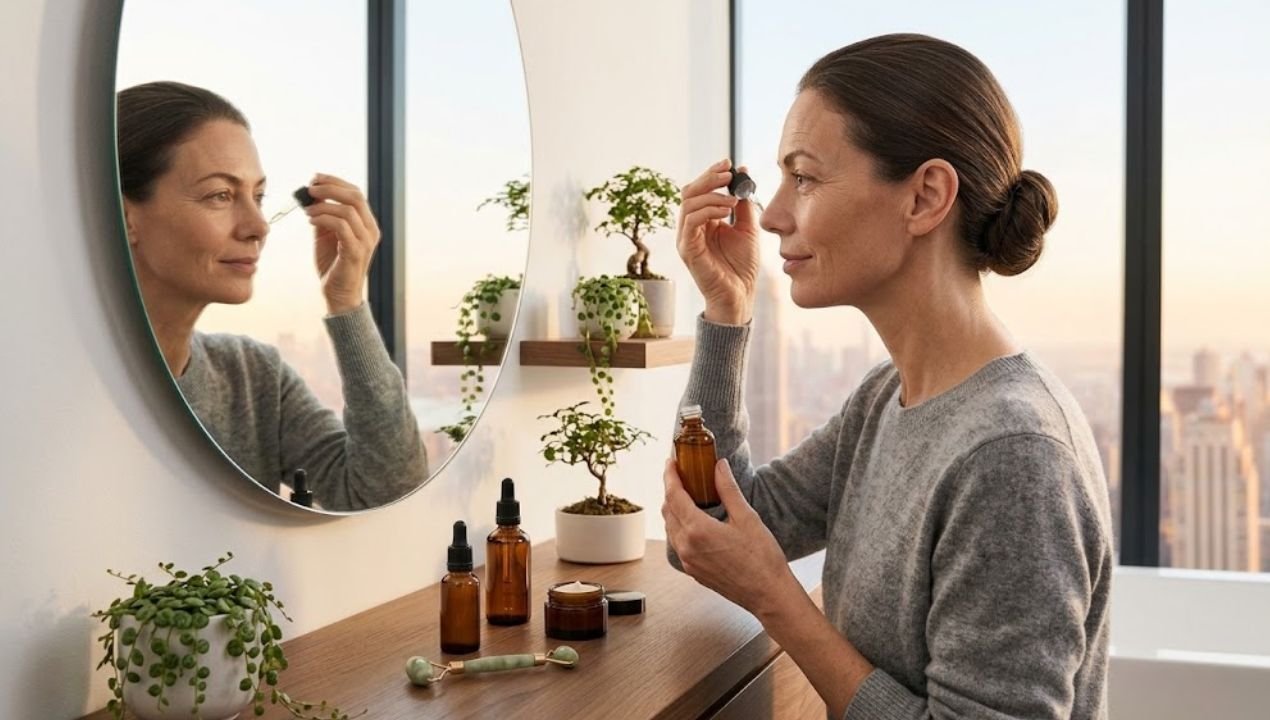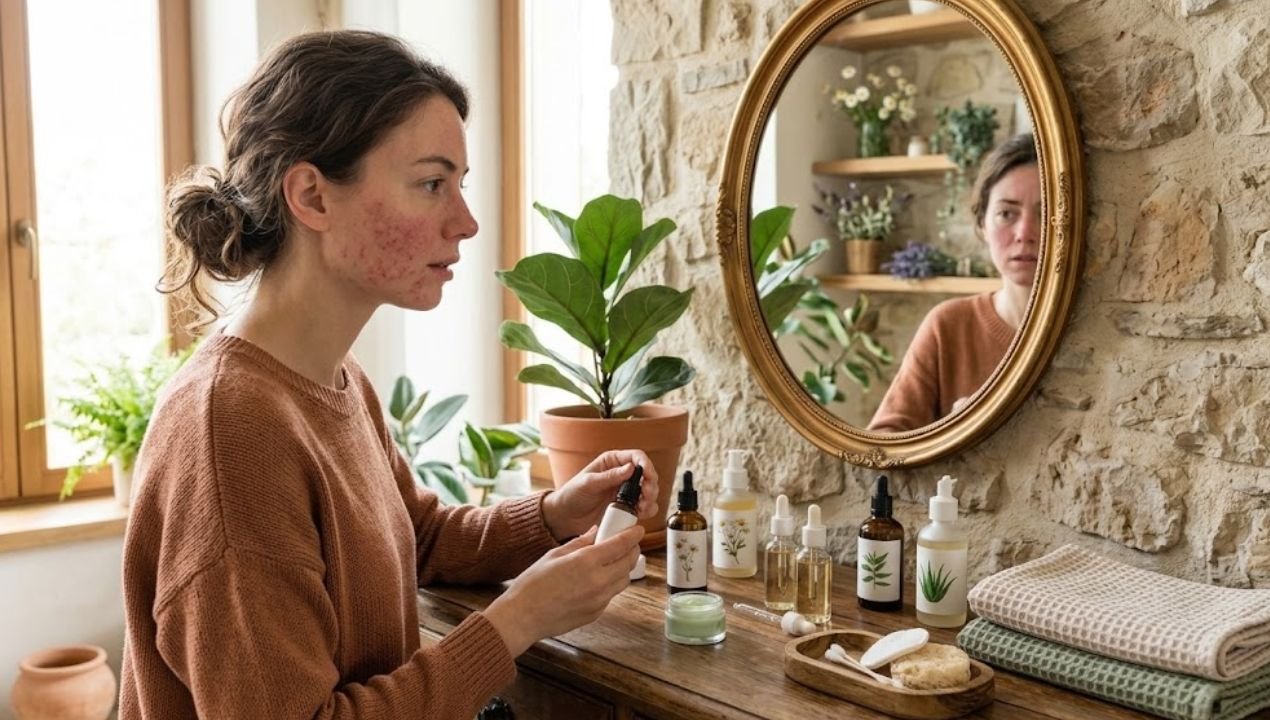
Dull Skin can make your complexion look tired and flat. Discover simple ways to restore radiance and choose suitable care with Glow & Go.
Glow is not simply about shiny skin. It is largely about how evenly light reflects from the skin’s surface. When the surface is smooth and hydrated, light reflects more evenly. Dryness, dead skin cells, uneven tone, and irritation can scatter light and make dull skin look tired.
What Is Dull Skin?
Dull skin describes a complexion that looks flat, tired, grey, rough, or less radiant than usual. It is not a skin type or a disease. Instead, it is usually a visible sign that something is affecting hydration, texture, tone, or natural cell renewal.
How Light Affects Your Glow
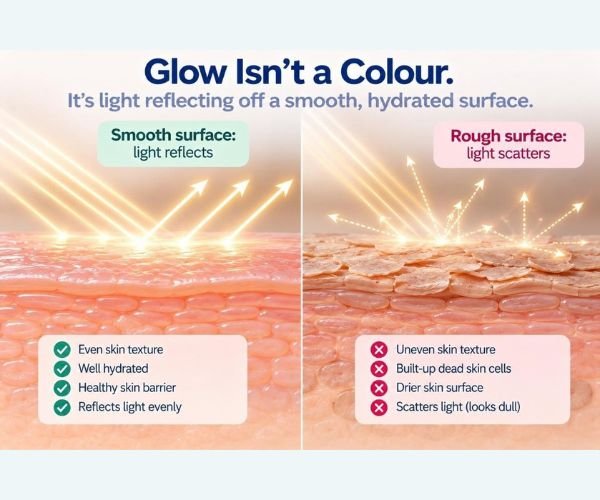
A smooth, hydrated surface reflects light more evenly, creating a healthy-looking radiance. When the surface becomes rough or dehydrated, light scatters in different directions, making the complexion appear less bright.
Signs of Dull Skin
Common signs include:
- A flat or tired-looking complexion
- Rough or uneven texture
- Patchy-looking makeup
- Uneven tone or darker areas
- Fine lines that appear more visible
- Skin that looks tired even after enough rest
Dead Skin Cell Build-Up
The outer layer of skin, called the stratum corneum, naturally sheds old cells through a process known as desquamation. When this process slows because of dryness, aging, or a weakened barrier, dead cells can accumulate.
This can make the surface rougher and interfere with even light reflection.
Read also about:-
Not sure what your skin needs?
Take the GG Skin Quiz to discover your skin type and main concern, then find a routine based on your needs.

What Causes Dull Skin?
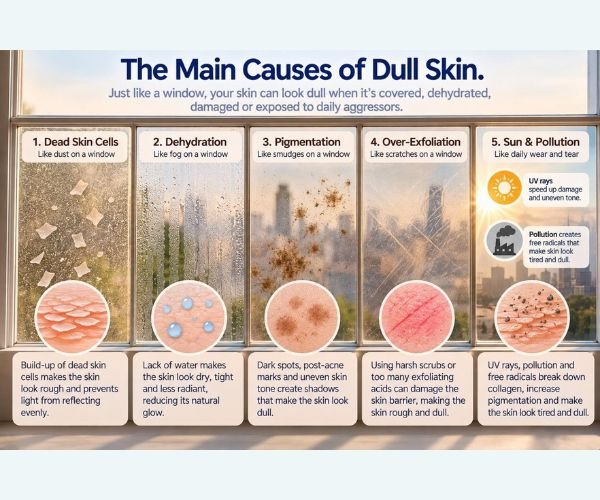
Several factors can contribute to dull skin, and more than one may be affecting your complexion at the same time.
Dehydration
Dehydrated skin lacks enough water in its outer layers. This can make the surface look less smooth, emphasize fine lines, and create a tight feeling.
Importantly, oily skin can also be dehydrated. Oil production does not mean the skin has enough water.
Uneven Pigmentation
Sun exposure, post-acne marks, and melasma can create areas of uneven pigmentation. Differences in tone can make the complexion look less uniform and radiant.
Sun Exposure and Oxidative Stress
UV exposure contributes to oxidative stress, pigmentation, and changes in collagen and skin lipids. Pollution can also contribute to oxidative stress and make the skin appear rougher over time.
Aging
Cell turnover naturally changes with age. Skin may become drier, while the shedding of old cells can become slower. These changes can contribute to roughness and reduced radiance.
Over-Exfoliation
Trying to remove dull skin too aggressively can make the problem worse. Frequent scrubbing, strong acids, or using too many active ingredients may damage the skin barrier, causing dryness, redness, and irritation.
Dull Skin in Egypt: What Makes It Worse?

Egyptian weather can create additional challenges for maintaining radiant skin.
Sun and Heat
Strong sun exposure can increase pigmentation and oxidative stress. Consistent sunscreen is therefore important for protecting an even-looking complexion.
Dust and Pollution
Dust, pollution, sweat, and excess sebum can accumulate throughout the day. Proper evening cleansing helps remove these residues without stripping the skin.
Air Conditioning
Spending long periods in air-conditioned environments may increase dryness for some people, making the skin feel tighter and look less fresh.
Harsh Scrubs
Rough facial scrubs, brushes, and loofahs can irritate the skin when used too frequently. Removing dead cells does not require aggressive physical scrubbing.
How to Get Glowing Skin Safely
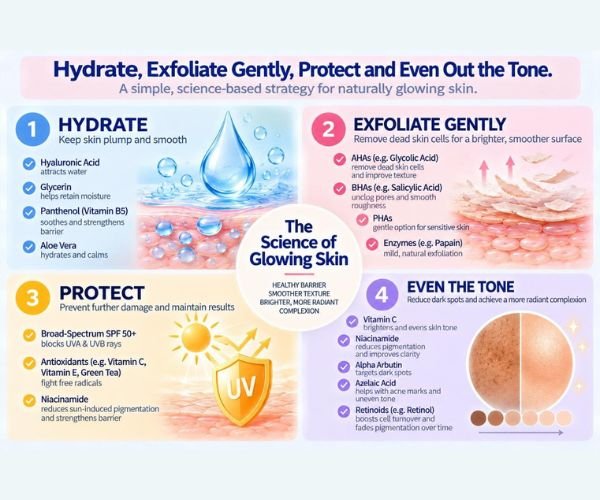
The most useful approach combines hydration, gentle exfoliation, sun protection, and support for an even skin tone.
Hydrate Daily
Glycerin and hyaluronic acid are humectants that attract water to the outer layers of the skin. Using them with a moisturizer can help create a smoother, more hydrated surface.
For beginners, improving hydration is often one of the simplest ways to make dull skin look fresher.
Exfoliate Gently
AHAs such as lactic acid and glycolic acid help loosen dead skin cells and improve surface texture. Lactic acid is often a gentler option for beginners.
PHAs such as gluconolactone can also provide mild exfoliation for people with dry or sensitive skin.
Start slowly. More exfoliation does not automatically mean more glow.
Use Vitamin C
Vitamin C provides antioxidant protection and can gradually improve the appearance of uneven pigmentation. Morning use followed by sunscreen is a practical approach.
Consider Niacinamide
Niacinamide supports the skin barrier and can help improve the appearance of uneven tone. It is generally compatible with many skincare routines.
Protect With Sunscreen
Broad-spectrum SPF 30 or higher helps protect against UV exposure that contributes to pigmentation and photoaging. This is especially important when using exfoliating acids.
Best Ingredients for Dull Skin
A beginner does not need many active ingredients at once. Choosing a few suitable options can make a routine easier to follow.
Hyaluronic Acid and Glycerin
They help attract water to the skin’s outer layer and can improve the appearance of dehydration. They are generally suitable for different skin types.
Lactic Acid
This AHA exfoliates dead cells while offering hydrating properties. Start with a low-strength product once or a few times per week according to your skin’s tolerance.
Vitamin C
Vitamin C offers antioxidant support and may gradually improve uneven tone. Its effectiveness depends on the formula, stability, and consistent use.
Niacinamide
Niacinamide can support the barrier and improve uneven-looking tone. It can usually be used once or twice daily depending on the formulation.
Retinoids
Retinoids such as retinol can improve cell turnover, texture, and signs of photoaging over time. Introduce them gradually because dryness and peeling are possible.
Retinoids should not be used during pregnancy unless advised by a qualified healthcare professional.
A Simple Radiant Skin Routine
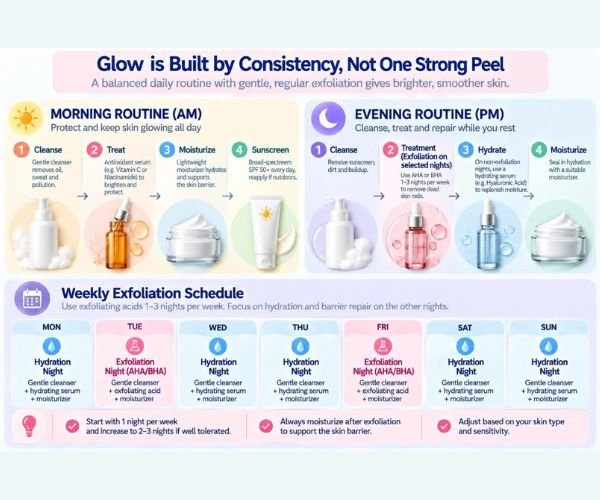
A routine for dull skin does not need to contain many steps. Consistency matters more than complexity.
Morning
- Gentle cleanser or water rinse if your skin is very dry.
- Vitamin C or another suitable treatment.
- Hydrating moisturizer.
- Broad-spectrum SPF 30 or higher.
Evening
- Gentle cleanser to remove sunscreen, makeup, sweat, and dust.
- A gentle AHA or PHA one to three nights per week if tolerated.
- Hydrating serum on other nights, or gradually introduce a retinoid if appropriate.
- Moisturizer.
Add One Active at a Time
Introducing several products simultaneously makes irritation more difficult to identify. Start with one active, allow your skin to adjust, and increase frequency gradually.
Ready to understand what your skin actually needs?
Take the GG Skin Quiz to identify your skin type and main concern, then explore suitable routine options for your specific needs.
→ Discover your routine with the GG Skin Quiz
What Not to Do for Dull Skin
Avoid these common mistakes:
- Do not scrub your face aggressively every day.
- Do not layer several exfoliating acids when starting.
- Do not combine strong exfoliants and retinoids on the same night when beginning.
- Do not skip moisturizer because your skin is oily.
- Do not use lemon juice or baking soda as brightening remedies.
- Do not sleep with sunscreen or makeup on your skin.
- Do not assume stronger products will produce faster results.
How Long Does It Take to Fix Dull Skin?
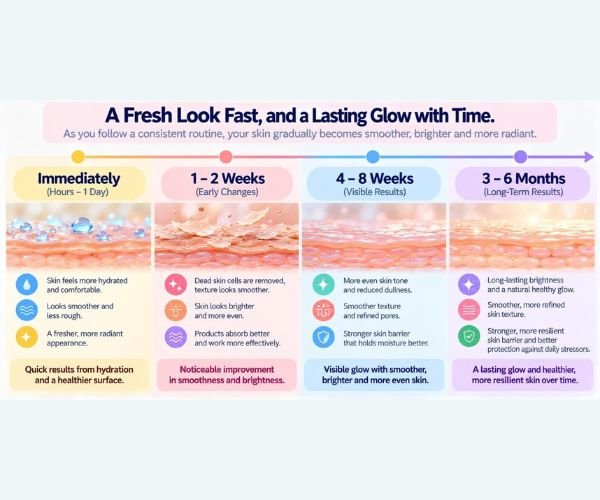
Hydration can make skin appear fresher within hours because moisturizers and humectants improve the surface appearance.
Gentle exfoliation may improve texture and radiance within one to two weeks, while vitamin C and niacinamide may require around four to eight weeks for more noticeable changes in uneven tone.
Retinoids generally take several months to produce more visible improvements in texture and photoaging. Results vary, so consistent care is more useful than expecting an instant transformation.
F&Q
What causes dull skin?
Common causes include dead skin cell build-up, dehydration, uneven pigmentation, sun exposure, pollution, aging, lifestyle factors, and over-exfoliation.
How do I get my glow back quickly?
Start with hydration. A moisturizer containing ingredients such as glycerin or hyaluronic acid can make the skin look fresher quickly. Gentle exfoliation and sunscreen support longer-term radiance.
Does exfoliation help dull skin?
Yes. Gentle exfoliation can help remove excess dead skin cells and improve texture. A mild AHA or PHA one to three times weekly may work for many beginners, while excessive exfoliation can cause irritation.
Does vitamin C brighten dull skin?
Vitamin C provides antioxidant support and can gradually improve uneven pigmentation. Consistent use and daily sunscreen are important for visible results.
Can dehydration make skin look dull?
Yes. Dehydration can make the surface appear less smooth and can make fine lines more noticeable. It can affect any skin type, including oily skin.
Can oily skin be dull?
Yes. Oily skin can still be dehydrated or congested. Oil creates shine, but shine is not the same as healthy radiance.
How long does it take to fix dull skin?
Hydration can improve the appearance within hours. Gentle exfoliation may take one to two weeks, while improvements in tone and texture generally require several weeks or months.
When should I see a doctor about dull skin?
Seek professional advice if dullness appears suddenly with fatigue, pale or yellowish skin, hair loss, weight changes, or feeling unwell. Persistent redness, itching, flaking, pain, or unexplained pigmentation should also be assessed.
Conclusion
Dull skin is usually connected to more than one factor, such as dehydration, dead skin cell build-up, uneven pigmentation, UV exposure, pollution, aging, or excessive exfoliation. A simple routine focused on hydration, gentle exfoliation, suitable brightening ingredients, and daily sunscreen can gradually improve the appearance of tired-looking skin.
The key is to understand what your skin needs instead of constantly adding stronger products. gglowandgo helps make that process more personalized by identifying your skin type and main concern, so you can discover a routine and products that match your skincare needs.