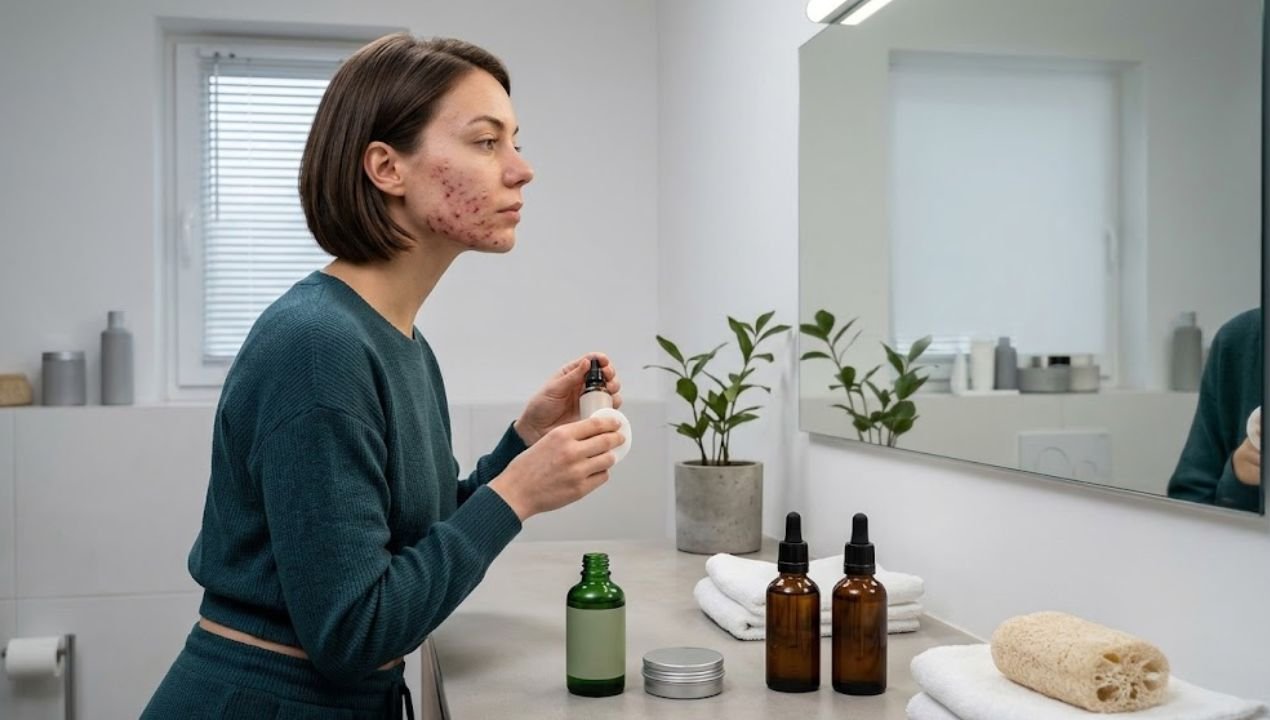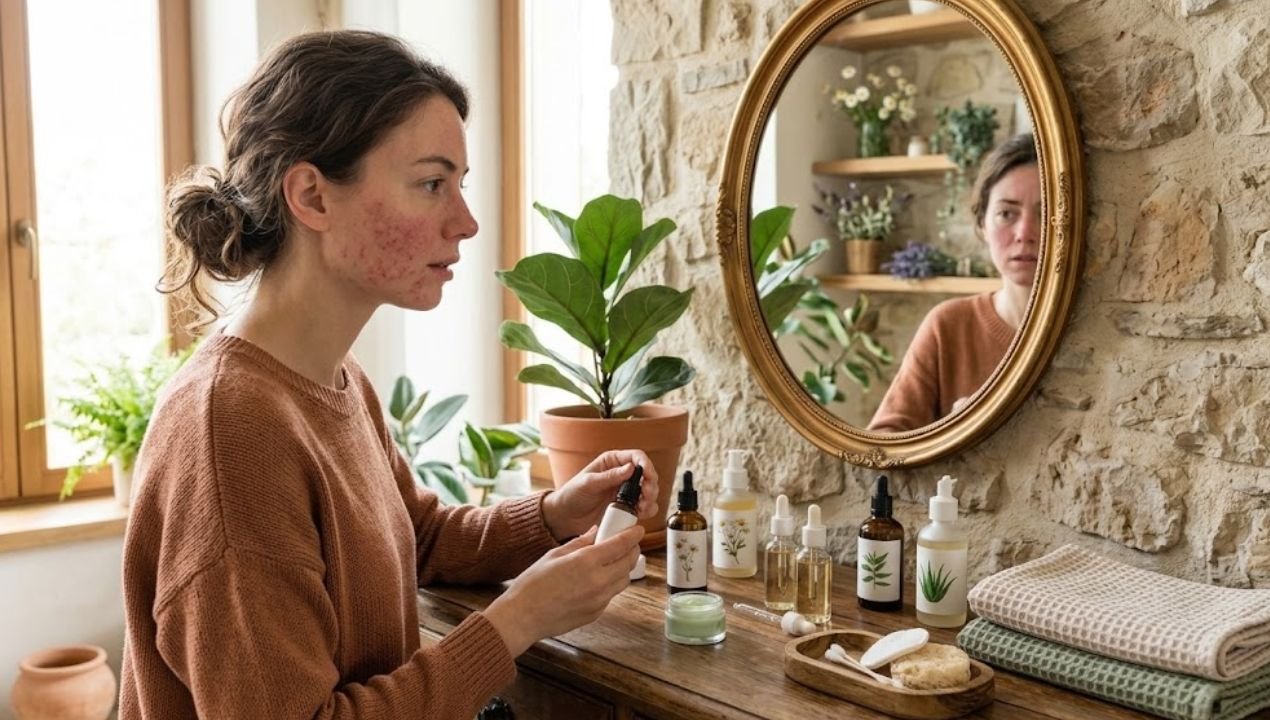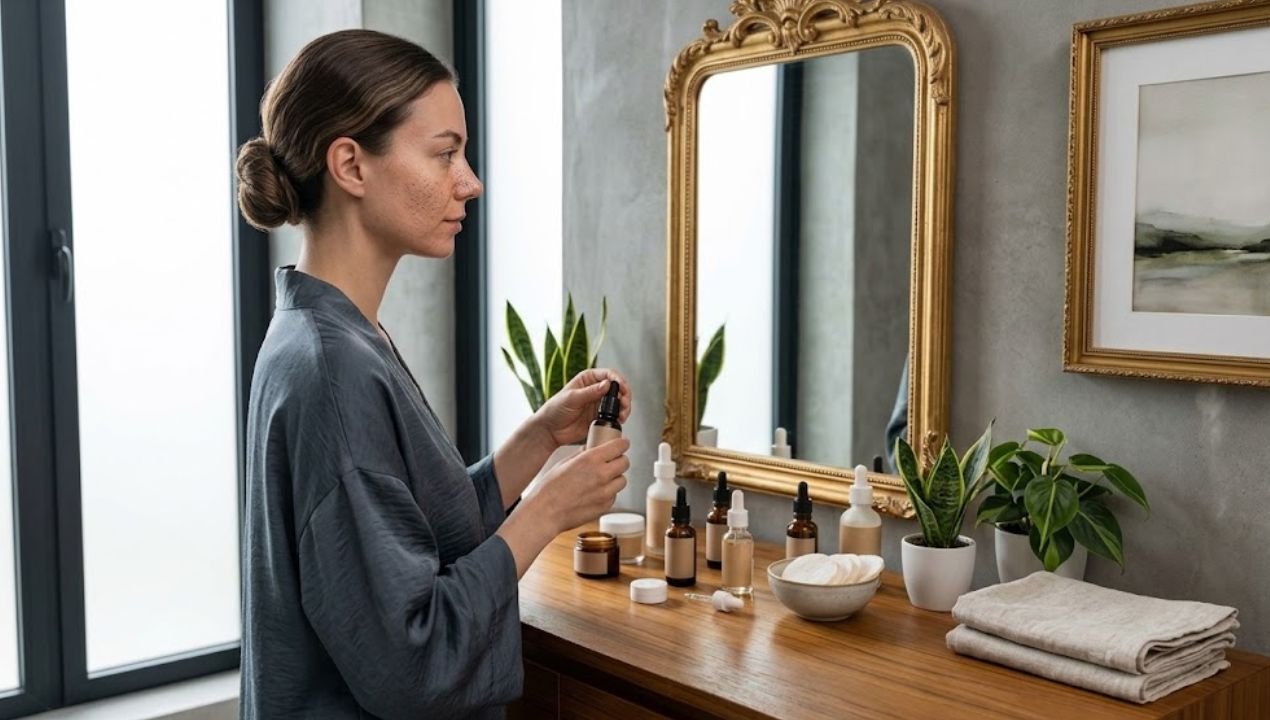
Large pores and blackheads can be managed. Learn what causes them, how to treat blackheads, and choose the right routine with Glow & Go.
You squeeze the dark dots on your nose, use a pore strip, and enjoy the clean look. A few days later, the dots are back. The surprising part is that some of those dots may not be blackheads at all. They could be sebaceous filaments, a normal part of your skin.
The good news is that you cannot permanently close or shrink pores, but you can make them look smaller by keeping them clear, controlling excess oil, preventing clogged pores, and protecting your skin from sun damage. This guide explains what causes large pores and blackheads, how to tell them apart, and which skincare ingredients actually help.
What Are Pores and Blackheads?
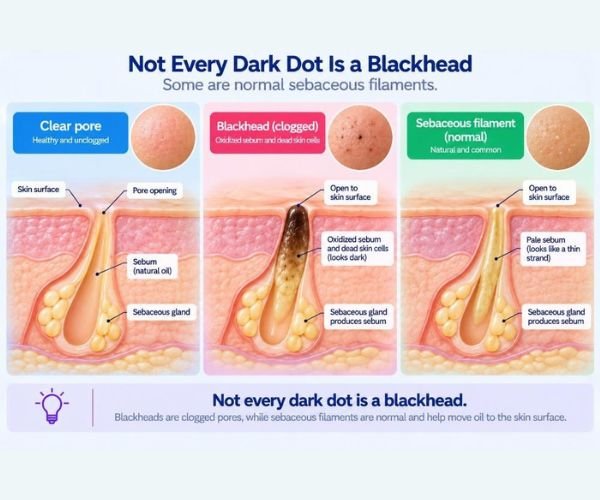
Pores are the openings of hair follicles where sebum reaches the skin’s surface. Everyone has pores, and they cannot be removed or permanently closed.
A blackhead, also called an open comedone, forms when sebum and dead skin cells clog a pore and remain exposed at the surface. The dark appearance is not simply dirt. Exposure to air contributes to oxidation, making the material in the pore appear dark.
Blackheads commonly appear on the nose, forehead, chin, and cheeks.
Blackheads vs. Sebaceous Filaments
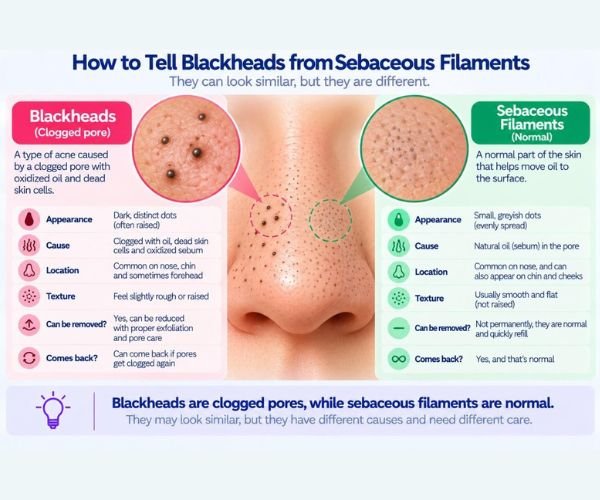
This distinction is especially important when dealing with blackheads on the nose.
Blackheads are clogged pores that can appear as distinct dark plugs. Sebaceous filaments are normal structures inside pores that help move sebum toward the skin’s surface. They are usually smaller, more evenly distributed, and may look grey, yellowish, or light brown.
Sebaceous filaments naturally refill after being removed, so trying to eliminate them permanently is unrealistic. They can only be made less noticeable.
Read also about:
What Causes Large Pores?

Several factors can make pores appear larger. The most common include:
- High oil production: More sebum can make pores look more noticeable, particularly across the T-zone.
- Genetics: Natural pore size and distribution vary from person to person.
- Age: Reduced collagen and skin firmness can make pores look wider over time.
- Sun exposure: UV damage can weaken collagen and the surrounding skin structure.
- Clogged pores: Sebum and dead skin cells can make an individual pore look darker and larger.
Hormonal changes can also influence oil production, which may make pores and blackheads more noticeable at certain times.
Why Pores May Look More Noticeable in Egypt
Egypt’s hot weather and strong sun exposure can make oily skin feel more difficult to manage. Heat may increase oiliness, while frequent sun exposure contributes to long-term collagen damage.
Sweat, sunscreen, makeup, and environmental particles can also make the skin feel more congested when they are not removed properly. However, blackheads are not simply caused by dirt, so aggressive scrubbing is not the answer.
Can You Shrink Large Pores?
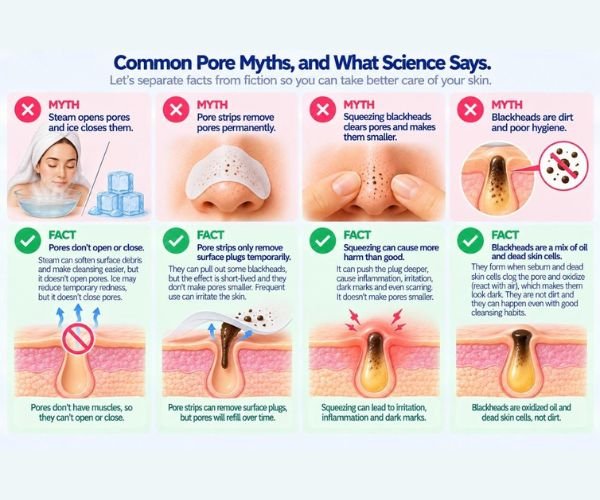
You cannot permanently shrink or close pores because pore size is influenced largely by genetics and the structure of the skin.
However, you can improve their appearance.
Keeping pores clear can make them look less noticeable, while controlling excess oil can reduce shine around the openings. Sunscreen helps protect collagen from UV damage, and ingredients such as retinoids may improve overall skin texture and pore appearance over time.
The goal is therefore not to “erase” pores, but to make them appear clearer, smoother, and less prominent.
If you are still unsure where to start, discover your routine with the GG Skin Quiz. Your answers help identify your skin type and priority concern so you can start with products that better match your needs.

How to Get Rid of Blackheads
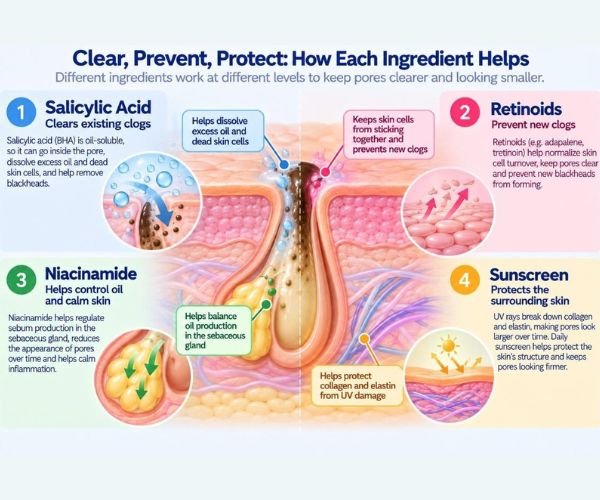
The most effective approach is consistent rather than aggressive. You want to clear existing congestion while reducing the chance of new clogs forming.
Salicylic Acid
Salicylic acid is one of the most useful ingredients for blackheads because it is oil-soluble and can work within the pore. It helps loosen the mixture of sebum and dead skin cells responsible for clogged pores.
Beginners can start with a lower-strength product a few times per week and increase frequency if their skin tolerates it.
Retinoids
Retinoids such as adapalene and retinol help regulate the way skin cells shed inside the follicle. This can reduce the formation of new comedones and improve skin texture over time.
Start gradually because dryness and irritation can occur. Prescription retinoids should be used according to medical guidance.
Niacinamide
Niacinamide may help reduce excess sebum and improve the appearance of pores. It can also support the skin barrier, making it a useful option for oily and combination skin.
Glycolic Acid and Clay
Glycolic acid works mainly on the skin’s surface and can improve rough texture and dullness. Clay masks can temporarily absorb excess surface oil, making the T-zone look less shiny.
Neither should be treated as a permanent solution for pore size.
What Should a Routine for Large Pores and Blackheads Look Like?

A beginner-friendly routine does not need several strong treatments at once.
Morning:
- Gentle cleanser
- Niacinamide, if tolerated
- Lightweight, non-comedogenic moisturizer
- Broad-spectrum SPF 30+ sunscreen
Evening:
- Gentle cleanser
- Salicylic acid or a retinoid
- Lightweight moisturizer
If you are introducing both salicylic acid and a retinoid, do not start them together. Alternate them and give your skin time to adjust.
A clay mask can be used occasionally on an oily T-zone if it does not leave your skin excessively dry.
Not sure whether your skin needs an oil-control routine, an acne-focused routine, or something gentler? Take the GG Skin Quiz to identify your skin type and main concern before choosing products.
What Should You Avoid?
Trying to remove blackheads aggressively can create more problems than it solves.
Avoid:
- Squeezing blackheads with your nails
- Using unsterile extraction tools at home
- Harsh physical scrubs
- Frequent pore strips
- Excessive steaming
- Starting several exfoliating products together
- Skipping moisturizer because your skin is oily
Squeezing can cause inflammation, dark marks, and scarring. Pore strips may temporarily remove material from the surface, but they do not permanently prevent blackheads or sebaceous filaments from returning.
How Long Does It Take to See Results?
Skincare needs consistency.
Some products can temporarily reduce shine immediately, but meaningful changes to blackheads and pore appearance take longer. Salicylic acid may begin improving congestion over several weeks, while retinoids generally require consistent use over several weeks to months.
A realistic expectation is 6–12 weeks for noticeable improvement with a consistent routine, although results vary between individuals.
If you stop treatment, blackheads and sebaceous filaments can become visible again because the underlying tendency toward oil production and pore congestion remains.
When Should You See a Dermatologist?
Consider professional advice if blackheads remain extensive after several months of consistent skincare, or if you also have painful acne, significant inflammation, scarring, or persistent dark marks.
Professional treatments such as chemical peels, extractions, microneedling, or laser procedures may help selected concerns, but they should be performed by an appropriately qualified professional.
How Glow & Go Can Help You Choose the Right Routine
Large pores and blackheads do not look the same on every skin type. Oily skin may need more focus on sebum and clogged pores, while combination skin may need oil control in the T-zone without over-drying the cheeks.
That is why choosing products based only on the appearance of your pores may not give you the right routine. Your skin type, sensitivity, and main concern should all be considered together.
F&Q
What causes large pores?
High oil production, genetics, age-related loss of skin firmness, sun damage, and clogged pores can all make pores appear larger.
Can you shrink pores permanently?
No. Pore size cannot be permanently changed or closed. You can make pores look smaller by keeping them clear, controlling excess oil, and protecting your skin from UV damage.
What are blackheads made of?
Blackheads are clogged pores containing sebum and dead skin cells. Because the opening remains exposed to air, the material becomes dark through oxidation and other factors.
Are the black dots on my nose blackheads?
Not always. Small, evenly distributed greyish or yellowish dots that quickly return after removal are often sebaceous filaments rather than blackheads.
Do pore strips work?
Pore strips can temporarily remove material from the surface, but they do not prevent pores from producing sebum or stop blackheads and sebaceous filaments from returning.
Should I squeeze blackheads?
It is better to avoid squeezing them yourself. Pressure from nails or unsterile tools can cause inflammation, dark marks, and scarring. Professional extraction is a safer option when extraction is appropriate.
Conclusion
Large pores and blackheads are normal skincare concerns, but they cannot be solved by permanently closing pores or repeatedly squeezing them. Understanding whether you are dealing with true blackheads or sebaceous filaments is the first step toward choosing the right approach.
Salicylic acid can help clear clogged pores, retinoids can help prevent new blackheads, niacinamide may support oil control, and daily sunscreen helps protect the skin structure around pores. Consistency matters more than aggressive treatments.
For a routine that matches your skin type and main concern, Glow & Go can help you start with a more personalized approach through its Skin Quiz.