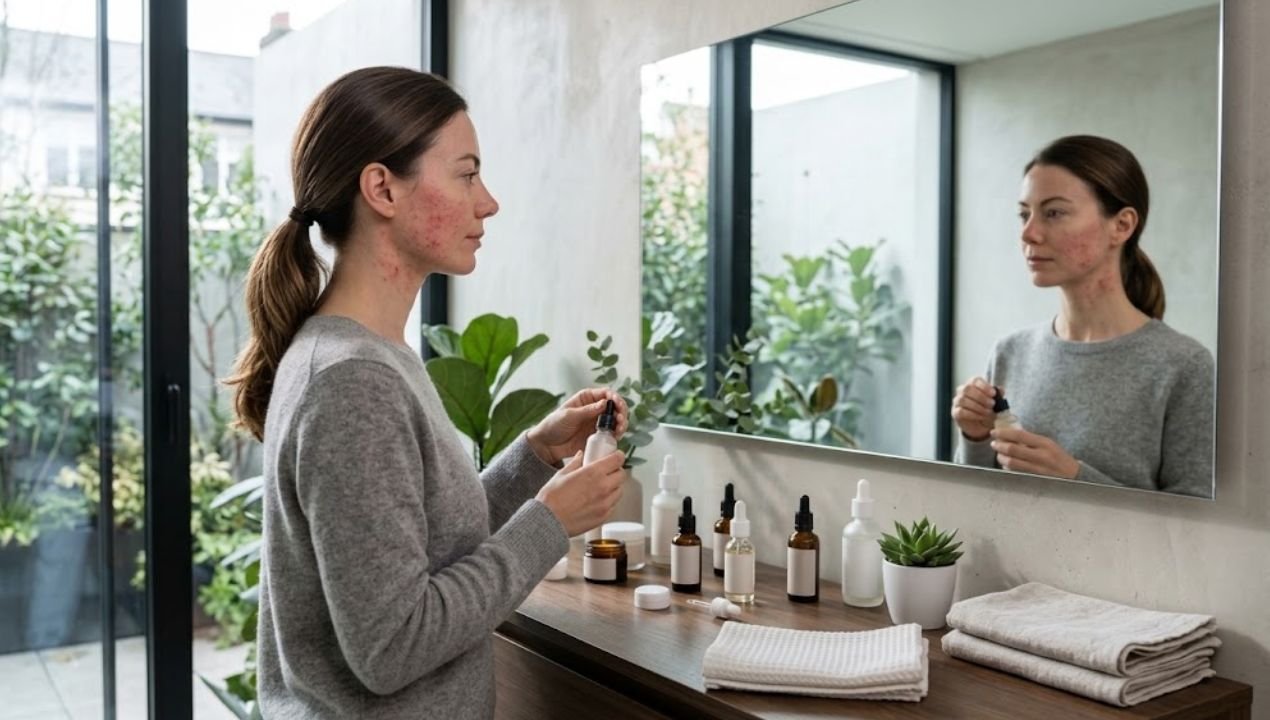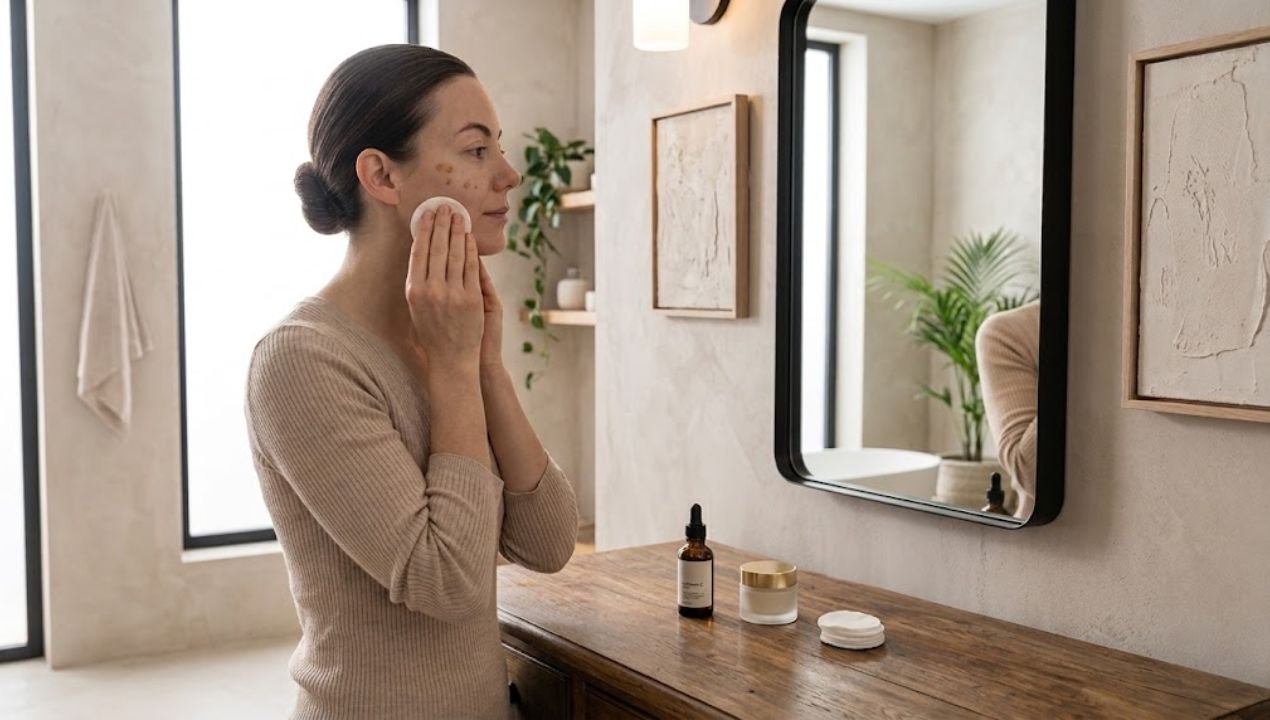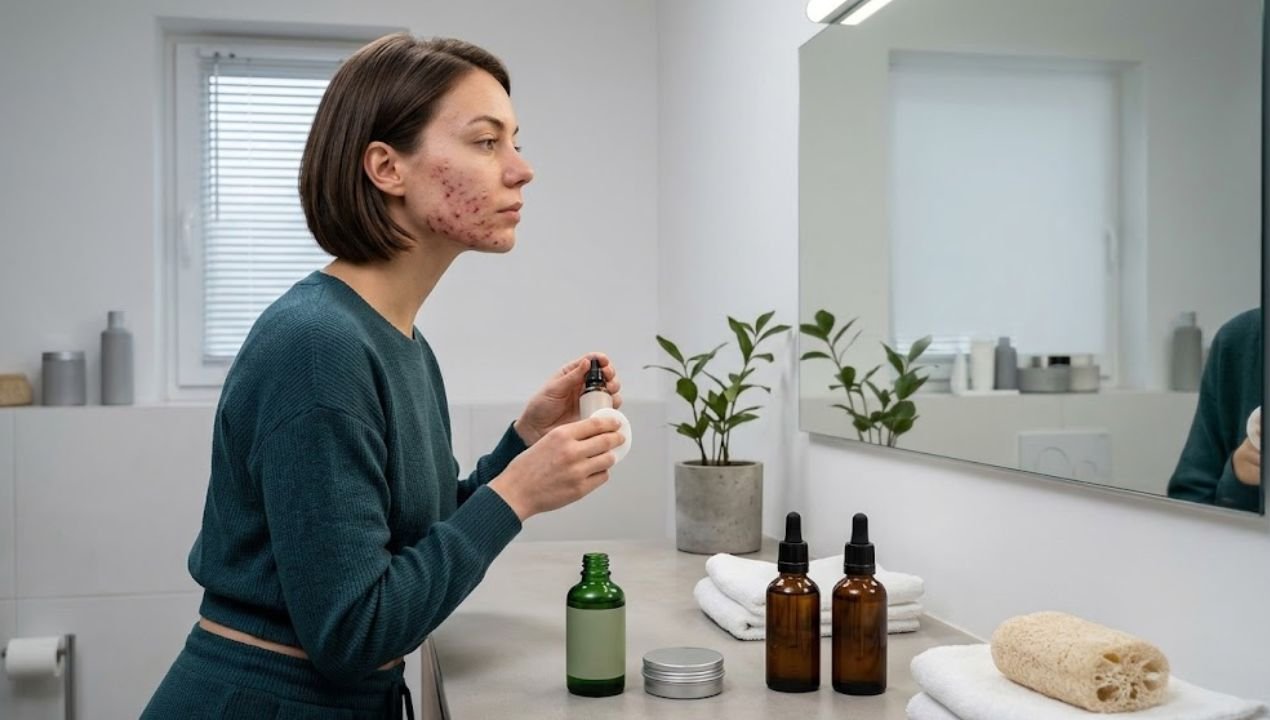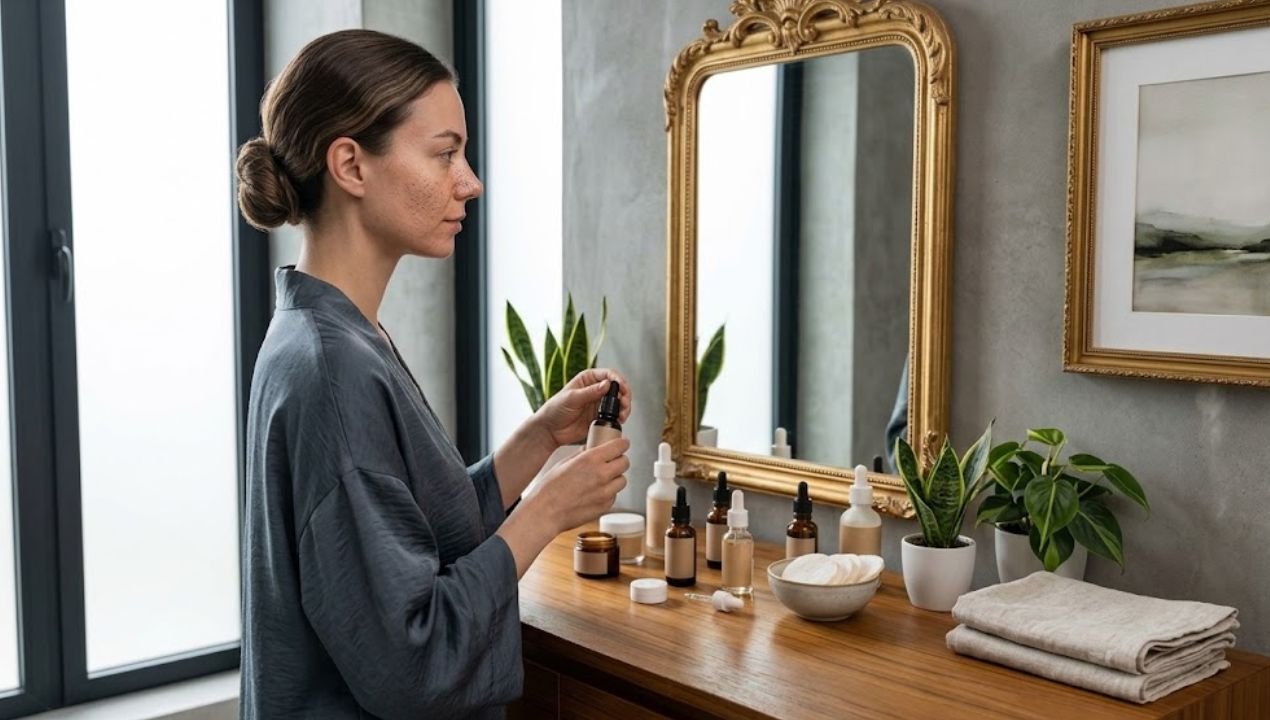
Dry skin explained by Glow & Go: learn why your face feels tight, flaky, or rough, the best barrier-repair ingredients, and a simple routine for Egypt’s climate.
You wash your face, and within minutes it feels tight, as if your skin has shrunk. By the afternoon, small flakes appear around your nose and eyebrows, and makeup starts clinging to rough patches.
Many people think dry skin is only about not drinking enough water, but the real problem is often a damaged skin barrier. When your skin lacks the natural oils and lipids that keep moisture locked in, water escapes faster and dryness returns.
This guide explains what causes dry skin, how to tell it apart from dehydrated skin, and how to build a simple routine that repairs your skin instead of only covering dryness temporarily.
What Is Dry Skin, Exactly?
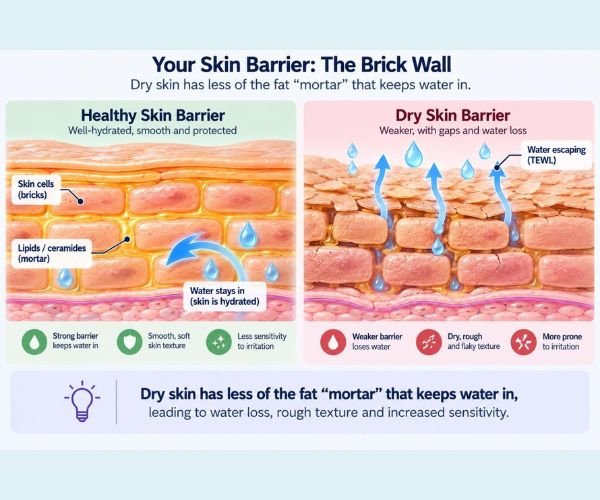
Dry skin, medically known as xerosis, is a skin type that lacks enough oil and natural lipids to stay soft, smooth, and protected.
The outer layer of your skin, called the stratum corneum, works like a protective wall:
- Skin cells act like the bricks.
- Lipids such as ceramides, cholesterol, and fatty acids act like the mortar holding everything together.
When this barrier is healthy, it keeps moisture inside the skin. When the barrier is weakened, water escapes through a process called transepidermal water loss (TEWL), leaving skin feeling tight, rough, or flaky.
Dry skin is different from temporary dehydration. Understanding the difference helps you choose the right products instead of adding unnecessary steps.
Read also about:
Dry Skin vs. Dehydrated Skin: What Is the Difference?
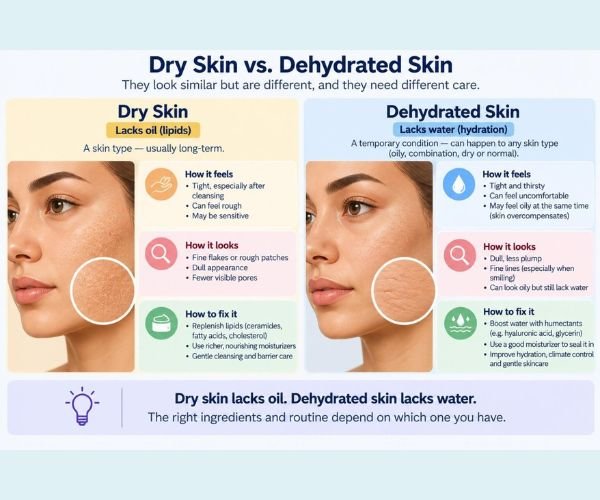
This is one of the most common skincare misunderstandings.
| Dry Skin | Dehydrated Skin | |
|---|---|---|
| What it is | A skin type with low oil and lipids | A temporary condition caused by low water levels |
| Who gets it | Often genetic or related to age and environment | Anyone, including oily skin |
| How it feels | Rough, flaky, tight throughout the day | Tight but may still look shiny |
| Main solution | Add lipids and seal moisture | Add hydration and prevent water loss |
Simply put:
Dry skin lacks oil. Dehydrated skin lacks water.
Some people experience both at the same time, especially when the skin barrier has been weakened.
Why Does Dry Skin Happen? The Main Causes
Genetics and Skin Type
Some people naturally produce less sebum and fewer barrier lipids. Genetics can influence how much natural moisture your skin maintains.
Age
Oil production and ceramide levels naturally decrease with age. Skin that was balanced in your twenties may become drier later.
Harsh Cleansing
Foaming cleansers, strong soaps, and washing too often can remove the oils your skin needs to stay protected.
A “squeaky clean” feeling is not always a sign of healthy skin. It can actually mean the barrier has been stripped.
Hot Water
Hot showers may feel relaxing, but high temperatures can remove skin lipids and increase dryness.
Environment
Air conditioning, dry weather, wind, and low humidity can all increase moisture loss.
Overusing Active Ingredients
Retinoids, exfoliating acids, and acne treatments can weaken the barrier if introduced too quickly or used too frequently.
Why Is Dry Skin Common in Egypt?
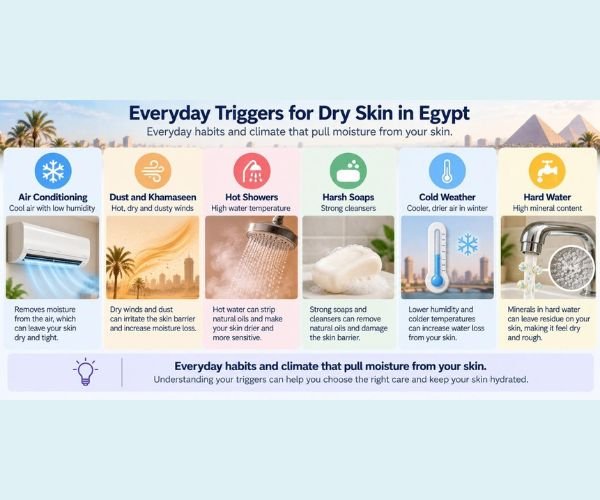
Many people assume Egypt’s hot climate means everyone has oily skin. In reality, several factors can make dryness worse.
Air Conditioning
Homes, offices, cars, and malls often use AC for long periods. Lower indoor humidity can pull moisture away from the skin.
Dry Winds and Climate
Dust, dry air, and seasonal winds can increase moisture loss and make skin feel rough.
Winter Weather
Cooler months combined with hot showers can make dryness more noticeable.
Hard Water
Mineral-rich water may leave residues on the skin and contribute to irritation, especially for sensitive skin.
Strong Cleansing Habits
Using strong soaps or washing too aggressively can remove protective oils.
The Science Behind Repairing Dry Skin
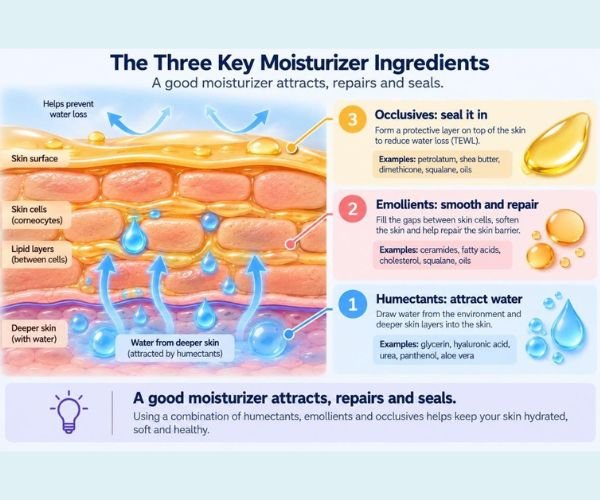
A good moisturizer usually works through three main types of ingredients.
Humectants
Humectants attract water into the skin.
Examples:
- Glycerin
- Hyaluronic acid
- Urea
- Panthenol
These ingredients help improve hydration levels.
Emollients
Emollients fill gaps between skin cells and make the skin feel smoother.
Examples:
- Ceramides
- Squalane
- Fatty acids
- Plant oils
Occlusives
Occlusives create a protective layer that reduces water loss.
Examples:
- Petrolatum
- Shea butter
- Dimethicone
The best moisturizers often combine all three:
Humectants bring water in, emollients repair the barrier, and occlusives lock moisture in.
Common Dry Skin Myths and Mistakes
Myth: Drinking More Water Will Fix Dry Skin :- Staying hydrated is important for overall health, but dry skin is usually a barrier issue. Moisturizing ingredients are often more effective for improving skin comfort.
Myth: Hyaluronic Acid Alone Is Enough :- Hyaluronic acid attracts water, but without a moisturizer to seal that hydration, moisture can escape again.
Myth: Flaky Skin Needs Scrubbing :- Harsh scrubs can damage an already weak barrier and increase irritation.
Myth: Natural Oils Are All You Need :- Oils can soften skin, but they do not attract water. A complete moisturizer usually works better.
Myth: Tingling Means the Product Is Working :- Stinging often means irritation, especially when the skin barrier is damaged.
How to Treat Dry Skin Properly
Use a Gentle Cleanser
Choose cream, milk, or low-foaming cleansers instead of harsh products.
Use Lukewarm Water
Avoid very hot water and keep washing time short.
Moisturize While Skin Is Damp
Applying moisturizer shortly after washing helps trap water inside the skin.
Choose Richer Textures
Dry skin usually benefits more from creams and balms than lightweight gels.
Protect Your Skin Barrier
Avoid introducing multiple strong actives at the same time.
Protect Against the Environment
Avoid direct AC airflow on your face and consider using a humidifier if indoor air feels very dry.
Ingredients That Help Dry Skin
Ceramides
Ceramides help restore the lipids that support the skin barrier.
Best for:
- Dry skin
- Sensitive skin
- Barrier damage
Glycerin
A powerful humectant that attracts water into the skin.
Hyaluronic Acid
Helps hydrate the skin surface when applied on damp skin and followed by moisturizer.
Urea
Helps soften rough and flaky skin.
Petrolatum and Occlusives
Create a protective layer that reduces moisture loss.
Squalane
A lightweight emollient that mimics natural skin oils.
Niacinamide
Supports the skin barrier and may help improve moisture balance.
How to Build a Dry Skin Care Routine for Beginners
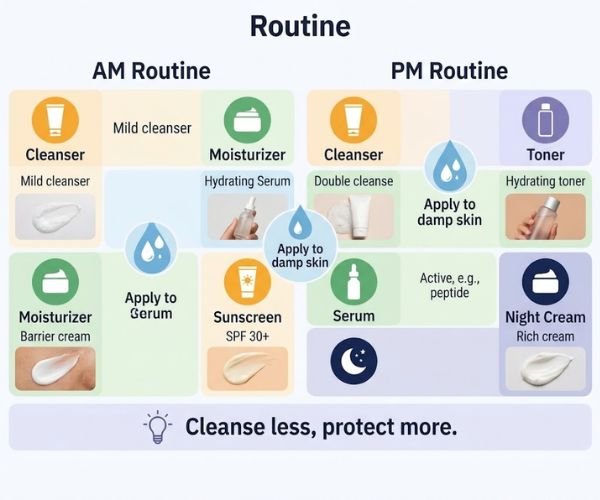
Morning Routine
- Gentle cleanser or lukewarm water
- Hydrating serum (optional)
- Rich moisturizer with barrier-supporting ingredients
- Sunscreen SPF 30+
Evening Routine
- Gentle cleanser
- Hydrating treatment if needed
- Rich moisturizer
- Occlusive balm on very dry areas if needed
The goal is simple: cleanse less, protect more, and give your skin time to rebuild its barrier.
Want a routine based on your actual skin type? The Glow & Go Skin Quiz helps identify whether your skin is truly dry, dehydrated, or dealing with barrier damage.

What NOT to Do When You Have Dry Skin
Avoid:
- Hot water on your face
- Harsh soaps
- Physical scrubs
- Alcohol-heavy toners
- Using multiple exfoliating acids
- Applying strong treatments too quickly
- Skipping moisturizer
How Long Does It Take to Fix Dry Skin?
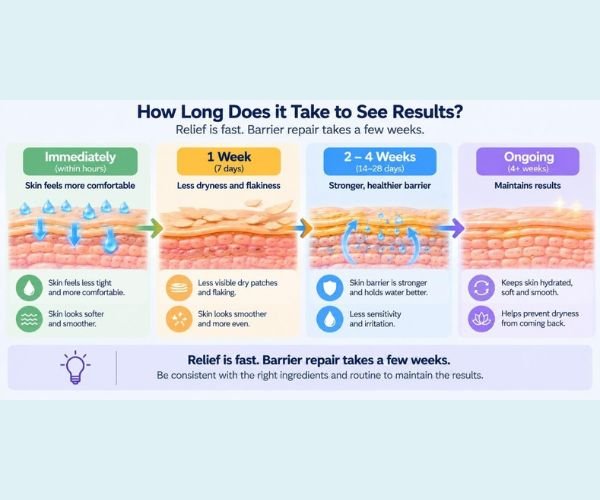
Dryness can improve gradually with consistent care.
- Immediately: A good moisturizer can reduce tightness quickly.
- Within 1 week: Flaking and discomfort may improve.
- 2–4 weeks: The skin barrier can become stronger and more comfortable.
- Ongoing: Dry skin often needs continuous maintenance.
Glow & Go helps you understand your skin needs and create a routine that matches your concerns.
When Should You See a Dermatologist?
Consider seeing a dermatologist if you have:
- Skin that cracks or bleeds
- Severe itching
- Red, scaly, or painful patches
- Signs of infection
- Dryness that does not improve after several weeks of gentle care
F&Q
What causes dry skin?
Dry skin can be caused by genetics, age, low oil production, harsh cleansing, hot water, air conditioning, and environmental factors.
Is my skin dry or dehydrated?
Dry skin lacks oil and usually feels rough or flaky. Dehydrated skin lacks water and can still appear shiny or oily.
Does drinking water fix dry skin?
Drinking enough water is healthy, but improving the skin barrier with the right moisturizer is usually more important.
What is the best moisturizer for dry skin?
Look for moisturizers containing ingredients like ceramides, glycerin, hyaluronic acid, and occlusives such as petrolatum.
Can I use hyaluronic acid on dry skin?
Yes. Apply it on damp skin and follow with a moisturizer to prevent moisture loss.
Should dry skin exfoliate?
Only gently and occasionally. Avoid harsh scrubs.
Why does my skin get drier under AC?
Air conditioning lowers humidity, which can increase water loss from the skin.
When should I see a dermatologist for dry skin?
If your skin cracks, bleeds, becomes very itchy, or does not improve with a gentle routine.
Conclusion
Dry skin is not simply a lack of water. It is often a problem with the skin barrier and the ability to keep moisture inside.
A gentle cleanser, barrier-supporting moisturizer, and daily sunscreen can help restore comfort and improve the look of dry, rough skin over time.