Oily skin explained by Glow & Go: learn what causes excess oil, how to control shine, the best ingredients for oily skin, and a simple routine for Egypt’s heat.
You wash your face in the morning, and by midday your forehead is shiny, your nose looks greasy, and your makeup starts sliding off. So you wash again, use stronger products, or skip moisturizer because your skin already feels oily.
But oily skin is not dirty skin, and removing all oil is not the solution. The goal is to balance oil production while keeping your skin barrier healthy.
This guide explains what causes oily skin, why it becomes harder to manage in Egypt’s climate, which ingredients can help control shine, and how to build a simple routine for beginners.
What Is Oily Skin, Exactly?
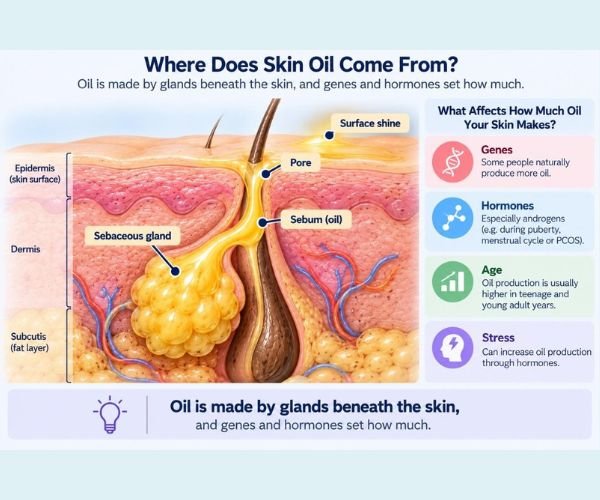
Oily skin is a skin type where the sebaceous glands produce more sebum (oil) than average.
Sebum is not the enemy. It helps:
- Keep skin soft and flexible.
- Support the protective layer on the skin surface.
- Carry antioxidants such as vitamin E.
The problem happens when there is excess sebum. Too much oil can lead to:
- Excess shine
- A greasy feeling
- Enlarged-looking pores
- Clogged pores and breakouts for some people
Common signs of oily skin include:
- Shine on the forehead, nose, and chin (T-zone) within a few hours of washing.
- Makeup that slides or breaks down during the day.
- Visible pores, especially around the nose and cheeks.
- A tendency toward blackheads or breakouts.
- Skin that rarely feels tight or flaky unless it is also dehydrated.
Understanding your skin type is important because oily skin does not always need stronger oil-removing products. Sometimes it needs more hydration and barrier support.
Read also about:
Oily Skin vs. Combination Skin vs. Oily-Dehydrated Skin
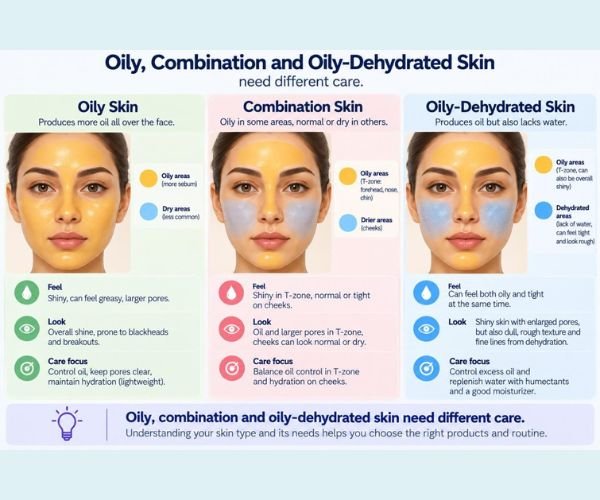
Many people confuse oiliness with dehydration. However, oil and water are two different things.
| Oily Skin | Combination Skin | Oily + Dehydrated Skin | |
|---|---|---|---|
| Where it is oily | All over the face | Mainly T-zone | All over or T-zone |
| Cheeks | Usually oily | Normal or dry | Can feel tight |
| After washing | Comfortable, then shiny fast | T-zone shiny, cheeks tight | Tight and shiny |
| Main need | Balance oil and keep pores clear | Treat different zones | Restore hydration while controlling oil |
Simply put:
Oily skin has excess oil. Dehydrated skin lacks water.
Some people experience both at the same time, especially when using harsh products.
Why Does Oily Skin Happen? The Main Causes
Genetics
The size and activity of your sebaceous glands are largely influenced by genetics. If oily skin runs in your family, you may naturally produce more sebum.
Hormones
Androgens are hormones that stimulate sebaceous glands.
Oil production often increases during puberty and may change with hormonal fluctuations.
Age
Sebum production is usually higher during teenage years and early adulthood, then gradually decreases with age.
Climate and Season
Heat can increase sebum production and make oil spread more across the skin’s surface.
This is why many people notice their face becomes shinier during summer.
Over-Stripping Your Skin
Using harsh cleansers, alcohol-heavy toners, or frequent scrubbing can damage the skin barrier.
The goal is not to remove all oil. Healthy skin needs some oil to stay balanced.
Why Is Oily Skin Common in Egypt?
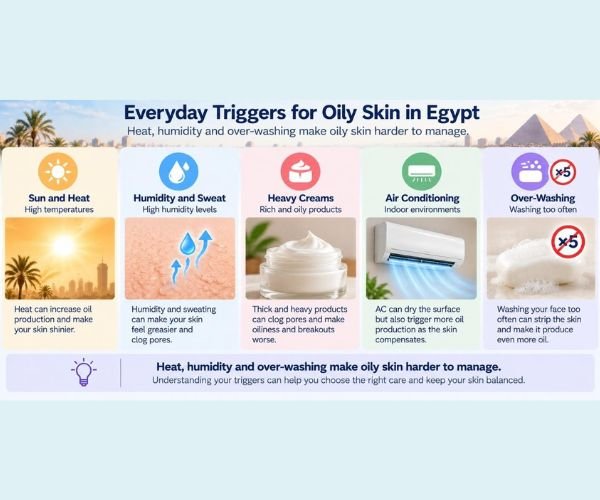
Egypt’s climate and daily habits can make oily skin more noticeable.
Heat and Sweat
Warm weather can increase shine. Sweat mixes with oil on the skin and may make the face feel heavier.
Humidity
Humidity can make oil spread across the skin’s surface, increasing the appearance of shine.
Heavy Products
Thick creams, heavy sunscreens, and rich makeup may feel uncomfortable in hot weather and may contribute to clogged pores.
Dust and Pollution
Environmental particles can settle on oily skin, making it feel less fresh.
Air Conditioning
Moving between hot outdoor weather and cold AC environments can leave oily skin dehydrated underneath.
Over-Cleansing
Washing many times a day with strong products can irritate the skin barrier.
The Science Behind Oil Control
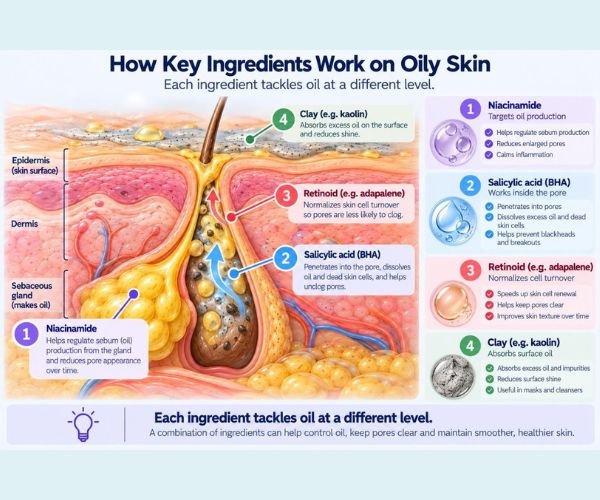
No skincare product can permanently stop oil production, but some ingredients can help manage excess shine and its effects.
Niacinamide
Niacinamide may help reduce sebum production while supporting the skin barrier and calming redness.
It is a gentle option for many oily skin types.
Salicylic Acid
Salicylic acid is oil-soluble, which allows it to penetrate pores and help clear oil and dead skin buildup.
It is especially useful for blackheads and clogged pores.
Retinoids
Retinoids help normalize skin cell turnover and may improve the appearance of pores and texture over time.
Clay
Clay ingredients such as kaolin and bentonite absorb surface oil.
The effect is temporary but useful before events or when shine is a concern.
Zinc
Zinc-based ingredients may support oil control and calming effects.
Glow & Go helps you understand your skin needs and create a routine that matches your concerns.

Common Oily Skin Myths and Mistakes
Myth: Oily Skin Does Not Need Moisturizer
Oily skin can still become dehydrated. A lightweight, non-comedogenic moisturizer helps maintain a healthy barrier.
Myth: Washing More Removes Oil Permanently
Oil production continues throughout the day. Over-washing can irritate your skin and make it harder to manage.
Myth: Alcohol Toners Are Best for Oily Skin
The tight feeling after using alcohol-based products often means the barrier has been stripped.
Myth: Oily Skin Does Not Need Sunscreen
Oil does not protect your skin from UV damage. Lightweight gel or fluid sunscreens are better options for oily skin.
Myth: Pores Can Be Permanently Shrunk
Pore size is mostly genetic. Keeping pores clear can make them appear smaller, but they cannot be closed permanently.
How to Control Oily Skin Without Damaging It
Cleanse Gently
Use a gentle cleanser twice daily. Avoid products that leave your skin feeling tight.
Use Lightweight Moisturizer
Choose gel or fluid moisturizers labeled non-comedogenic.
Wear Sunscreen Daily
Oil-free, gel, or matte sunscreen formulas can feel more comfortable in Egypt’s heat.
Add One Active Ingredient
Start with one proven ingredient:
- Niacinamide for oil balance.
- Salicylic acid for clogged pores.
- Retinoids for texture and pore appearance.
Use Blotting Papers
Blotting papers remove excess surface oil without repeatedly washing your face.
Try Clay Masks
Clay masks can temporarily reduce shine when used once or twice weekly.
How to Build an Oily Skin Care Routine for Beginners
Morning Routine
- Gentle gel cleanser
- Niacinamide serum (optional)
- Lightweight moisturizer
- Oil-free SPF 30+ sunscreen
Evening Routine
- Gentle cleanser
- Salicylic acid or retinoid (do not start both together)
- Lightweight moisturizer
Weekly
- Clay mask once or twice weekly if needed
Want a routine designed around your skin type? The Glow & Go Skin Quiz helps identify whether your skin is balanced oily, acne-prone oily, or oily but dehydrated.
What NOT to Do When You Have Oily Skin
Avoid:
- Washing your face too many times daily.
- Using harsh alcohol-based toners.
- Scrubbing aggressively.
- Skipping moisturizer.
- Skipping sunscreen.
- Starting several active ingredients together.
- Using heavy products that feel uncomfortable in hot weather.
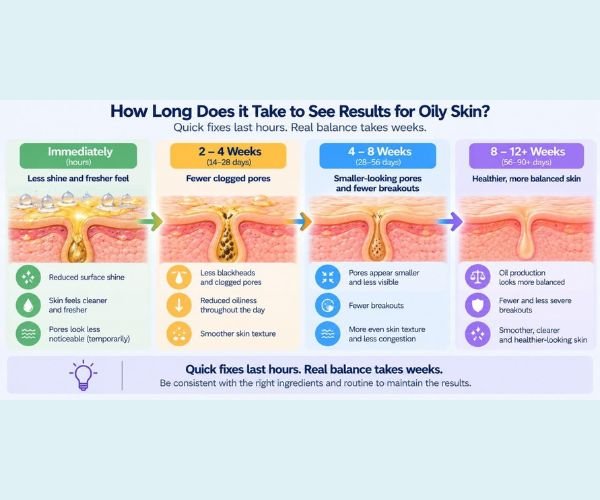
How Long Does It Take to Control Oily Skin?
Managing oily skin takes consistency.
- Immediately: Blotting papers and mattifying products reduce shine temporarily.
- 2–4 weeks: A gentle routine can help skin feel more balanced.
- 4–8 weeks: Ingredients like niacinamide and salicylic acid may improve shine and clogged pores.
- 8–12 weeks: Retinoids may improve texture and pore appearance.
[IMAGE 6 — INSERT HERE]
Oily skin is a skin type, so maintenance is important. The goal is balance, not removing all oil.
When Should You See a Dermatologist?
Consider professional advice if you have:
- Persistent painful acne.
- Red, flaky, or greasy patches.
- Sudden changes in oil production.
- Oiliness that does not improve despite a consistent routine.
A dermatologist can recommend treatments based on your specific skin condition.
F&Q
What causes oily skin?
Oily skin is mainly caused by genetics and hormones that influence sebum production. Heat and humidity can make it appear worse.
Should oily skin use moisturizer?
Yes. A lightweight non-comedogenic moisturizer helps keep the skin barrier healthy.
Does washing your face more reduce oil?
No. Over-washing can irritate and dehydrate the skin. Gentle cleansing twice daily is usually enough.
Can oily skin be dehydrated?
Yes. Oily skin can lack water and feel tight while still looking shiny.
Does niacinamide reduce oil?
Niacinamide may help reduce facial sebum production and support the skin barrier.
Which sunscreen is best for oily skin?
Oil-free, gel, fluid, or matte sunscreens are usually more comfortable for oily skin.
Why does my skin get oilier in summer?
Heat and humidity can increase shine and make oil spread more easily across the skin.
Can I permanently shrink my pores?
No. Pore size is mostly genetic, but keeping pores clear can make them look smaller.
Conclusion
Understanding oily skin helps you manage shine without damaging your skin barrier. The goal is not to remove all oil, but to create balance with gentle cleansing, lightweight hydration, sunscreen, and proven ingredients.