Oily forehead, dry cheeks? Learn what causes combination skin, how to identify it, and a simple zone-based routine that works in Egypt’s climate.
By lunchtime your forehead and nose are shiny, yet your cheeks feel tight and slightly flaky. An oil-control product dries out your cheeks, while a rich cream makes your T-zone feel heavy.
It can feel like your face has two different skin types. The good news is that combination skin is one of the most common skin types, and there is a simple reason behind it. Your T-zone naturally contains more oil glands than your cheeks.
This guide explains what combination skin is, how to know if you have it, why it becomes harder to manage in Egypt, and how to build a simple routine that treats each area correctly.
What Is Combination Skin, Exactly?
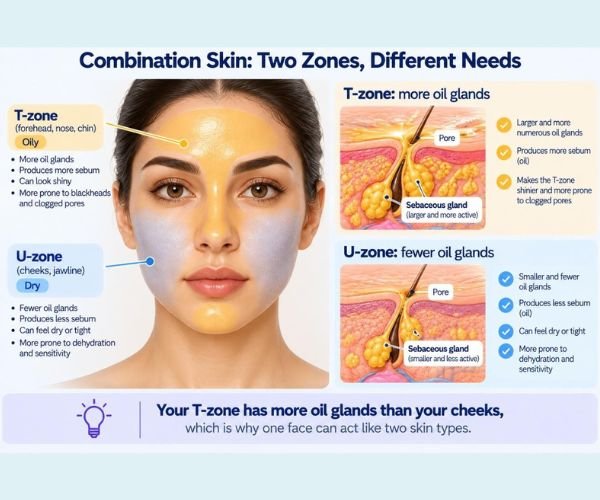
Combination skin is a skin type where different areas of the face behave differently.
Usually:
- The T-zone (forehead, nose, and chin) is oily or shiny, with more visible pores.
- The U-zone (cheeks, jawline, and around the eyes) is normal, dry, or sometimes sensitive.
Combination skin is not a skin problem or disease. It is simply a common pattern of how oil is distributed across the face.
Your forehead, nose, and chin contain a higher density of sebaceous glands, which produce sebum (oil). This is why those areas often become shiny faster than the cheeks.
Read also about:
How to Know If You Have Combination Skin
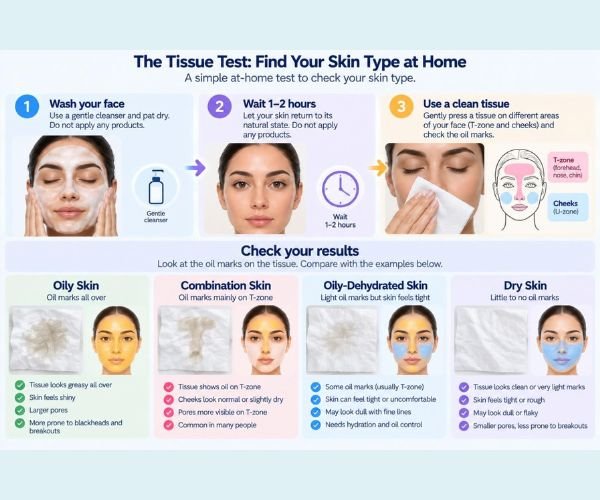
A simple at-home test can help you understand your skin type:
- Wash your face with a gentle cleanser.
- Do not apply any skincare products.
- Wait 1–2 hours.
- Check your skin in natural light and gently press a clean tissue on different areas.
| What You Notice | Likely Skin Type |
|---|---|
| Oil on forehead and nose, but cheeks feel comfortable or tight | Combination skin |
| Oil across the whole face, including cheeks | Oily skin |
| No oil and skin feels tight or rough | Dry skin |
| Little oil and comfortable skin everywhere | Balanced skin |
Combination Skin vs. Oily-Dehydrated Skin
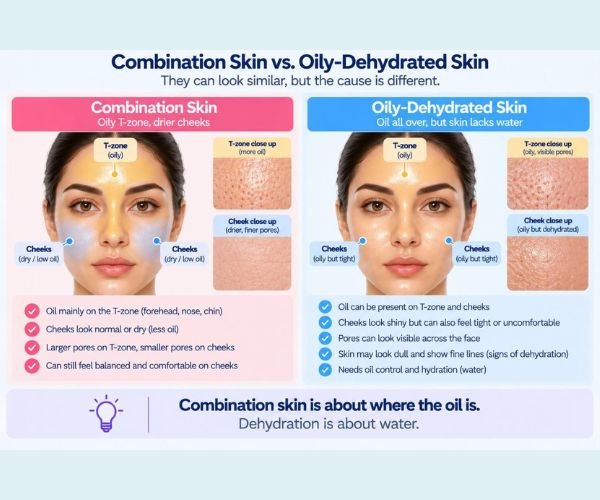
These two skin types are often confused.
Combination skin:
- The cheeks genuinely produce less oil.
- The T-zone is naturally oilier.
Oily-dehydrated skin:
- The skin may produce oil everywhere.
- The skin lacks water, causing tightness and discomfort.
Simply put:
Combination skin is about where the oil is. Dehydration is about how much water the skin has.
You can also have both at the same time.
Why Does Combination Skin Happen?
Uneven Oil-Gland Distribution
The main reason behind combination skin is that oil glands are not distributed equally across the face.
The forehead, nose, and chin usually have more sebaceous glands than the cheeks, which leads to more oil production in the T-zone.
Genetics
The size and activity of your oil glands are influenced by genetics. Your natural skin pattern can be inherited from your family.
Hormones
Androgens stimulate oil production. This is why skin can become oilier during puberty and may change with hormonal fluctuations.
Seasons and Climate
Combination skin often changes with weather.
- Hot and humid months can increase T-zone shine.
- Cold weather and air conditioning can make cheeks feel drier.
Using the Wrong Products
Using strong oil-control products all over the face can dry out the cheeks.
Using heavy creams all over can make the T-zone feel greasy.
The solution is not more products — it is smarter placement.
Combination Skin in Egypt: What Makes It Harder?

Egypt’s climate can make combination skin more challenging.
Hot Summers
Warm weather can increase oil production, making the forehead, nose, and chin look shinier.
Air Conditioning
Long hours in AC environments can increase moisture loss, making cheeks feel tight or dry.
Hot Streets and Cold Offices
Moving between outdoor heat and indoor AC can create a mix of oily and dry sensations.
Dust and Pollution
Environmental particles can collect more easily on oily areas, which may lead people to over-cleanse their skin.
Heavy Sunscreens
Some rich formulas can feel uncomfortable on the T-zone, especially in hot weather.
Glow & Go helps you understand your skin needs and create a routine that matches your concerns.

The Science Behind Caring for Combination Skin
The best approach for combination skin is simple:
Balance the whole face, then target specific zones.
Niacinamide
Niacinamide may help reduce oil production while supporting the skin barrier.
It is one of the most useful ingredients because it can benefit both oily and dry areas.
Hyaluronic Acid and Glycerin
These ingredients hydrate the skin without adding extra oil.
They are especially helpful for cheeks that feel tight.
Ceramides
Ceramides help restore the skin barrier and support dry or sensitive areas.
Salicylic Acid
Salicylic acid helps clear clogged pores and blackheads.
It works best on oily areas like the T-zone rather than dry cheeks.
Clay
Clay masks absorb surface oil temporarily.
A practical approach is multi-masking:
- Clay on the T-zone.
- Hydrating products on dry cheeks.
Retinoids
Retinoids help improve texture, pores, and clogged areas.
They should be introduced slowly because they can cause dryness.
Common Combination Skin Myths and Mistakes
Myth: You Need Two Completely Separate Routines
Most people only need one basic routine with targeted products for specific areas.
Myth: Oil-Control Products Should Go Everywhere
Applying drying products to cheeks can cause irritation and tightness.
Myth: Rich Creams Should Be Used All Over
Heavy creams may feel uncomfortable on oily areas.
Myth: Combination Skin Never Changes
Combination skin can shift with seasons, hormones, and age.
Myth: Shiny Skin Means You Need More Cleansing
Oil production is natural. Over-washing can damage the barrier.
How to Care for Combination Skin
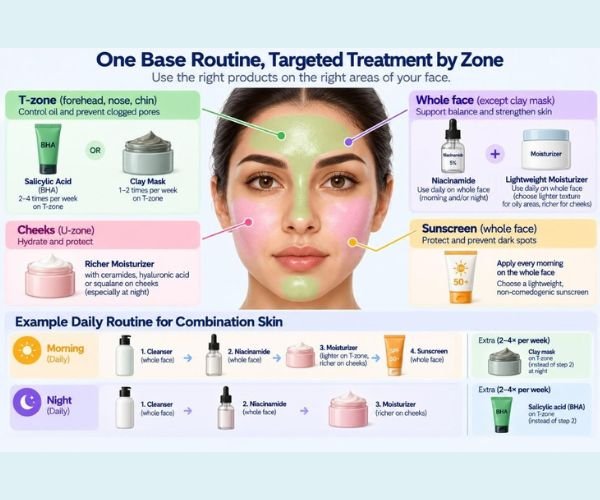
Use One Gentle Cleanser
Choose a mild cleanser that does not leave your cheeks feeling tight.
Moisturize the Whole Face
Use a lightweight moisturizer everywhere.
Add extra moisture only to dry areas if needed.
Treat the T-Zone Separately
Use ingredients like:
- Salicylic acid for clogged pores.
- Clay masks for excess shine.
Use Niacinamide
Niacinamide can be applied across the whole face.
Wear Sunscreen Daily
Choose a lightweight SPF 30+ sunscreen suitable for daily use.
Adjust With Seasons
Your summer and winter routines may need to be slightly different.
Want a routine based on your exact skin type? The Glow & Go Skin Quiz helps identify whether your combination skin is balanced, acne-prone, or barrier-damaged.
How to Build a Combination Skin Routine for Beginners
Morning Routine
- Gentle cleanser
- Niacinamide serum
- Lightweight moisturizer
- SPF 30+ sunscreen
Evening Routine
- Gentle cleanser
- Salicylic acid on the T-zone or retinoid treatment
- Moisturizer
- Extra cream on dry cheeks if needed
Weekly
- Clay mask on oily areas
- Hydrating treatment on dry areas
The goal is simple: one routine for your whole face, with targeted care where your skin needs it.
What NOT to Do With Combination Skin
Avoid:
- Applying harsh oil-control products everywhere.
- Using heavy creams on oily areas.
- Scrubbing your T-zone aggressively.
- Using alcohol-heavy toners.
- Starting multiple active ingredients at once.
- Keeping the same routine all year without adjusting.
How Long Does It Take to Balance Combination Skin?
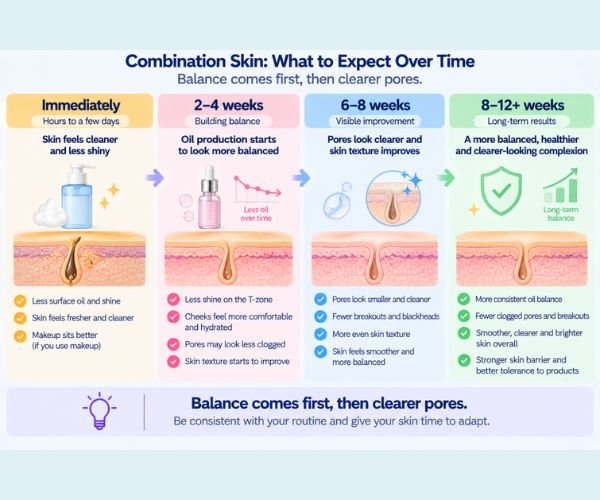
Results require consistency.
- Immediately: Moisturizer can improve tightness, and blotting can reduce shine.
- 2–4 weeks: Skin often feels more balanced.
- 6–8 weeks: Ingredients like niacinamide and salicylic acid may improve oiliness and clogged pores.
- 8–12 weeks: Retinoids may improve texture and pore appearance.
Combination skin is a natural skin type. The goal is balance, not completely changing your skin.
When Should You See a Dermatologist?
Consider professional advice if you have:
- Persistent painful acne.
- Red, flaky, greasy patches.
- Severe irritation.
- Sudden changes in oil production.
- Dry patches that crack or become painful.
A dermatologist can recommend treatments based on your specific skin concerns.
F&Q
What is combination skin?
Combination skin is when some areas of the face are oily, usually the T-zone, while other areas such as the cheeks are normal or dry.
How do I know if I have combination skin?
Wash your face, wait 1–2 hours without products, and check whether your forehead and nose become oily while your cheeks remain comfortable or dry.
Why is my forehead oily but my cheeks dry?
The T-zone usually contains more oil glands than the cheeks, causing different behavior in different areas.
What moisturizer is best for combination skin?
A lightweight moisturizer with hydrating ingredients like glycerin, hyaluronic acid, and ceramides is usually suitable.
Should I use different products on different parts of my face?
Yes. Keep one base routine and apply targeted treatments only where needed.
Is niacinamide good for combination skin?
Yes. It can support the skin barrier and help manage oil.
Does combination skin change with seasons?
Yes. Heat can increase T-zone oil, while winter and AC can increase cheek dryness.
Can combination skin be acne-prone?
Yes. Breakouts often appear in oily areas, especially the T-zone.
Conclusion
Combination skin does not mean your skin is confused. It simply means different areas have different needs.
A balanced routine with gentle cleansing, lightweight hydration, sunscreen, and targeted treatments can help your skin feel more comfortable and consistent.