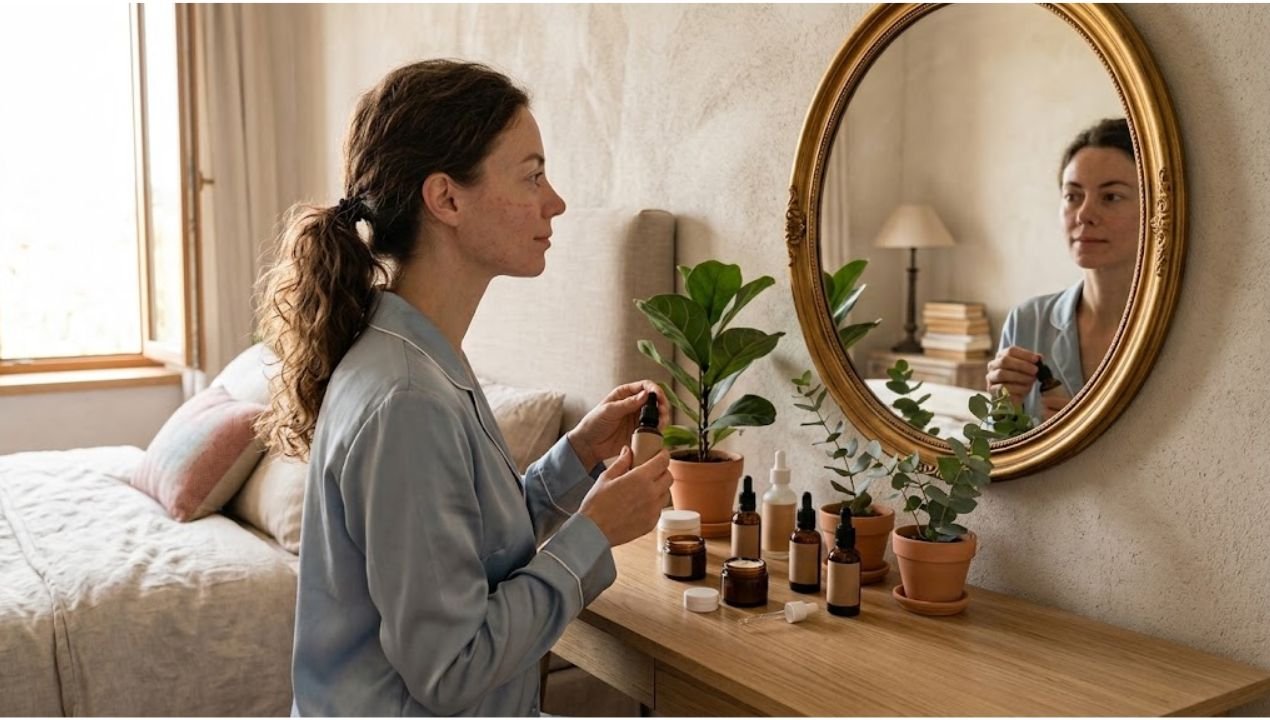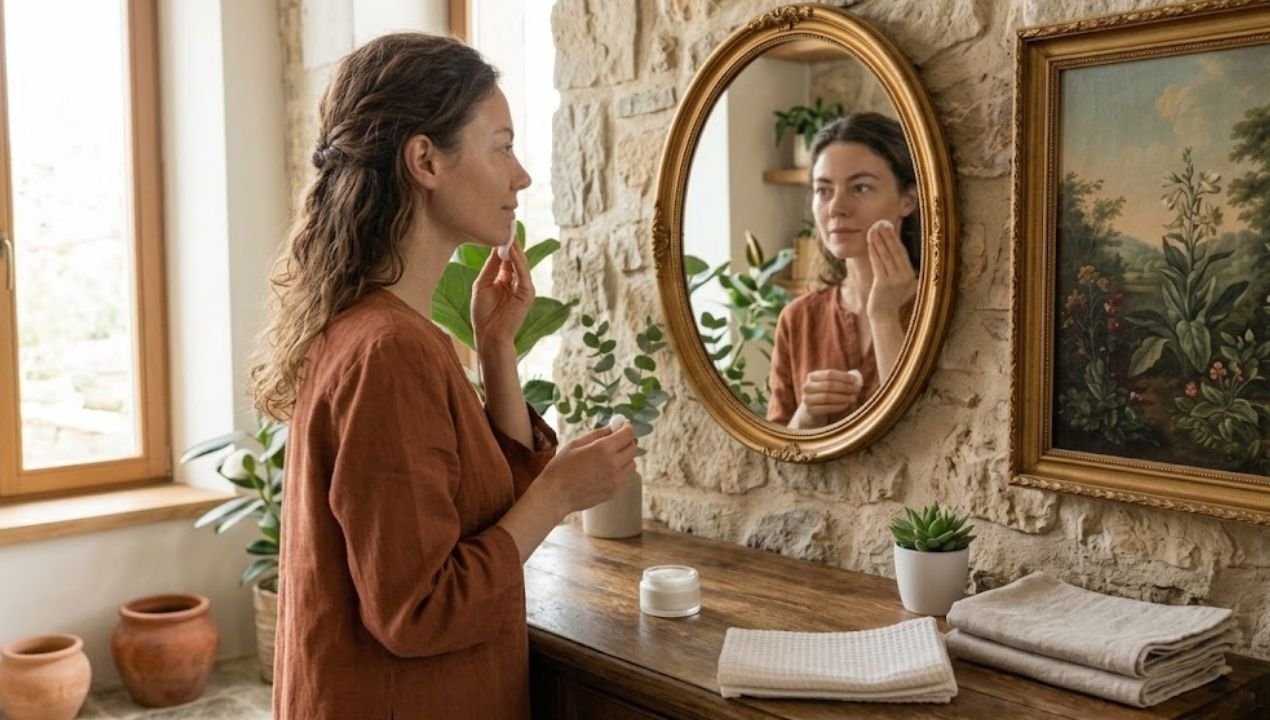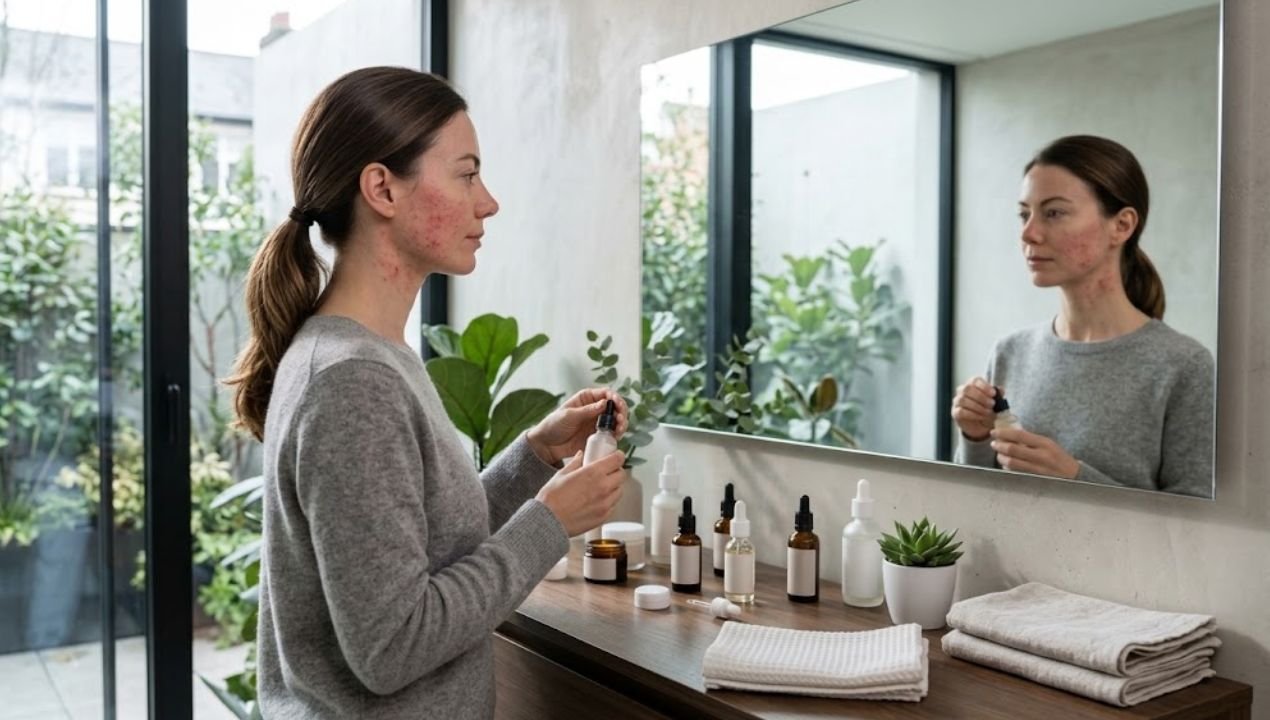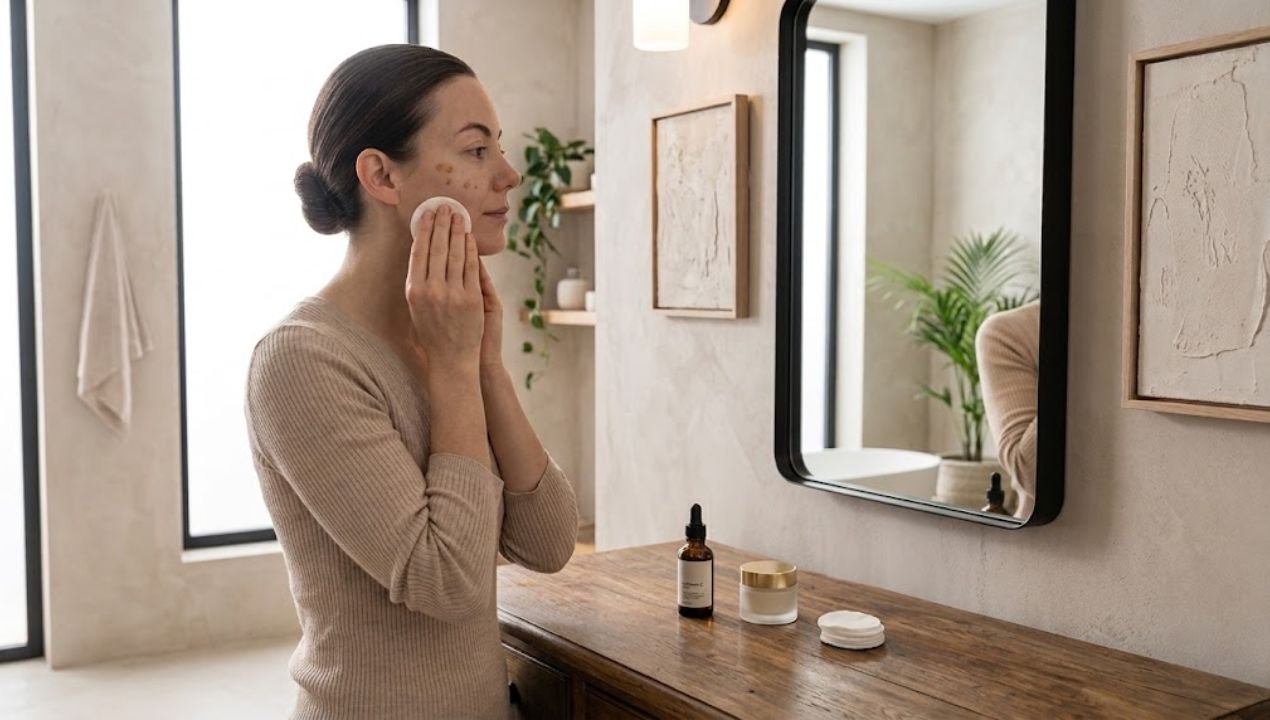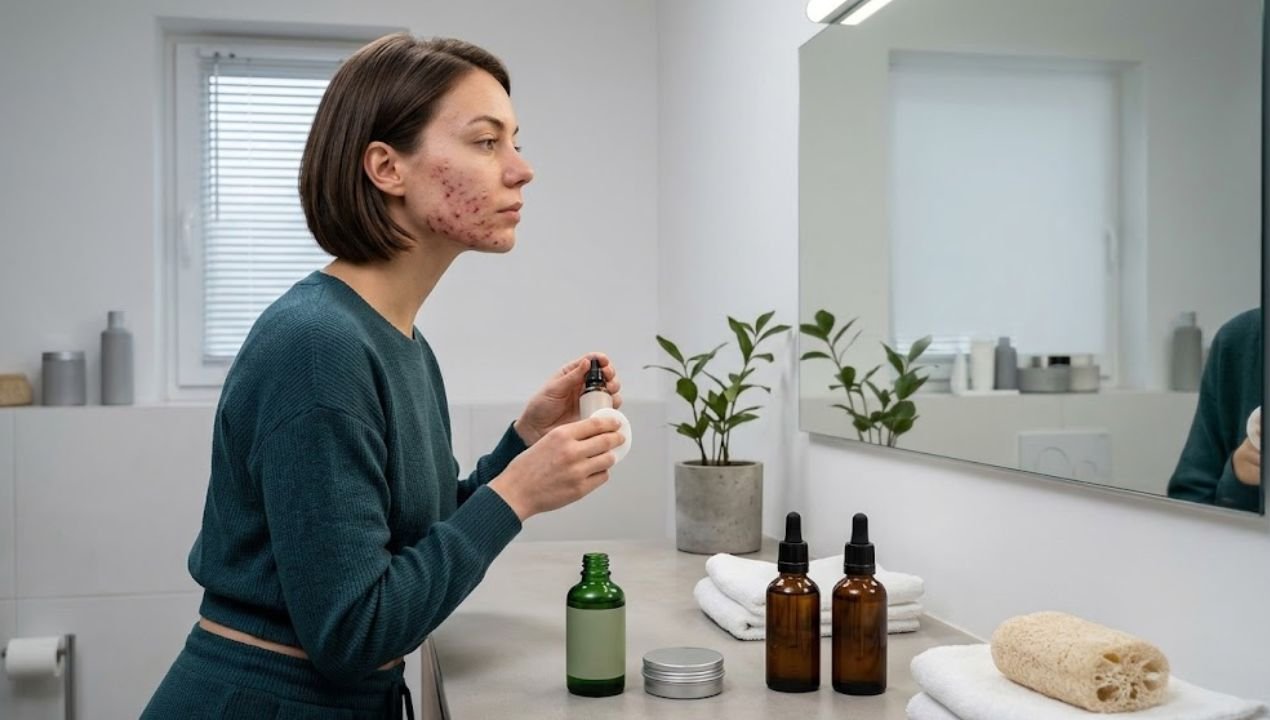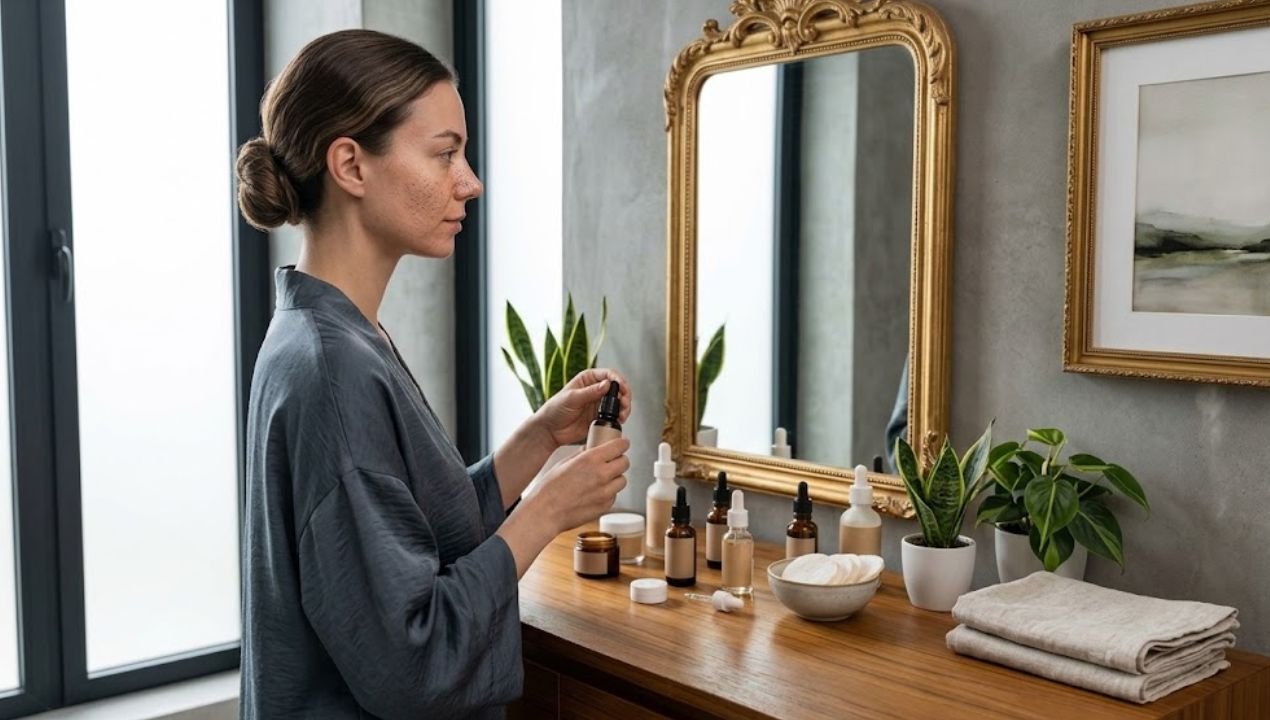
Between work, family, traffic, and endless responsibilities, finding time for yourself can feel impossible. But a self-care routine doesn’t need an entire afternoon or expensive products.
Whether you have five minutes or a full hour, the secret is building simple habits that fit your skin, schedule, and lifestyle.
What Should a Self-Care Routine Include?
A good self-care routine supports your skin, body, and emotional wellbeing without overwhelming your schedule.
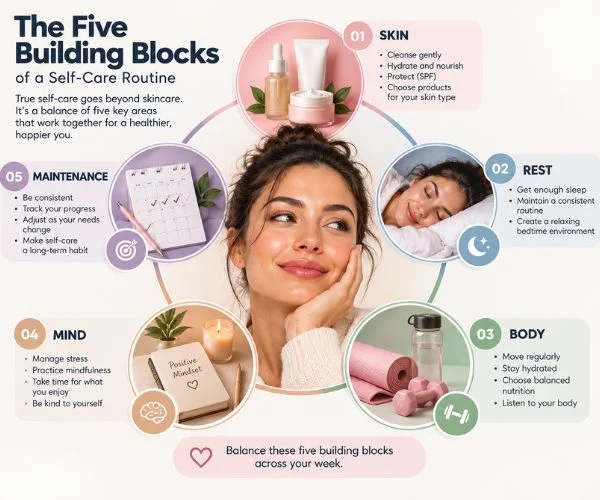
It doesn’t have to include everything every day. Instead, focus on five essential areas.
| Self-Care Element | Why It Matters | Simple Example |
|---|---|---|
| Skincare | Supports your skin barrier and addresses concerns | Cleanse, moisturize, sunscreen |
| Rest | Supports recovery and overall health | Consistent sleep schedule |
| Body Care | Supports physical wellbeing | Walking, hydration, balanced meals |
| Mental Wellbeing | Helps manage everyday stress | Deep breathing, prayer, quiet time |
| Maintenance | Keeps habits relevant and sustainable | Weekly or monthly check-in |
The goal is consistency, not perfection.
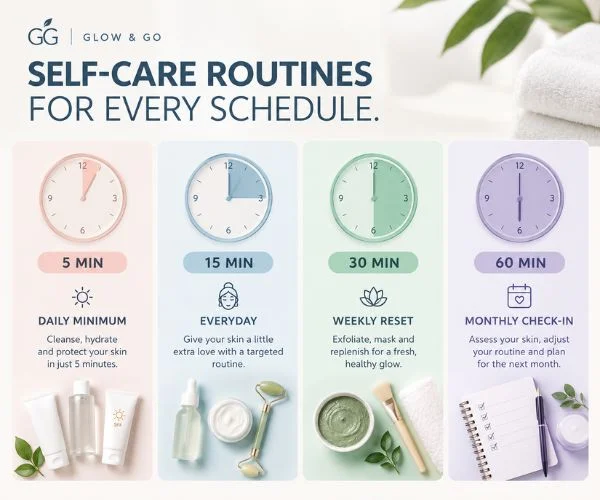
Quick Answer: An effective self-care routine combines basic skincare, adequate sleep, movement, hydration, and moments of relaxation. Start with a five-minute daily routine, add a 15-minute option for normal days, a 30-minute weekly reset, and a 60-minute monthly check-in. Adjust each routine to your skin type, available time, energy, and current life stage.
Read also about:
Why a Personalized Self-Care Routine Works Better
Many online self-care routines look beautiful but aren’t practical for everyday life.
A routine designed for someone with unlimited free time may not work for a student preparing for exams, a working parent, or someone with irregular shifts.
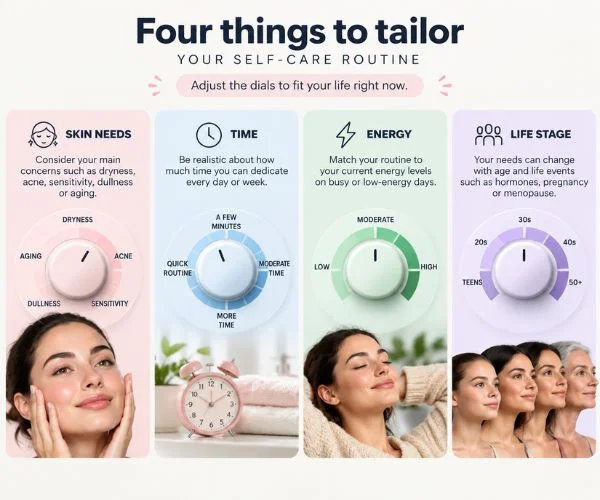
The best approach is to personalize four things.
1. Your Skin’s Needs
Your skin type, sensitivity, and main concerns determine which skincare products make sense.
Oily, acne-prone skin may benefit from lightweight moisturizers, while dry skin may need richer textures.
2. Your Available Time
Choose a realistic routine based on whether you have 5, 15, 30, or 60 minutes.
3. Your Energy Level
On exhausting days, completing your basic routine is enough.
4. Your Current Life Stage
Your routine may need to change during exams, pregnancy, parenthood, travel, Ramadan, or shift work.
Think of self-care as a flexible plan rather than a strict checklist.
Discover the Skincare Foundation That Fits You
Every effective self-care routine starts with understanding what your skin actually needs. A product that works beautifully for dry skin may feel too heavy for oily skin, while an acne-focused routine might irritate sensitive skin.
Instead of copying someone else’s routine, discover your skin type and priority concerns with the Glow & Go Skin Quiz. Use your results to build a practical skincare foundation that fits into your daily self-care schedule.

Self-Care Routines by Time: 5, 15, 30 and 60 Minutes
You don’t need the same amount of time every day. Having several versions of your routine makes it easier to stay consistent.
The 5-Minute Daily Self-Care Routine
Perfect for busy mornings, exhausting evenings, and days when your schedule feels overwhelming.
Morning — approximately 2–3 minutes
-
Gently cleanse your face or rinse with water.
-
Apply moisturizer suited to your skin type.
-
Finish with broad-spectrum SPF 30 or higher.
Evening — approximately 2–3 minutes
-
Cleanse your skin, removing makeup and sunscreen thoroughly.
-
Apply moisturizer.
Add a glass of water and a few slow breaths whenever you have a moment.
This is your minimum routine. It doesn’t need to be elaborate to be worthwhile.
The 15-Minute Everyday Self-Care Routine
This option gives you more time for targeted skincare and relaxation.
Morning
-
Gentle cleanser.
-
Vitamin C or niacinamide serum, if appropriate.
-
Moisturizer.
-
Broad-spectrum sunscreen.
-
SPF lip balm when outdoors.
Evening
-
Remove makeup and sunscreen.
-
Apply one targeted treatment if needed.
-
Moisturize.
-
Spend a few minutes relaxing without your phone.
You don’t need to use every active ingredient. A simple routine that suits your skin is usually preferable to excessive layering.
The 30-Minute Weekly Self-Care Routine
A weekly reset is an opportunity to care for areas that don’t need daily attention.
Consider dividing your time between:
-
Face: A hydrating or calming mask suited to your skin.
-
Body: Gentle exfoliation if needed, followed by moisturizer.
-
Hands and feet: Hand cream, cuticle care, and heel moisturizer.
-
Hair: A conditioning treatment.
-
Hygiene: Changing your pillowcase or cleaning makeup brushes.
-
Mind: Planning something enjoyable for the coming week.
Choose a few activities rather than attempting everything in one session.
The 60-Minute Monthly Self-Care Check-In
Once a month, review your routine and make adjustments.
Check whether your skin feels comfortable, whether your products are still suitable, and whether seasonal changes require different textures.
Inspect product expiry dates and discard anything that has changed significantly in smell, color, or consistency.
You can also take a skincare progress photo in consistent lighting, check for unusual skin changes, and schedule time for a hobby or relaxing activity.
Your monthly check-in is about making your routine work better, not finding new imperfections.
Self-Care Routines for Real-Life Situations

Different schedules and responsibilities call for different self-care strategies.
1. Self-Care Routine for Students During Exams
Exam periods can disrupt sleep, increase stress, and make skincare feel less important.
Keep your routine minimal: cleanse, moisturize, apply sunscreen, and continue any established acne treatment.
Avoid introducing unfamiliar products immediately before important exams.
Take short breaks between study sessions, maintain regular meals, and protect your sleep as much as possible.
If you’re tempted to pick at pimples, hydrocolloid patches may help protect suitable superficial spots.
2. Simple Self-Care Routine for Busy Moms and Parents
When you’re balancing work, children, and household responsibilities, long beauty rituals may be unrealistic.
Try connecting skincare to activities you already do.
Apply sunscreen after brushing your teeth, and complete your evening routine before bed.
Keep frequently used products organized and accessible.
Even ten minutes of quiet time, a short walk, or a favorite activity can be a meaningful part of your day.
3. Skincare Routine for Night-Shift Workers
Working at night can disrupt your circadian rhythm and make conventional morning and evening routines impractical.
Adapt your skincare to your actual schedule.
Apply sunscreen before daylight exposure, whether that’s after waking or on your commute home.
Cleanse and moisturize before your main sleep period, regardless of the clock.
Blackout curtains, a comfortable sleep environment, and a consistent sleep window can also support rest.
4. Travel Self-Care Routine
Travel is easier when you pack only the essentials.
Bring a gentle cleanser, moisturizer, sunscreen, lip balm, and any treatment you’re already using.
Avoid experimenting with unfamiliar products while traveling.
For beach destinations, use water-resistant sunscreen and reapply approximately every two hours outdoors, and after swimming or sweating.
For cold or dry destinations, consider a richer moisturizer.
5. Postpartum Self-Care Routine for New Mothers
After childbirth, sleep, hormones, and daily schedules can change dramatically.
Keep skincare simple and focus on comfortable cleansing, moisturizing, and sun protection.
Postpartum hair shedding is common and often begins a few months after delivery. It usually improves with time, although persistent or unusually heavy shedding deserves medical evaluation.
If you’re breastfeeding, review active skincare ingredients with your healthcare professional. Recommendations vary by ingredient and exposure, and retinoids should be avoided during pregnancy.
Persistent sadness, anxiety, or overwhelming exhaustion after childbirth also deserves professional support.
6. Self-Care During Ramadan
Ramadan can change your sleep schedule, meal timing, and daily energy.
Keep your skincare routine flexible.
You might complete your evening skincare after iftar or before sleeping, while maintaining sunscreen during daytime exposure.
Drink adequate fluids between iftar and suhoor, and include balanced meals with protein, vegetables, and fruit.
A shorter routine is often easier to maintain during busy evenings.
7. Self-Care Routine for Men
Men benefit from the same basic skincare foundation: cleansing, moisturizing, and sun protection.
If shaving causes irritation, use a clean, sharp razor, shave in the direction of hair growth, and moisturize afterward.
Beard care may include gentle washing and conditioning.
Choose additional treatments according to concerns such as acne, dryness, or sensitivity rather than gender alone.
How to Build Your Own Self-Care Routine in 4 Steps
Creating a personalized routine doesn’t need to be complicated.
Step 1: Identify Your Skin’s Needs
Determine whether your skin is oily, dry, combination, sensitive, or prone to concerns such as acne or dehydration.
This helps you select appropriate products.
Step 2: Choose Your Time Format
Select the routine that fits your current schedule.
-
5 minutes for essential daily care.
-
15 minutes for a more complete everyday routine.
-
30 minutes for a weekly reset.
-
60 minutes for a monthly check-in.
Step 3: Plan Exactly When You’ll Do It
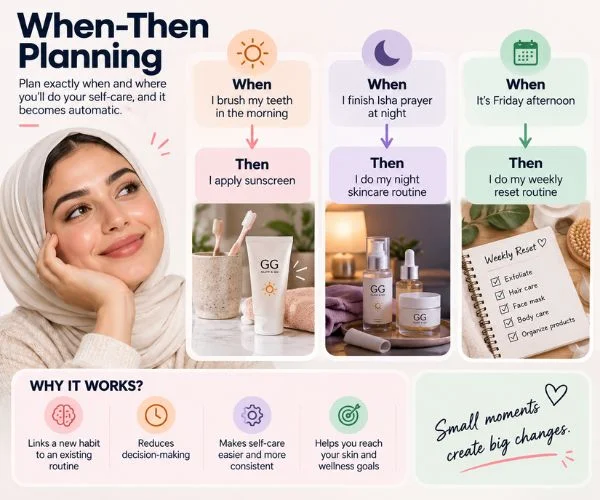
Habit research supports the usefulness of specific action plans, sometimes called implementation intentions.
Instead of saying, “I’ll do skincare more often,” connect it to a clear moment.
For example:
When I finish brushing my teeth, I’ll apply sunscreen.
When I finish Isha prayer, I’ll complete my evening routine.
On Friday afternoon, I’ll spend 30 minutes on my weekly reset.
This approach is also known as habit stacking.
Step 4: Adjust as Life Changes
Your routine should evolve with your energy, schedule, season, and skin condition.
If you’re exhausted, return to the five-minute minimum.
Consistency doesn’t mean doing everything perfectly. It means maintaining a routine you can realistically return to.
Your Weekly Self-Care Routine Checklist
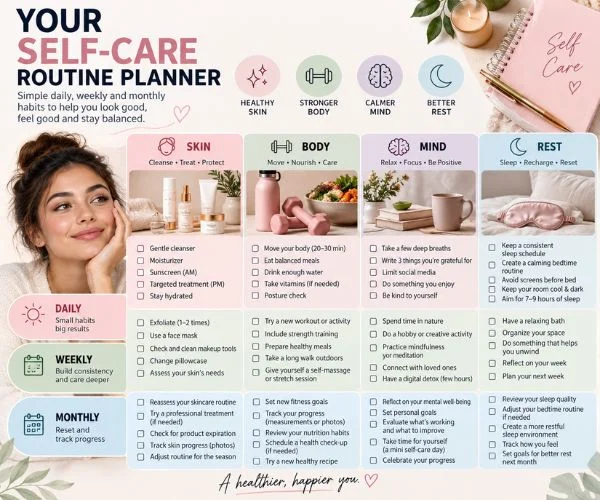
Use this simple planner to organize self-care without making your schedule overwhelming.
| Frequency | Skin | Rest | Body | Mind |
|---|---|---|---|---|
| Daily | 5–15-minute routine | Consistent sleep schedule | Water and movement | Quiet time or breathing |
| Weekly | Mask or body care | One restful evening | Longer walk or exercise | Time with loved ones |
| Monthly | Review products and skin needs | Check sleep habits | General wellbeing check | Plan something enjoyable |
Treat this checklist as a flexible guide.
You can move activities between days, skip optional treatments, or shorten your routine when necessary.
Take the Glow & Go Skin Quiz to explore a routine that supports your skin without complicating your day.
The Science Behind Building Better Self-Care Habits
Self-care becomes easier when it relies on repeatable habits rather than motivation alone.
Research into habit formation suggests that repeating an activity in a consistent context can help it become more automatic.
One widely cited study found a median of approximately 66 days for a new behavior to reach a high level of automaticity, although individual timelines varied substantially.
Planning exactly when and where you’ll complete a task can also improve follow-through.
For skincare, consistent sun protection has strong evidence for preventing photoaging, while adequate sleep and physical activity support general health.
Mindfulness and relaxation practices may also help reduce perceived stress.
The important lesson is that sustainable routines work better when they are realistic, specific, and easy to repeat.
Common Self-Care Routine Myths
Myth: Self-care needs at least an hour.
Reality: A short, consistent routine can be valuable, especially for essential skincare.
Myth: Missing one day ruins your progress.
Reality: Occasional missed days don’t erase a developing habit. Resume when you can.
Myth: You need expensive skincare products.
Reality: Product suitability and consistency matter more than price.
Myth: Everyone should follow the same routine.
Reality: Skin type, schedule, and lifestyle influence what works best.
Myth: Your routine should stay the same forever.
Reality: Your needs may change with seasons, age, stress, and life circumstances.
What Not to Do When Building a Self-Care Routine
Avoid making self-care another source of pressure.
Common mistakes include starting with too many steps, buying products you don’t need, or copying routines that don’t suit your skin.
Don’t introduce several strong active ingredients simultaneously, especially during stressful periods or immediately before major events.
Avoid treating every missed day as failure.
If you’re pregnant, breastfeeding, or managing a skin condition, review potentially unsuitable treatments with a qualified healthcare professional.
And remember that skincare alone cannot address persistent emotional distress or significant exhaustion.
How Long Does It Take to See Results?
Different parts of your self-care routine produce different results.
| Timeline | What You May Notice |
|---|---|
| Immediately | Cleaner, more comfortable skin after basic care |
| 1–2 weeks | Possible improvements in dryness or irritation |
| 4–8 weeks | Early improvements from some targeted treatments |
| Around 2 months or longer | Some habits may feel increasingly automatic |
| Months to years | Long-term benefits from consistent sun protection |
Results vary depending on your skin, products, and consistency.
A routine doesn’t need to feel automatic immediately to be successful.
Make Every Minute Count with a Routine Designed for You
The most effective self-care routine is one you can maintain, even when your schedule changes. That starts with choosing skincare products that match your skin type and concerns instead of adding unnecessary steps.
At Glow & Go, skincare routines are organized around individual skin needs, with product options across different budget levels. Whether you have five minutes before work or time for a complete evening ritual, your skincare foundation should remain practical.
GiGi’s Self-Care Tip
The best self-care routine is the one that fits the life you actually have.
Keep a five-minute version for difficult days, a 15-minute version for normal days, and a little weekly time just for yourself.
Decide exactly when you’ll complete each routine, and let consistency do the rest.
When Should You Seek Extra Support?
Self-care is important, but some concerns require more than a home routine.
Consult a dermatologist if acne, irritation, or other skin problems persist despite appropriate care.
Seek medical advice for prolonged or excessive hair shedding, particularly after childbirth.
If low mood, anxiety, or exhaustion continues to interfere with everyday life, consider speaking with a qualified healthcare professional.
Self-care includes recognizing when additional support would be beneficial.
F&Q
1. What should a self-care routine include?
A balanced self-care routine includes basic skincare, adequate sleep, movement, hydration, and time for mental wellbeing. The exact activities should fit your needs and schedule.
2. How do I make time for self-care?
Start with a five-minute routine and connect it to an existing habit, such as brushing your teeth. Choose a specific time rather than waiting until you’re free.
3. What’s a good five-minute skincare routine?
In the morning, cleanse if needed, moisturize, and apply sunscreen. In the evening, remove makeup and sunscreen, cleanse gently, and moisturize.
4. What should a weekly self-care routine include?
A weekly reset may include a suitable face mask, body moisturizing, hair conditioning, and cleaning makeup tools. Add something relaxing that you genuinely enjoy.
5. How do I adapt my routine when life changes?
Adjust your skincare products, available time, and activities according to your energy and circumstances. During stressful periods, return to your essential routine.
6. How long does it take for self-care to become a habit?
Habit formation varies, but some research suggests approximately two months as a useful reference point. Repeating a simple activity in a consistent context can make it easier to maintain.
Conclusion
A successful self-care routine doesn’t require expensive products, unlimited free time, or a perfect daily schedule. It requires realistic habits that support your skin, body, and emotional wellbeing.
Start with five minutes, expand your routine when you have more time, and adapt it as your life changes.
At Glow & Go, we believe self-care should feel achievable, personal, and supportive rather than overwhelming. With suitable skincare, consistent habits, and professional guidance whenever physical or emotional concerns require additional attention, you can create a routine that genuinely works for you.