Learn how to identify your skin type by understanding oiliness, dryness, combination, and sensitivity with practical guidance from Glow & Go.
Knowing your skin type is one of the simplest ways to make your skincare routine more relevant to your actual needs. But skin type is not a permanent label. Oil production, hydration, sensitivity, and overall skin behavior can change with age, hormones, weather, lifestyle, and the products you use.
Instead of choosing products based on trends or labels alone, start by observing how your skin behaves. Look for patterns such as shine, tightness, flaking, redness, and how your skin reacts to skincare products.
What Does Skin Type Actually Mean?
Skin type mainly describes how your skin naturally behaves in terms of oil production and moisture balance. The commonly recognized categories are oily, dry, combination, normal, and sensitive skin.
These categories can help guide product selection, but they do not describe every aspect of your skin. For example, acne, redness, pigmentation, or visible pores are concerns that can exist alongside different skin types.
How to Recognize the Main Skin Types
Oily Skin
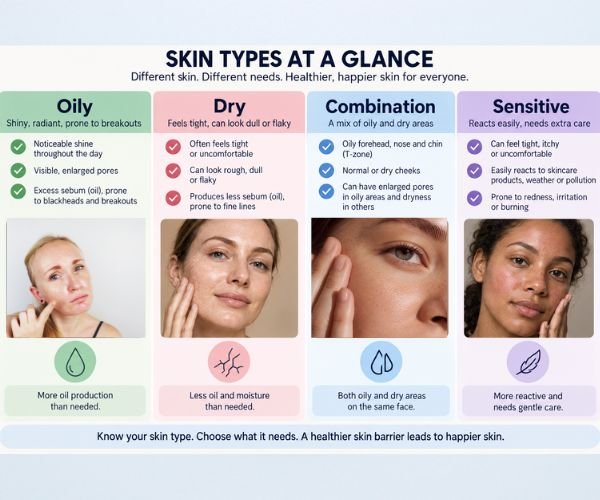
Oily skin generally produces more sebum than other skin types. This can make the face appear shiny or greasy, particularly throughout the day. People with oily skin may also notice more visible pores or a tendency toward clogged pores and breakouts.
Dry Skin
Dry skin is generally linked to lower sebum production and can feel tight, rough, flaky, or uncomfortable. The skin may also look dull because it does not retain moisture as effectively.
Combination Skin
Combination skin has different characteristics in different areas of the face. A common pattern is an oilier forehead, nose, and chin, while the cheeks feel normal or dry. This difference can reflect the natural distribution of sebaceous glands across the face.
Normal Skin
Normal skin generally has a relatively balanced level of oil and moisture. It does not tend to feel excessively oily or tight, although occasional changes can still happen with weather, hormones, or skincare habits.
Sensitive Skin
Sensitive skin is different from oily or dry skin because it describes how the skin reacts to products or environmental factors. Burning, stinging, itching, redness, or irritation can occur, and sensitive skin can exist alongside dry, oily, or combination skin.
How Can You Test Your Skin Type at Home?
Start With a Clean Face
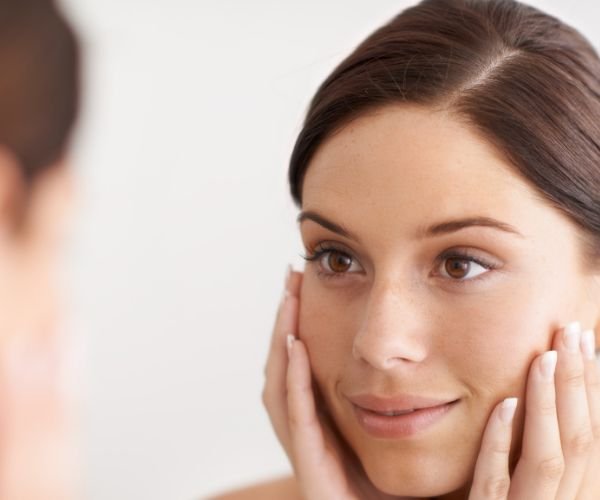
Wash your face with a gentle cleanser and avoid immediately applying moisturizer, makeup, or other skincare products. The goal is to observe your skin without temporarily changing its appearance or feel.
Give Your Skin Some Time
After cleansing, pay attention to how your skin feels as time passes. Looking at your skin immediately after washing may not give you enough information to understand its usual behavior.
Check for Oil and Shine
Notice whether your forehead, nose, chin, cheeks, or entire face becomes noticeably shiny. Consistent oiliness across much of the face may suggest oily skin, while shine concentrated around the T-zone can be more consistent with combination skin.
Look for Tightness or Flaking
If your face repeatedly feels tight, rough, or flaky after cleansing, your skin may be dry. However, temporary dryness caused by harsh products does not necessarily mean your natural skin type is dry.
Pay Attention to Reactions
If products frequently cause burning, stinging, itching, or redness, sensitivity may be an important part of your skin profile. Sensitive skin should be considered separately from oil production because a person can have sensitive and oily skin at the same time.
Not sure which skincare products suit your skin during stressful periods? The Glow & Go Skin Quiz helps identify your skin type and priority concern so you can build a practical routine without unnecessary steps.

Why Can Your Skin Type Change?
Your skin does not always behave the same way throughout your life. Age, hormonal changes, stress, medications, seasonal weather, and environmental conditions can influence oil production and how your skin feels.
Seasonal Changes
Hot and humid weather can make skin feel oilier, while cold or dry conditions can contribute to dryness and tightness. This means the routine that feels comfortable in one season may need adjustment in another.
Hormonal Changes
Hormonal fluctuations can affect sebum production and overall skin behavior. Changes during periods such as puberty, pregnancy, or other hormonal shifts may make skin appear oilier or more prone to breakouts.
Skincare Products
A harsh cleanser or an overly aggressive routine can leave skin feeling dry, irritated, or uncomfortable. This does not necessarily mean that your natural skin type has permanently changed.
Skin Type vs. Skin Concerns: What Is the Difference?

Skin type and skin concerns should not be treated as the same thing. Skin type describes a general pattern of how your skin behaves, while concerns describe specific problems or changes you want to address.
Acne and Breakouts
Acne can occur with oily skin, but having acne does not automatically mean that your skin type is oily. Treatment should consider both the acne itself and the underlying characteristics of your skin.
Pigmentation
Dark spots and uneven pigmentation are skin concerns rather than skin types. They can occur alongside dry, oily, combination, or normal skin.
Redness
Redness can have many causes and should not automatically be interpreted as sensitive skin. If redness is persistent, painful, or accompanied by other symptoms, professional evaluation may be appropriate.
Dehydration
Dehydrated skin refers to a lack of water, while dry skin generally refers to lower oil production. These are not necessarily the same thing, so temporarily dehydrated skin does not automatically mean you have a dry skin type.
How Does Your Skin Type Affect Product Selection?
Once you understand how your skin behaves, choosing products becomes more logical. The goal is not to find products labeled as “best” in general, but products that suit your skin’s characteristics and concerns.
For example, people with oily skin may benefit from lightweight, non-comedogenic formulations, while dry skin often needs richer moisturizing support. Combination skin may require different approaches for different areas of the face.
Can You Have More Than One Skin Type?
Yes, your skin can show characteristics that overlap between categories. Combination skin is the clearest example because different parts of the face can behave differently.
You can also have oily and sensitive skin, dry and sensitive skin, or combination and sensitive skin. This is why identifying only one label may not provide enough information to build an effective routine.
Can You Sell or Use Products Based on Skin Type Alone?
Skin type is a useful starting point, but it should not be the only factor when choosing skincare products. Your concerns, product tolerance, current routine, and environmental conditions also matter.
A product designed for oily skin may not be appropriate for every person with oily skin, particularly if that person also experiences sensitivity or dehydration. The same principle applies to dry and combination skin.
How Glow & Go Can Help You Understand Your Skin
Instead of trying to memorize every skin type and ingredient combination, Glow & Go focuses on making skincare decisions easier to understand. A structured skin assessment can help organize what you notice about your skin and connect those observations with a more suitable routine.
The goal is not simply to give your skin a label. It is to understand what your skin is currently experiencing so that your routine can be more intentional.
Frequently Asked Questions
What is the easiest way to identify your skin type?
Cleanse your face gently, leave it without skincare for a period of time, and observe oiliness, tightness, flaking, and how different areas feel.
Can skin type change over time?
Yes. Age, hormones, weather, lifestyle, medications, and skincare products can all influence how your skin behaves.
Can sensitive skin also be oily?
Yes. Sensitive skin describes reactivity rather than oil production, so it can occur alongside oily, dry, or combination skin.
Does acne mean I have oily skin?
Not necessarily. Acne can be associated with oily skin, but acne itself is a skin concern rather than a skin type.
Is dry skin the same as dehydrated skin?
No. Dry skin is generally associated with lower oil production, while dehydration refers to insufficient water in the skin.
Can combination skin have dry cheeks?
Yes. A common combination-skin pattern is an oilier T-zone with cheeks that feel normal or dry.
Should I choose skincare products only according to my skin type?
No. Skin type is an important starting point, but your specific concerns, sensitivity, current routine, and product tolerance should also be considered.
Conclusion
Identifying your skin type does not have to involve complicated tests or memorizing product categories. Start by observing how your skin behaves over time: how much oil it produces, whether it feels tight or flaky, how different areas compare, and how it reacts to products.
Once you separate your basic skin type from concerns such as acne, pigmentation, or redness, your skincare choices become much easier to understand. The right routine should respond to what your skin actually needs now rather than relying on a permanent label.