Fine lines and wrinkles? Learn what causes them, how sunscreen and retinol help, and build a simple anti-aging routine with gglow and go for healthier skin
You may first notice fine lines and wrinkles around your eyes or forehead in bright bathroom light or in a photo. Some lines are part of natural aging, while others may simply be dehydration lines that become less visible after moisturizing.
The good news is that you do not need an expensive routine to care for aging skin. Daily sunscreen, a suitable retinoid, moisturizer and antioxidant ingredients can help protect the skin and soften the appearance of fine lines over time.
What Are Fine Lines and Wrinkles?
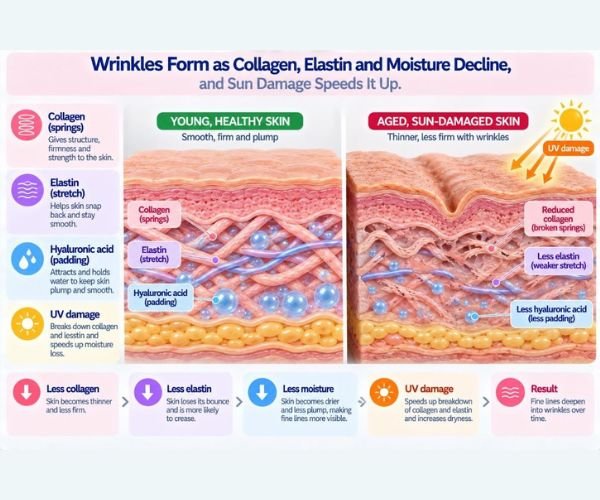
Fine lines are small, shallow lines that commonly appear around the eyes, forehead and mouth. Wrinkles are deeper and more permanent creases that may develop as collagen and elastin decline.
Not every visible line is a wrinkle. Dehydration lines can look more noticeable when the skin lacks water and may improve quickly with proper hydration. Expression lines appear during smiling, frowning or squinting, while static wrinkles remain visible when the face is relaxed.
A simple clue is how the line reacts to hydration. If it becomes less noticeable after moisturizing, dehydration may be contributing to its appearance.
Read also about :-
Summer Skincare in Egypt: Daily Skincare Routine Tips 2026
Hyaluronic Acid: What Does It Actually Do 2026
Not Every Line Is a Wrinkle: Understanding the Differences
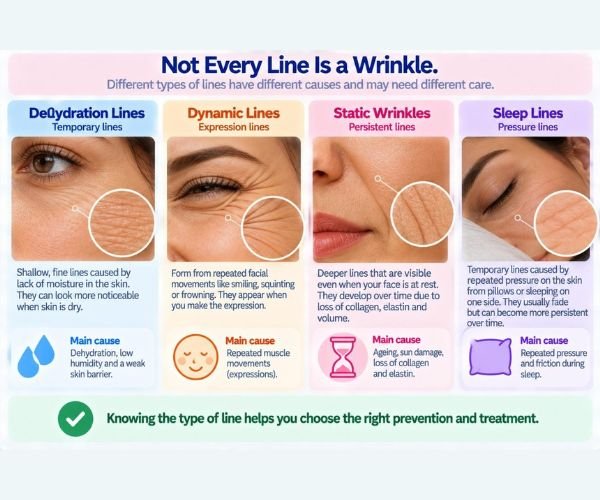
Not all lines on the skin have the same cause or appearance. Some are temporary, while others become more noticeable over time and may need different care.
Dehydration Lines
Fine, shallow lines caused by a lack of moisture in the skin, often becoming more visible when the skin is dry.
Dynamic Lines
Expression lines that appear with repeated facial movements such as smiling, squinting, or frowning.
Static Wrinkles
Deeper lines that remain visible even when the face is at rest, often linked to aging, sun damage, and reduced collagen.
Sleep Lines
Temporary lines caused by repeated pressure on the skin while sleeping, which may become more persistent over time.
What Causes Fine Lines and Wrinkles?
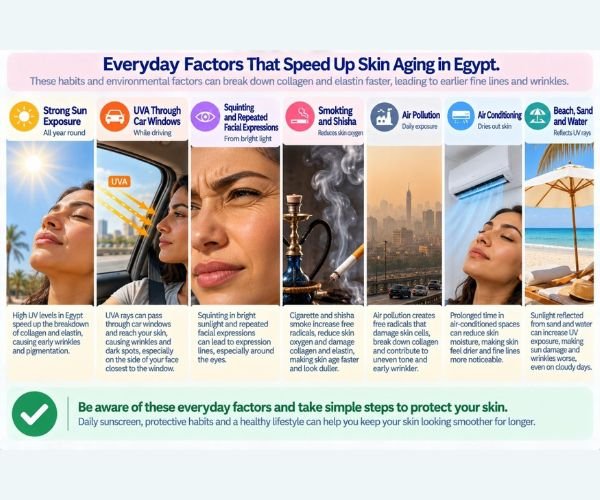
Several factors contribute to fine lines and wrinkles, but some have a much greater impact than others.
Natural aging
From around the mid-20s, collagen production gradually slows. Cell turnover also becomes slower, while the skin may become thinner and drier. This is a normal part of intrinsic aging.
Sun exposure
UV exposure is one of the biggest causes of premature skin aging. UVA can reach deeper layers of the skin and damage collagen and elastin, leading to wrinkles, rough texture and loss of firmness.
For people living in Egypt, daily exposure from driving, commuting, walking and sitting near windows can accumulate over many years.
Facial expressions
Repeated smiling, frowning and squinting create expression lines. Strong sunlight can also make you squint more often, increasing movement around the eyes.
Smoking and pollution
Smoking damages collagen and elastin and increases oxidative stress. Pollution can also generate free radicals that contribute to skin damage.
Dehydration
Dry or dehydrated skin can make fine lines appear deeper. This is one of the easiest factors to address because proper hydration can improve the skin’s surface appearance relatively quickly.
Fine Lines and Wrinkles in Egypt
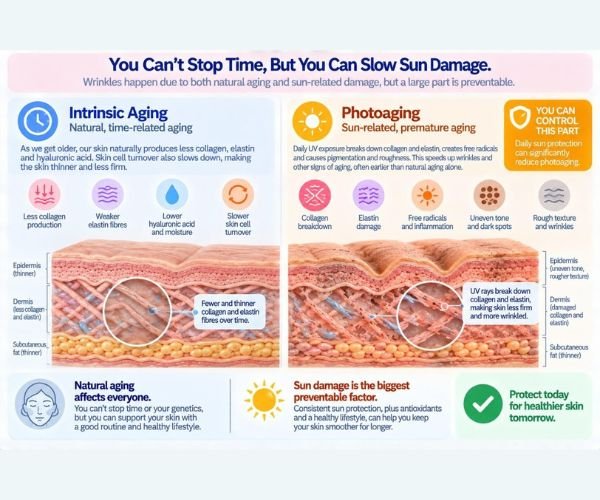
Egypt’s strong sunlight makes sun protection particularly important for preventing premature aging. UVA exposure can also occur through car and office windows.
Other everyday factors can contribute to visible aging, including air conditioning, which can make skin feel dry, prolonged summer sun exposure and squinting in bright light.
Sunscreen should therefore be part of your daily routine, not something reserved for beach days.
Which Ingredients Help Fine Lines and Wrinkles?
The most useful anti-aging ingredients do not all work in the same way.
Retinoids
Retinoids such as retinol, retinal and prescription tretinoin support cell turnover and collagen production. They have some of the strongest evidence for improving fine lines and skin texture.
For beginners, retinol can be introduced two or three nights a week before gradually increasing frequency. Irritation, dryness and peeling can occur, so moisturizer and slow introduction are important.
Vitamin C
Vitamin C provides antioxidant protection and supports collagen production. It is commonly used in the morning underneath sunscreen.
Niacinamide
Niacinamide supports the skin barrier and may improve fine lines, texture and uneven tone. It is generally well tolerated by different skin types.
Peptides
Peptides may support firmness and collagen-related processes. Evidence varies depending on the specific peptide and formulation, so they are better viewed as supporting ingredients rather than essential ones.
Hyaluronic acid and moisturizers
Moisturizers and humectants such as hyaluronic acid can increase water in the outer skin layer and temporarily make fine lines appear smoother. They do not rebuild lost collagen.
Sunscreen
Broad-spectrum SPF 30+ is the foundation of an anti-aging skincare routine because it helps prevent UV-related collagen damage and photoaging.
A Simple Anti-Aging Skincare Routine
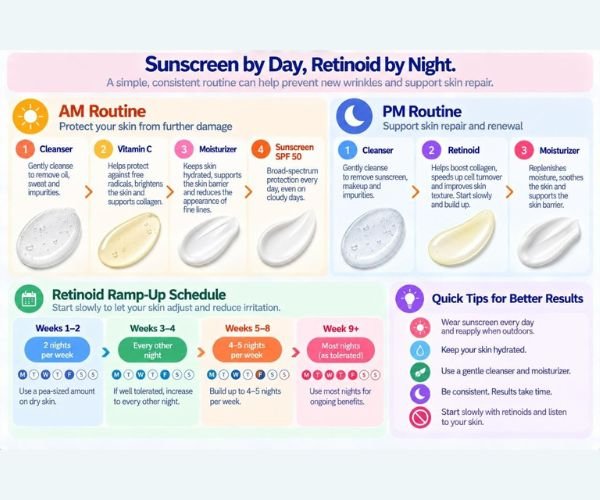
A complicated routine is not necessary to manage fine lines and wrinkles.
Morning:
- Gentle cleanser.
- Vitamin C or niacinamide.
- Moisturizer containing ingredients such as hyaluronic acid or ceramides.
- Broad-spectrum SPF 30+ applied evenly to the face and neck.
Evening:
- Gentle cleanser.
- Retinoid two or three nights per week when starting.
- Moisturizer to support the skin barrier.
On nights when you are not using a retinoid, you can focus on hydration or another gentle supporting ingredient.
Find a Routine That Fits Your Skin
Fine lines and wrinkles can appear on oily, dry or sensitive skin, but the same routine may not suit everyone. Your skin type and other concerns can affect which ingredients and strengths are appropriate.
Glow & Go uses a skin assessment to identify your skin type and main concern before suggesting a suitable routine and product options.
Take the skin quiz to discover a routine based on your skin needs.

How to Reduce Wrinkles Without Irritating Your Skin
Consistency matters more than using several strong products at once.
Start slowly with retinol, avoid combining it with multiple strong acids in the beginning, and moisturize regularly. Sunglasses can also reduce squinting in strong sunlight.
Avoid smoking and prolonged exposure to smoke, including shisha. Protecting your skin from UV exposure every day is also essential.
If you have sensitive or dry skin, introducing active ingredients gradually can help reduce irritation and make the routine easier to maintain.
What NOT to Do for Fine Lines and Wrinkles
Avoid starting a strong retinoid every night from the beginning. Irritation can damage the skin barrier and make the routine difficult to maintain.
Do not combine several powerful acids and retinoids immediately. Also avoid using retinoids during pregnancy or breastfeeding unless your doctor specifically advises otherwise.
Most importantly, do not skip sunscreen. Expensive creams cannot compensate for continued UV exposure.
How Long Does It Take to See Results?
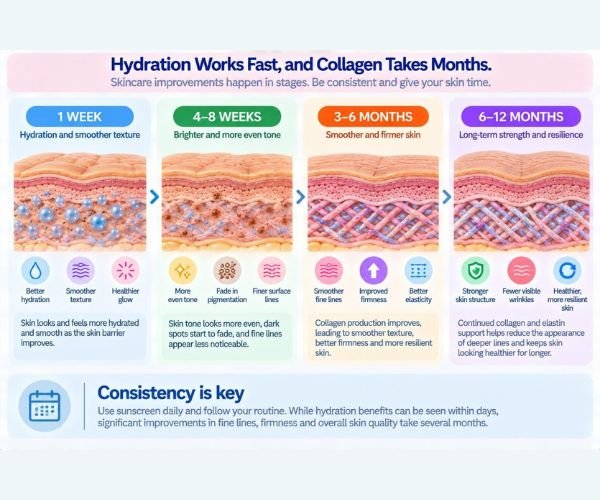
Hydration can make dehydration lines look smoother within days. Improvements in texture and overall skin appearance may become noticeable after several weeks of consistent care.
Retinoids generally require several months to produce visible improvements in fine lines. A period of around three to six months is more realistic for noticeable changes, while continued sunscreen use helps protect the results.
Deeper wrinkles may not respond fully to skincare products and may require professional treatment.
Build a Routine Based on Your Skin Type
The right anti-aging skincare routine depends on your skin type, tolerance and main concern. Someone with sensitive skin may need a slower retinoid introduction, while dehydrated skin may need more barrier support.
Glow & Go starts with a skin assessment so your routine can focus on your actual skin needs instead of simply adding more anti-aging products.
Take the skin quiz and discover your recommended routine and product options.
When Should You See a Dermatologist?
Consider professional advice if you want prescription tretinoin or treatment for deeper wrinkles.
A dermatologist can also discuss options such as chemical peels, microneedling, lasers, fillers or botulinum toxin when appropriate. These treatments should be performed by qualified professionals.
You should also seek medical advice if your skin suddenly becomes unusually thin or aged, or if a mole, spot or rough area changes in size, shape or color, bleeds or does not heal.
F&Q
What causes fine lines and wrinkles?
Natural aging reduces collagen, elastin and moisture, while sun exposure, smoking, pollution, facial expressions and dehydration can accelerate their appearance.
At what age should I start anti-aging skincare?
Daily sunscreen can be used from an early age. Many people introduce a retinoid in their late 20s or 30s, depending on their skin and concerns.
Does retinol really work for wrinkles?
Yes. Retinol has clinical evidence showing improvement in fine lines and collagen-related changes, but results require consistent use over several months.
Does sunscreen prevent wrinkles?
Daily broad-spectrum sunscreen helps prevent UV damage and photoaging, making it one of the most important steps for wrinkle prevention.
Can moisturizer remove wrinkles?
Moisturizer can temporarily plump the skin and soften fine lines, especially dehydration lines, but it cannot rebuild lost collagen or remove deep wrinkles.
Are fine lines under the eyes always wrinkles?
No. Some may be dehydration lines that become less visible after hydration. Persistent lines when the face is relaxed are more likely to be true wrinkles.
Can I use retinol during pregnancy?
Retinoids are generally not recommended during pregnancy or breastfeeding. Speak with your doctor about suitable alternatives.
When should I consider professional treatments?
If wrinkles are deep or do not respond sufficiently to skincare, a qualified dermatologist can discuss suitable professional options.
Conclusion
Fine lines and wrinkles are a normal part of skin aging, but daily habits can influence how early and how strongly they appear. Sunscreen, hydration, a suitable retinoid and consistent barrier care are more important than buying a large number of expensive products.
The goal is not to stop aging, but to keep your skin healthy and protected while softening visible signs of photoaging. With a routine suited to your skin type and concerns, Glow & Go can help you find a practical starting point for your skincare needs.