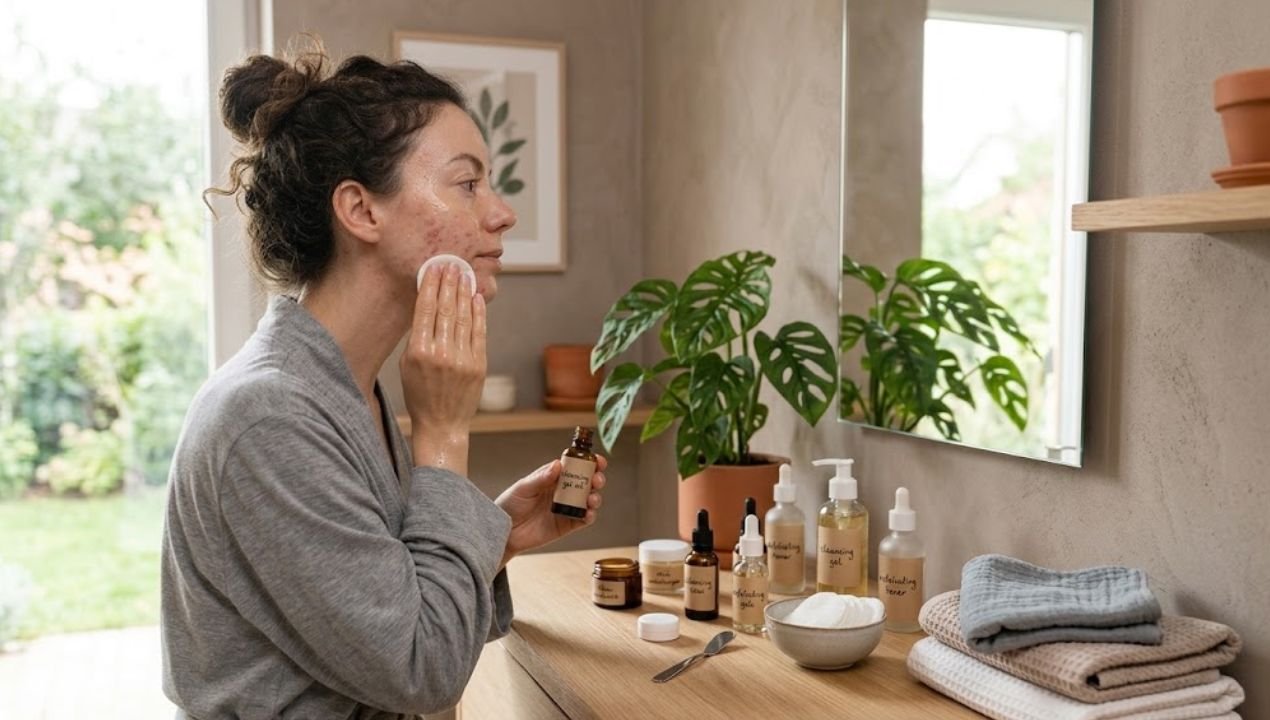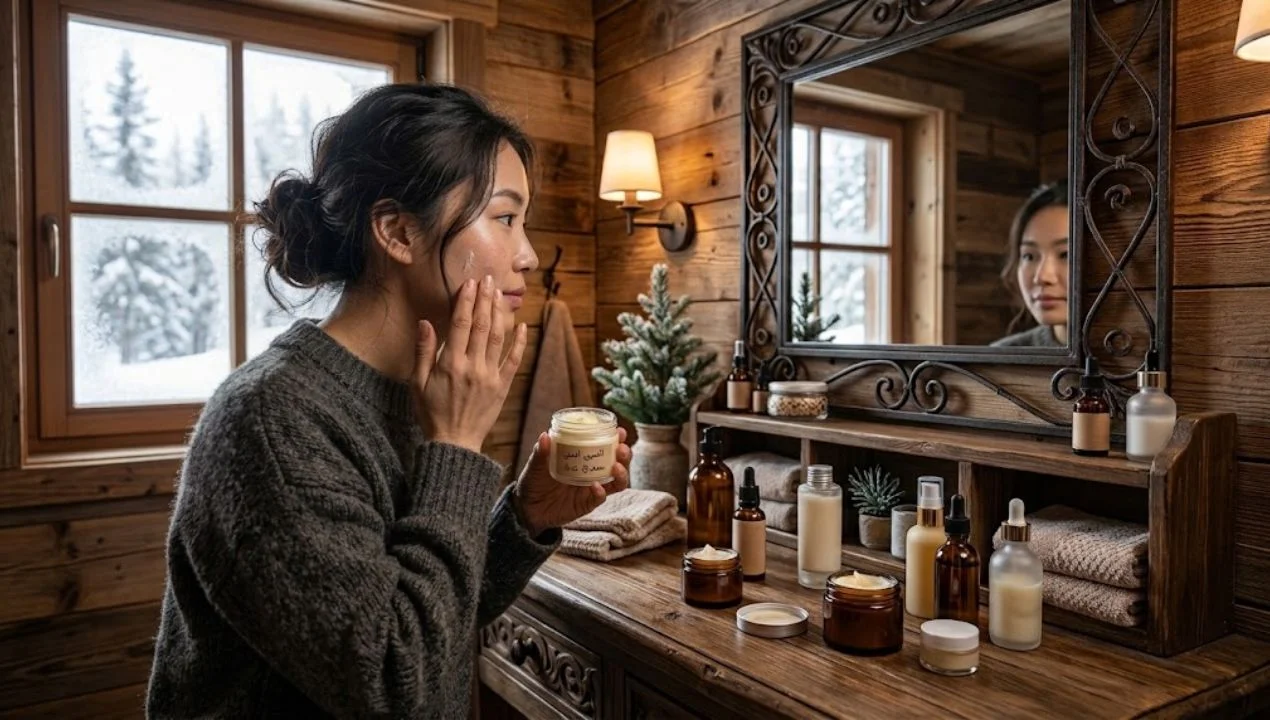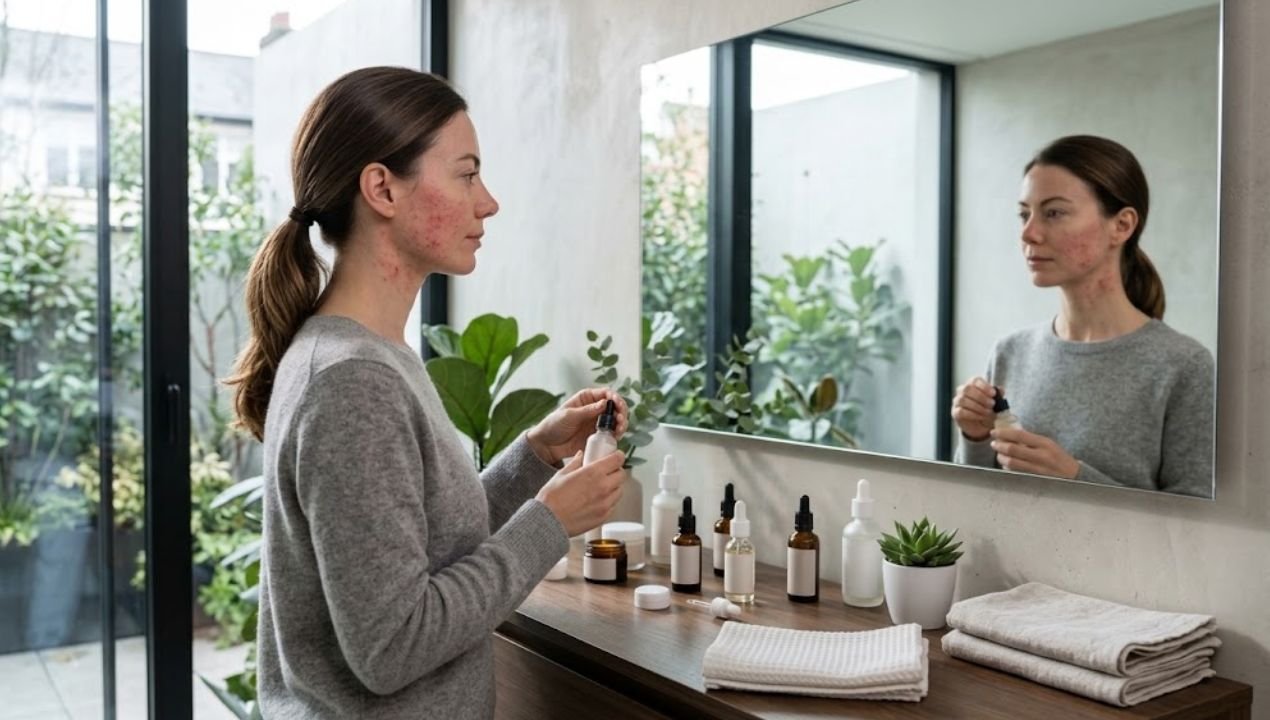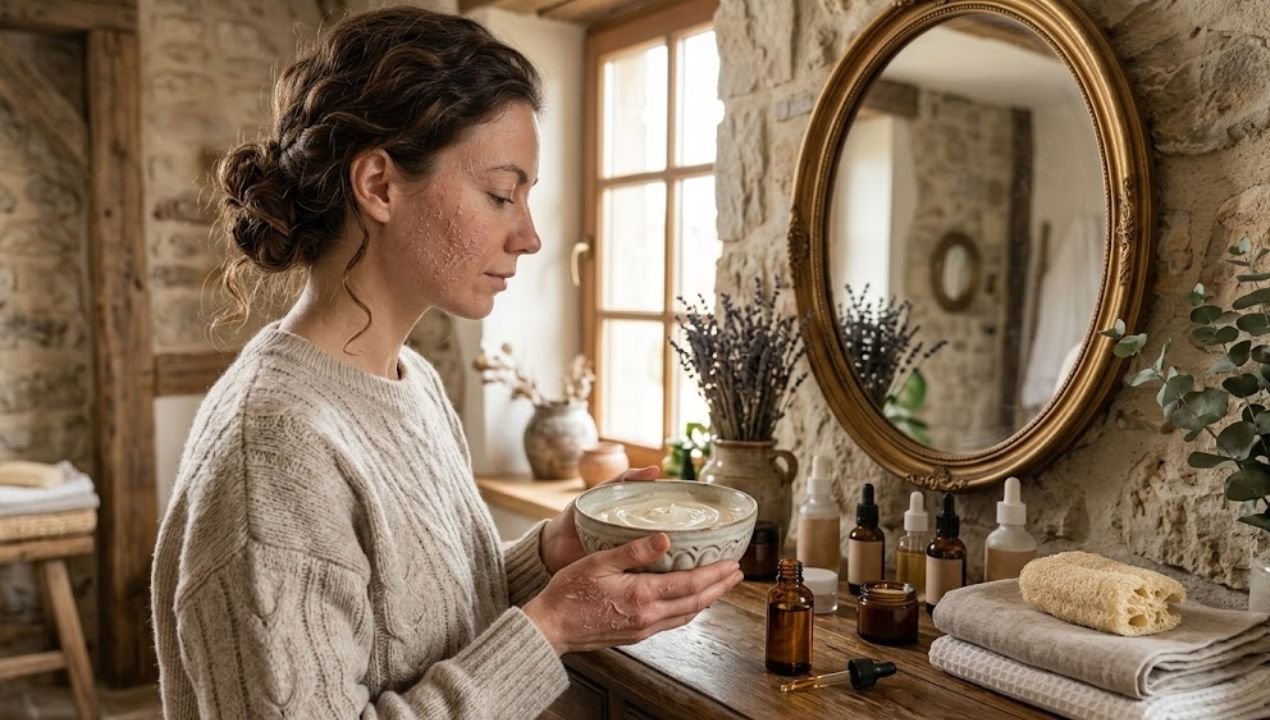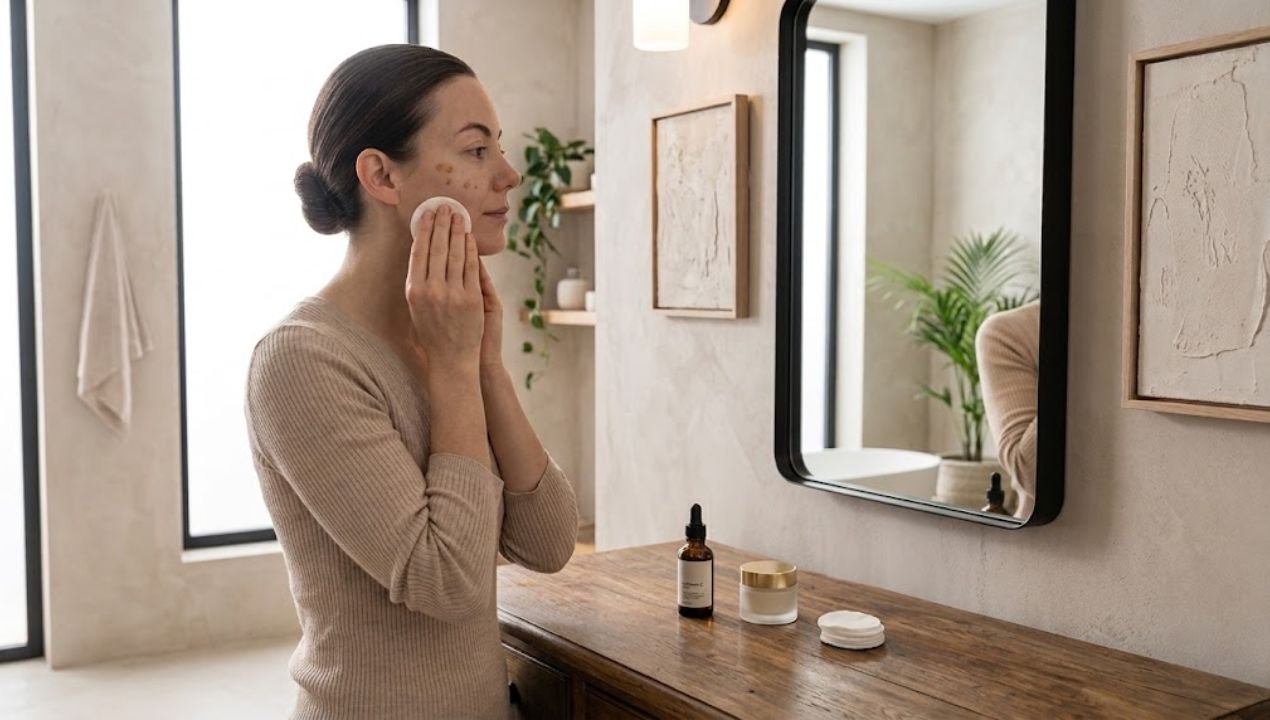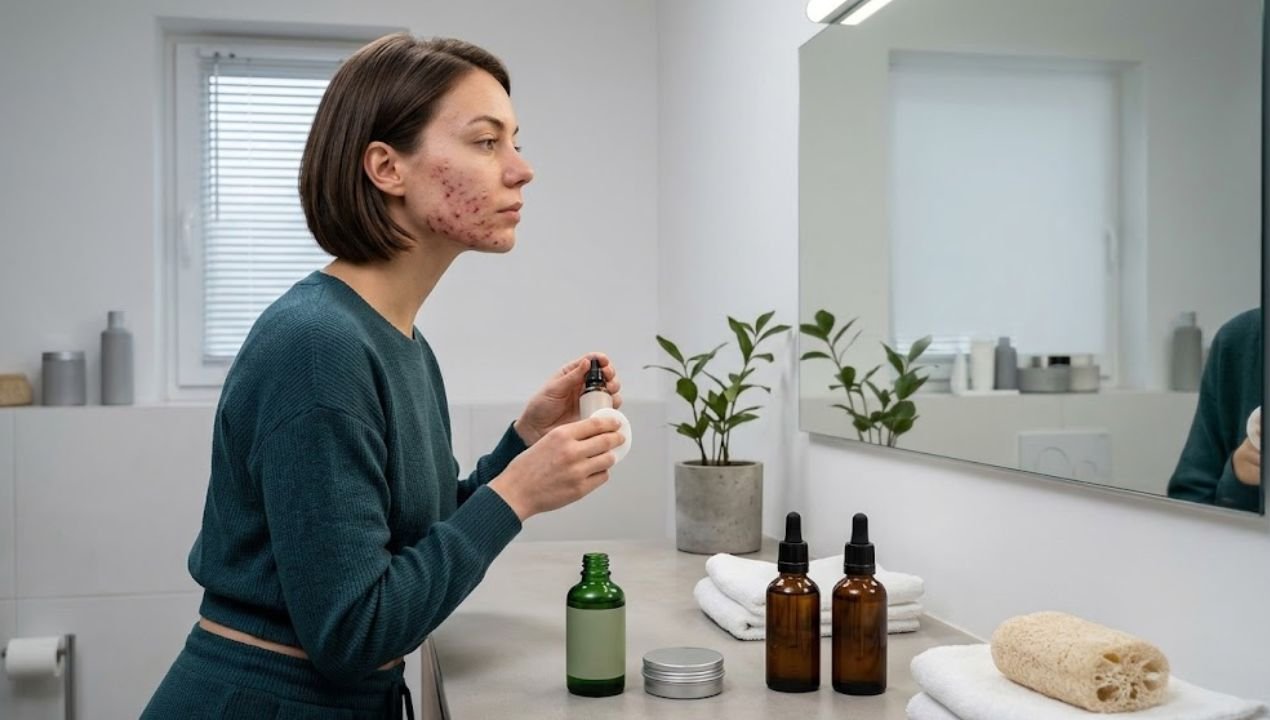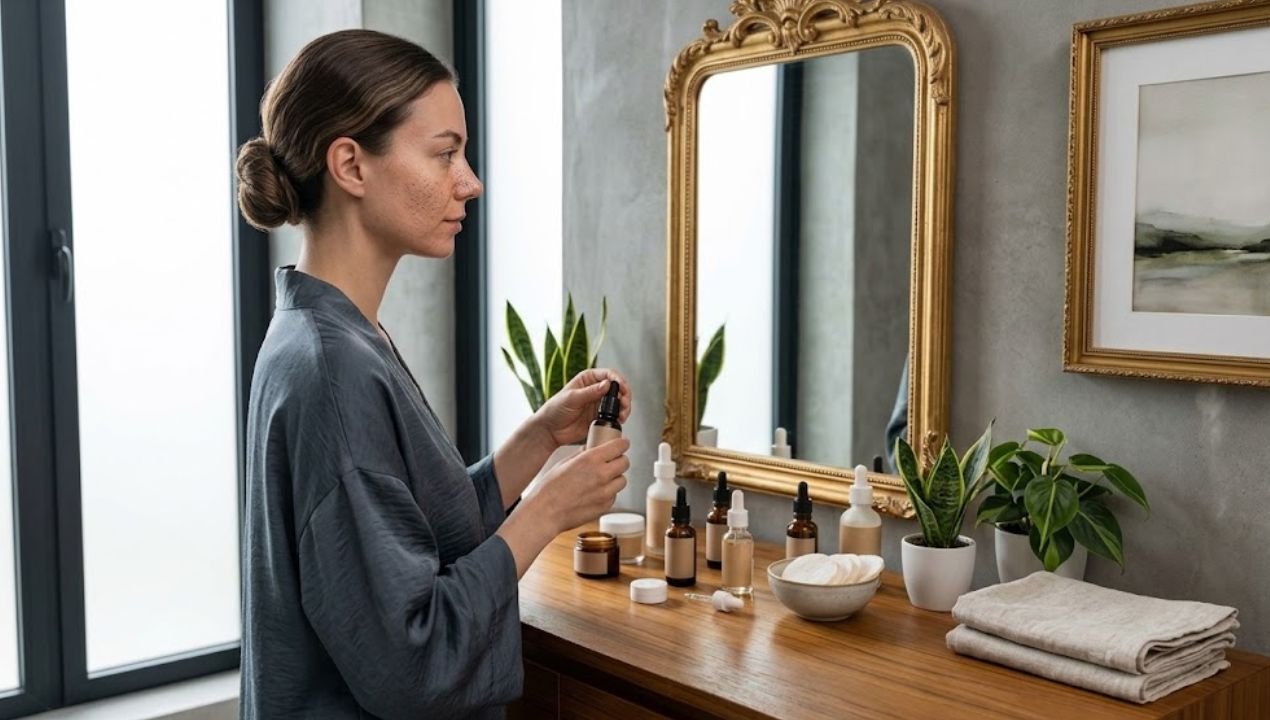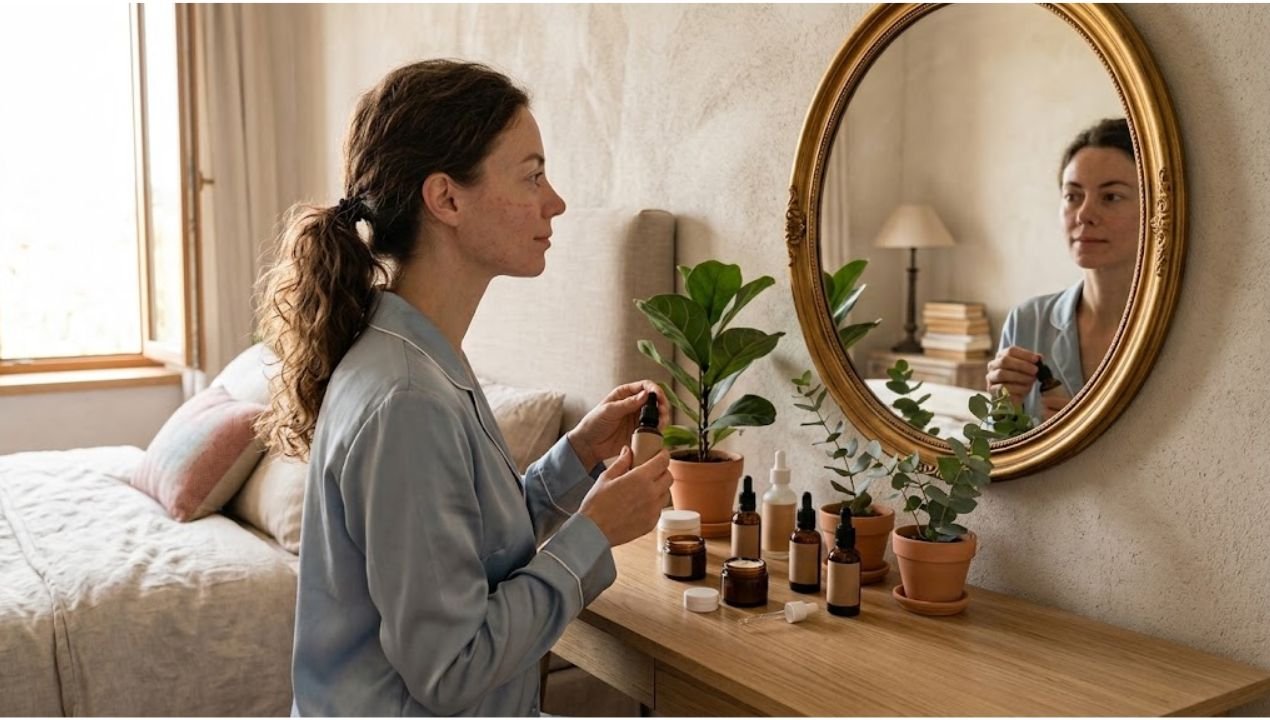
Sleep and beauty: learn how poor sleep affects skin, dark circles and repair, plus a simple night skincare routine to support healthier-looking skin with Glow & Go.
After a late night, you often see it in the mirror immediately: puffy eyes, darker circles, duller skin, and a face that looks as tired as you feel.
The connection between sleep and beauty is real.During the day, skin is more focused on protection, while nighttime supports repair and recovery.
This guide explains what happens to your skin overnight, how poor sleep affects its appearance, and how to build a night skincare routine that works with your body’s natural rhythm.
What Happens to Your Skin While You Sleep?
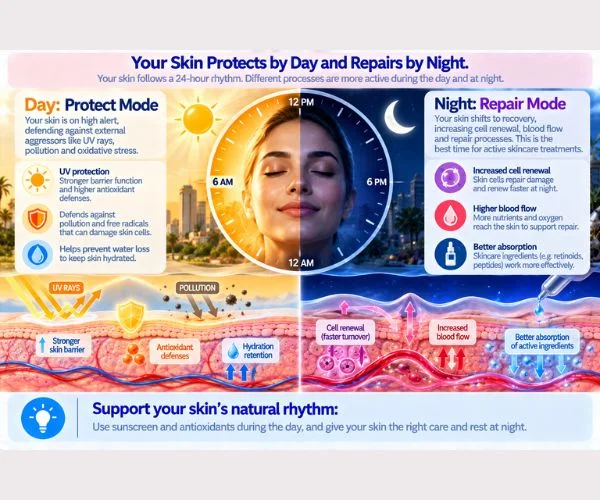
Your skin follows a circadian rhythm, an internal 24-hour clock that influences how it behaves during the day and at night.
During the day, the skin focuses more on protection from UV exposure, pollution, and environmental stress. At night, its priorities shift toward renewal and repair.
While you sleep:
- Skin cell renewal increases.
- Blood flow to the skin rises.
- The skin barrier becomes more permeable.
- Transepidermal water loss (TEWL) can increase.
- Cortisol levels normally decrease during the first part of the night.
- Deep sleep supports tissue repair throughout the body.
This is why nighttime is a useful period for treatments and barrier-supporting products. In simple terms, your skin protects during the day and repairs at night.
Read also about:
How Does Poor Sleep Affect Skin?
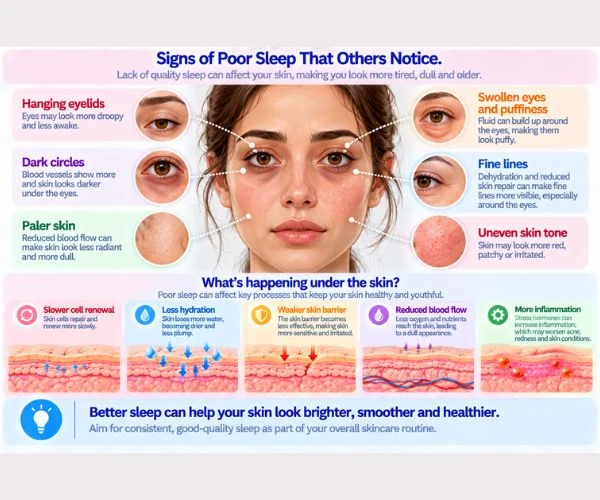
Repeated sleep loss can affect both how your skin looks and how effectively it recovers.
Dull and Tired-Looking Skin
Poor sleep can make the face look visibly more tired. Skin may appear paler, duller, and less refreshed after a short or disrupted night.
Dark Circles and Puffiness
Lack of sleep may make the blood vessels under the thin eye area more visible and can contribute to fluid collecting around the eyes.
However, sleep and dark circles are not always directly linked. Genetics, pigmentation, allergies, and naturally thin under-eye skin can also play a role.
Slower Skin Barrier Recovery
Poor sleep has been associated with slower recovery after skin-barrier disruption. This may leave skin more vulnerable to irritation and dryness.
More Inflammation
Sleep deprivation is linked with increased inflammatory activity in the body. This may contribute to flare-ups in people who already deal with acne, eczema, rosacea, or other inflammatory skin concerns.
Higher Stress Levels
Poor sleep may keep cortisol elevated. Over time, this can influence inflammation, oil production, and the skin’s ability to recover.
Sleep and Beauty in Egypt: What Can Disrupt Your Rest?
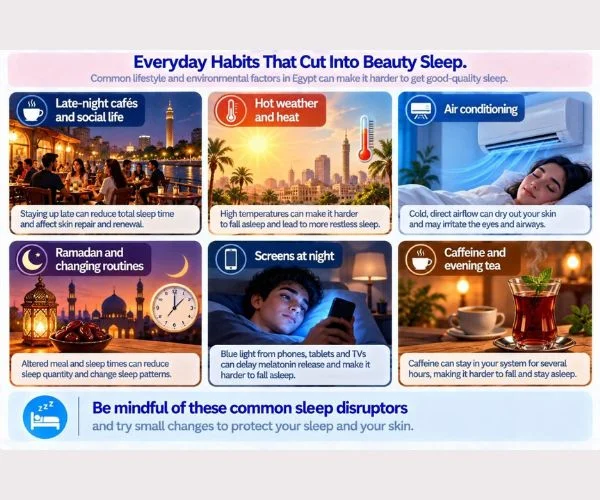
Getting enough sleep is not always simple, especially when lifestyle and environmental factors interfere with your schedule.
Late-Night Habits
Late dinners, social visits, evening outings and cafés can sometimes push bedtime later, especially on work or school nights.
Summer Heat
Hot nights can make falling asleep and staying asleep more difficult. A cooler, darker bedroom can support better rest.
Air Conditioning
AC may improve sleep in hot weather, but dry air blowing directly on the face can increase moisture loss overnight.
Ramadan Schedules
Late iftar, early suhoor, and changing sleep patterns can lead to shorter or fragmented sleep. Keeping skincare simple and maintaining hydration between iftar and suhoor may help.
Screens Before Bed
Using phones or watching TV late at night can make it harder to wind down and fall asleep.
Evening Caffeine
Tea and coffee late in the day can interfere with sleep for some people.
The Science Behind Sleep and Skincare
Good sleep supports several processes that matter for skin health, but skincare still plays an important role.
Certain products are especially suited to evening use. Retinoids, for example, are commonly applied at night because light can affect their stability and they may increase sun sensitivity.
Nighttime is also a useful period for:
- Barrier-supporting moisturizers
- Azelaic acid
- Gentle exfoliating acids when appropriate
- Occlusive products on very dry areas
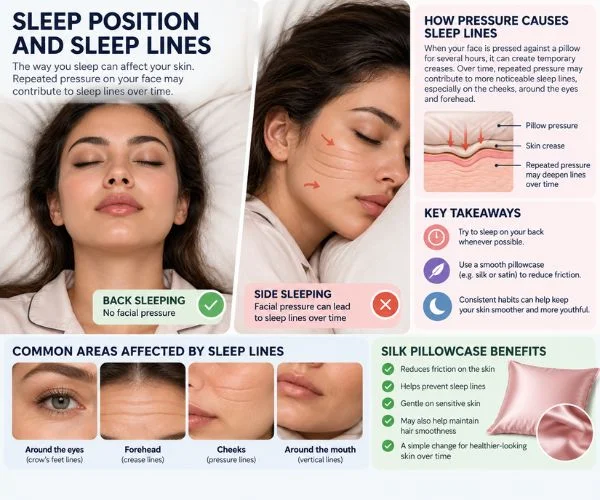
Sleep position may matter too. Repeated pressure from side or stomach sleeping can create temporary facial lines, and over time these may contribute to visible sleep lines.
Silk or satin pillowcases may reduce friction and absorb less moisture than cotton, although direct evidence for major skincare benefits remains limited.
Sleep Habits That Can Support Healthier-Looking Skin
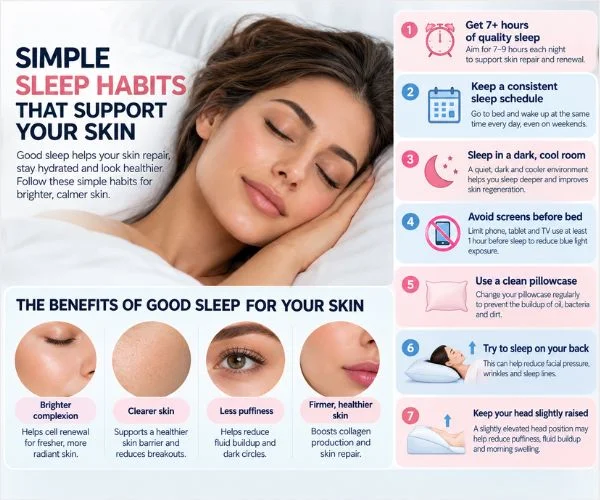
Good skincare cannot completely compensate for chronic sleep loss. Your daily habits matter too.
Helpful sleep habits include:
- Aim for at least 7 hours of sleep when possible.
- Keep bedtime and waking time relatively consistent.
- Create a cool, dark, quiet sleeping environment.
- Limit screens before bed.
- Reduce evening caffeine.
- Avoid very heavy meals close to bedtime.
- Keep AC airflow away from your face.
- Change pillowcases regularly.
- Sleep on your back when comfortable.
- Slightly elevate your head if you regularly wake with puffy eyes.
Not sure whether your night routine matches your skin type? The Skin Quiz helps identify your skin type and priority concern so you can build a routine that fits both your morning and evening needs.

How to Build a Night Skincare Routine That Works With Sleep
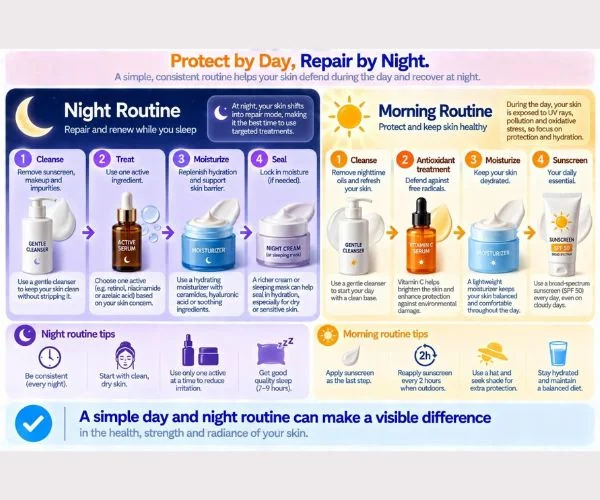
Your night skincare routine should focus on cleansing, targeted treatment, and barrier support.
Evening Routine
- Cleanse
Remove sunscreen, makeup, pollution, and sweat before bed. Double-cleansing can be useful when wearing heavy sunscreen or makeup.
- Treat
Choose one treatment based on your main concern:
- Retinoid for fine lines, texture, or acne
- Azelaic acid for redness, acne, or dark marks
- Gentle AHA a few nights per week for dullness or texture
- No strong active if your barrier is irritated
- Moisturize
Use a moisturizer containing barrier-supporting ingredients such as ceramides, glycerin, or panthenol.
- Seal if Needed
Very dry skin may benefit from a thin layer of an occlusive balm over dry areas, especially when sleeping in air conditioning.
Morning Routine
- Gentle cleanse or rinse
- Antioxidant such as vitamin C if suitable
- Moisturizer
- Broad-spectrum SPF 30+
The principle is simple: protect by day, repair by night.
Want a night routine built around your actual skin type and concern? The Glow & Go Skin Quiz can help determine whether your evening routine should focus on retinoids, azelaic acid, barrier repair, or another priority.
Quick Fixes After a Bad Night’s Sleep
These steps cannot replace proper sleep, but they may help your skin look fresher the next morning:
- Use a cool compress around the eyes for a few minutes.
- Apply a hydrating serum and moisturizer.
- Consider a caffeine-containing eye product for temporary puffiness.
- Use tinted sunscreen or color correction for uneven tone or dark circles.
- Drink water and eat a balanced breakfast.
- Use gentle facial massage around the eye area if puffiness is a concern.
What NOT to Do
Avoid habits that make tired skin harder to manage:
- Do not sleep in makeup or sunscreen.
- Do not start strong new actives when your skin is already stressed.
- Do not rely heavily on late-day caffeine.
- Do not scroll on your phone for hours in bed.
- Do not leave the same pillowcase unchanged for long periods.
- Do not let AC blow directly on your face throughout the night.
How Long Does Better Sleep Take to Show on Your Skin?
Some effects can appear quickly, while others depend on consistency.
- The next morning: Less puffiness and a fresher appearance may be noticeable after better sleep.
- 1–2 weeks: A consistent schedule may make you look and feel more rested and help you follow your skincare routine more regularly.
- Weeks to months: Better sleep can support barrier recovery and the long-term results of your night routine.
- Ongoing: Sleep works best as a daily habit, much like sunscreen.
When Should You See a Doctor About Sleep and Skin?
Consider medical advice if you experience:
- Ongoing difficulty falling or staying asleep.
- Loud snoring, pauses in breathing, or waking up gasping.
- Persistent daytime fatigue despite enough sleep.
- Itchy skin that repeatedly keeps you awake.
- Sudden or one-sided eye swelling or puffiness.
- A need for sleep medications or supplements, especially if you take other medicines or are pregnant.
F&Q
Is beauty sleep real?
Yes. Research suggests poor sleep can make people appear more tired and less healthy, while adequate sleep supports skin recovery and overall appearance.
What happens to your skin when you do not sleep enough?
Your skin may look duller, puffier, or more tired, with darker circles and more visible fine lines. Barrier recovery may also become slower.
Does lack of sleep cause acne?
Poor sleep may contribute to inflammation and stress, which can worsen acne in some people. It is a contributing factor rather than the main cause.
How many hours of sleep does skin need?
Most adults are generally advised to get at least 7 hours of sleep each night. A consistent schedule also matters.
Why should I use retinol at night?
Retinoids are commonly used at night because some retinoids are light-sensitive, and retinoid use can increase skin sensitivity to sunlight.
Do sleep lines become wrinkles?
Repeated pressure during side or stomach sleeping may contribute to sleep lines over time, although aging has many other causes.
Do silk pillowcases help skin?
They may reduce friction and absorb less moisture than cotton, but direct evidence for major skin benefits is limited.
Why should I apply skincare at night?
Nighttime is a practical period for cleansing, targeted treatments, and barrier-supporting moisturizers. A simple evening routine can help support the skin while you sleep, but it cannot replace adequate sleep.
Does lack of sleep cause dark circles?
It can make dark circles more noticeable, but genetics, pigmentation, allergies, and thin under-eye skin can also cause them.
Conclusion
The link between sleep and beauty is more than a skincare myth. Sleep supports skin renewal, barrier recovery, and a healthier-looking complexion, while repeated sleep loss can contribute to dullness, puffiness, dark circles, and slower recovery.
A consistent sleep schedule combined with a simple night routine gives your skin both the time and support it needs to repair. Glow & Go helps you understand your skin type and choose skincare that fits your individual needs.