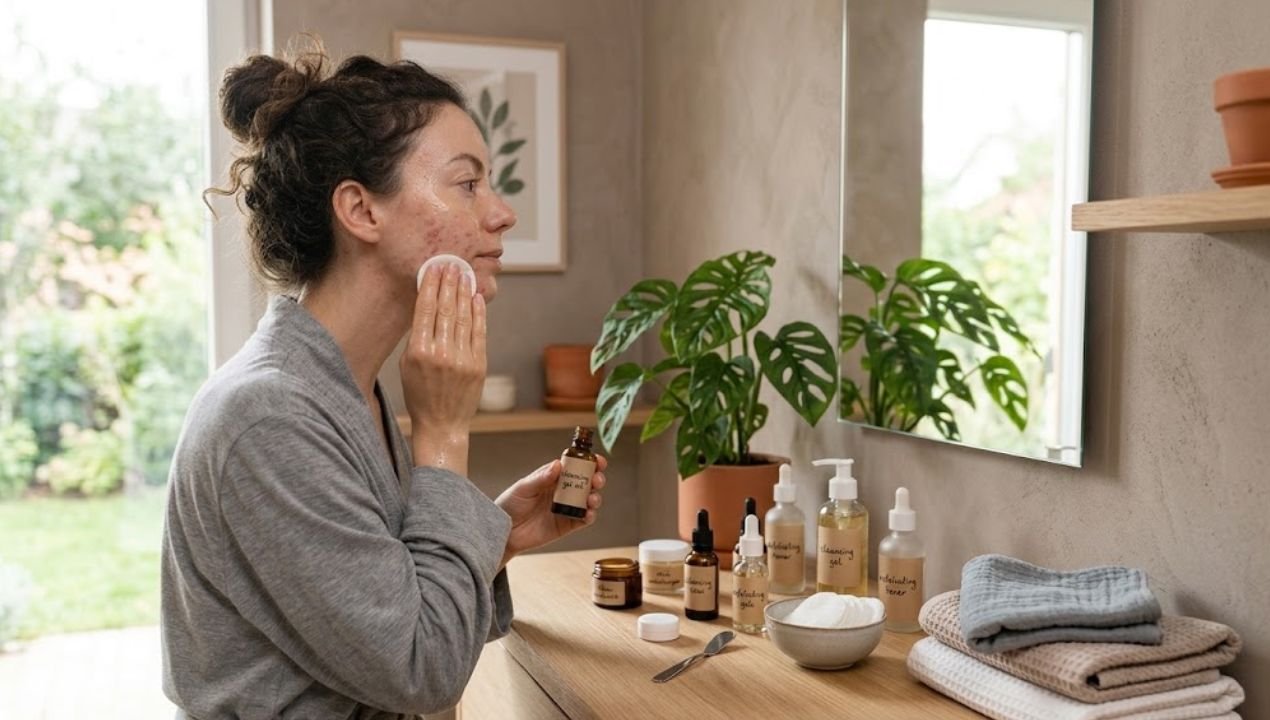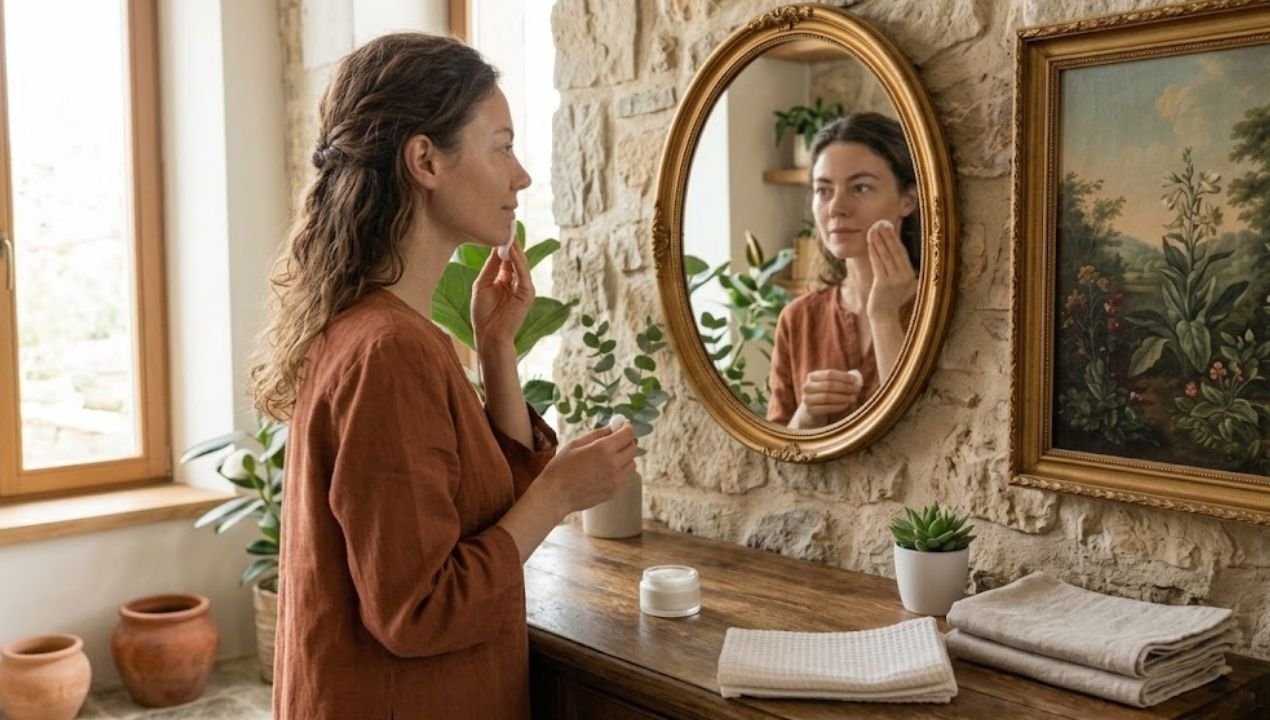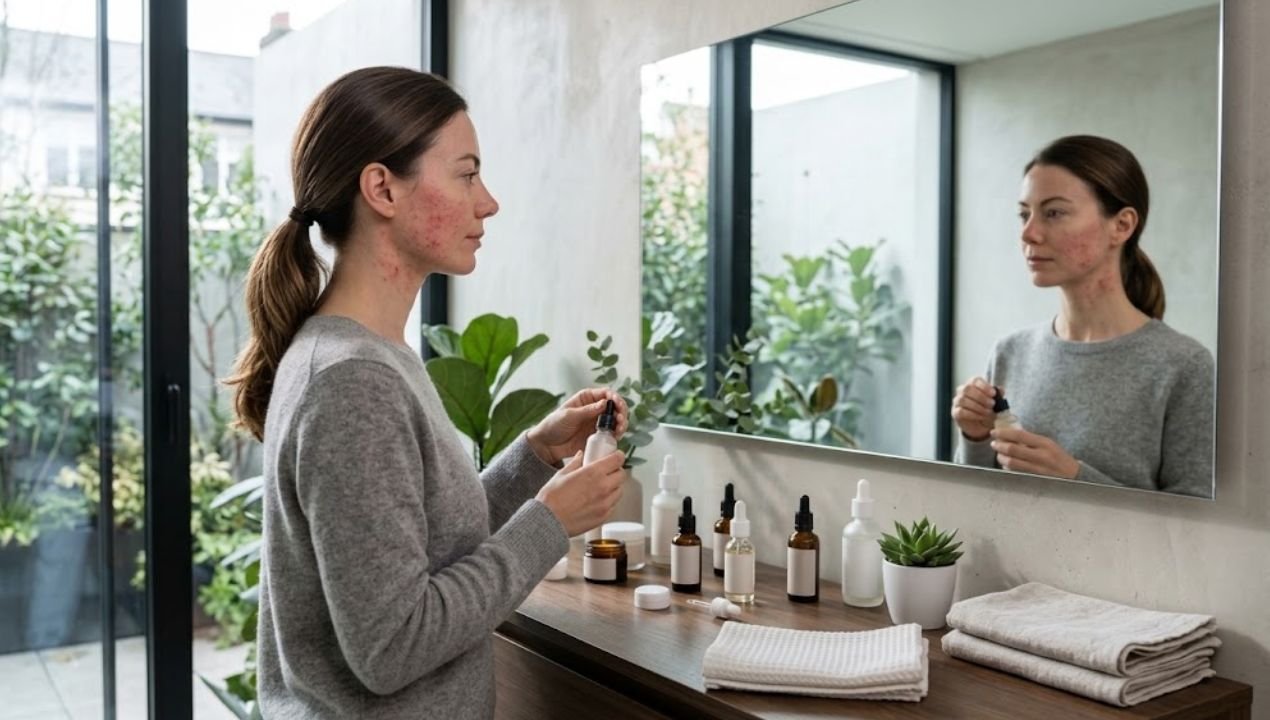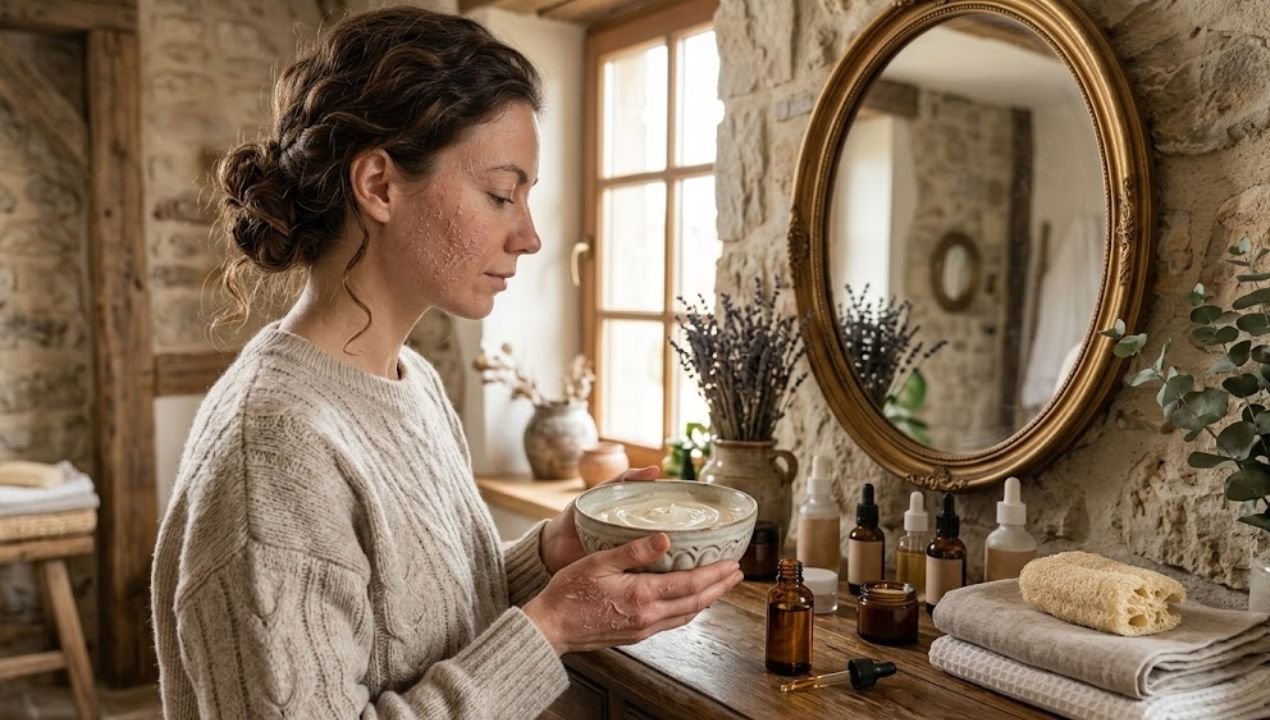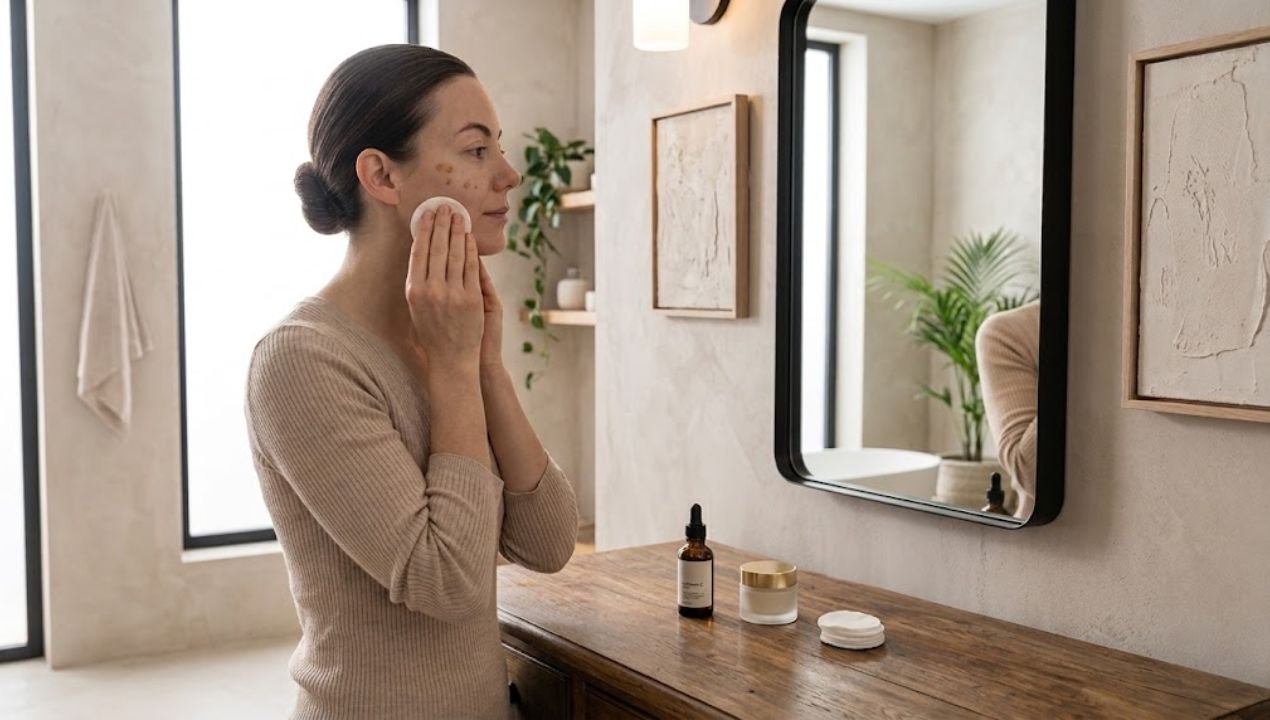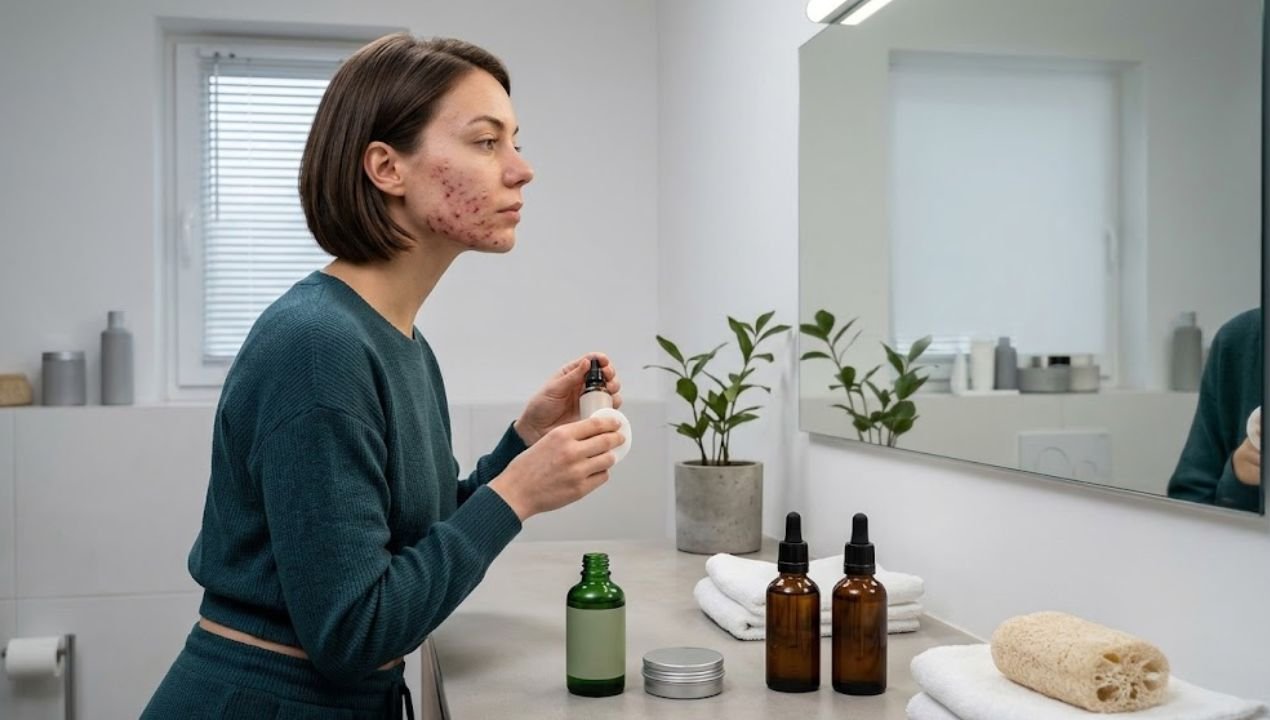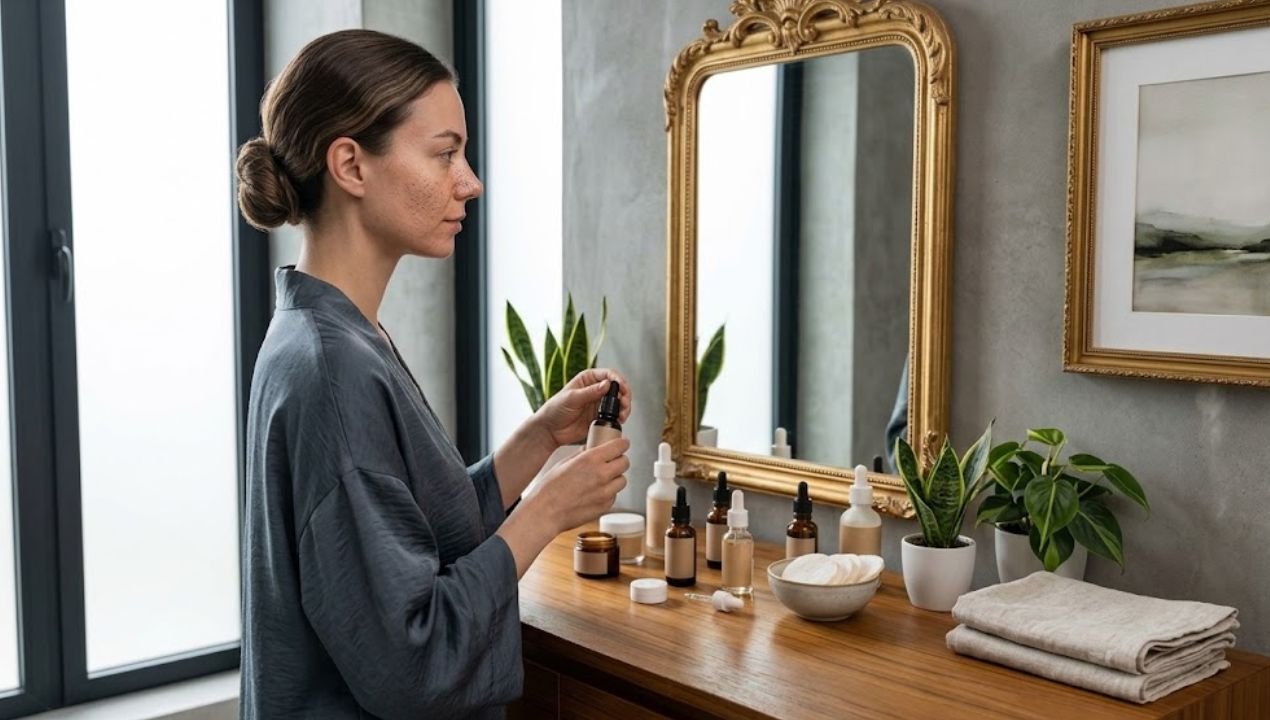
Your wedding day is approaching, and you want your skin to look healthy, smooth, and radiant. But trying too many products or booking last-minute treatments can lead to irritation instead of glowing skin.
The secret to successful pre-wedding skincare is starting early, understanding your skin, and following a routine that works for you.
Why a Personalized Pre-Wedding Skincare Plan Matters
Every bride and groom has different skin concerns, from acne and pigmentation to dryness and sensitivity.
A generic bridal beauty package may not address these differences. In fact, unsuitable treatments can cause breakouts, redness, or irritation just before an important event.
A personalized bridal skincare routine considers:
- Skin type: Oily, dry, combination, or sensitive.
- Main concerns: Acne, dark spots, dullness, or uneven texture.
- Skin barrier: Whether your skin tolerates active ingredients.
- Time available: How many months remain before the wedding.
- Wedding plans: Henna night, makeup trials, hair removal, and honeymoon activities.
- Budget: Choosing suitable products without unnecessary spending.
Quick Answer: Start your pre-wedding skincare routine ideally 3–6 months before the wedding. Focus on gentle cleansing, moisturizing, sunscreen, and targeted treatments when needed. Schedule professional procedures early, avoid introducing new products during the final two weeks, and plan hair removal several days before the celebration.
Read also about:
How Can You Really Identify Your Skin Type 2026
Discover Your Skin’s Needs Before the Wedding Countdown

Your wedding glow begins with understanding your skin, not copying someone else’s bridal routine.
Whether you’re managing breakouts, pigmentation, dryness, or sensitivity, choosing suitable products early gives your skin time to respond before the big day.
The Glow & Go Skin Quiz helps you explore your skin type and priority concerns, so you can start building a bridal skincare routine that fits your needs and wedding timeline.

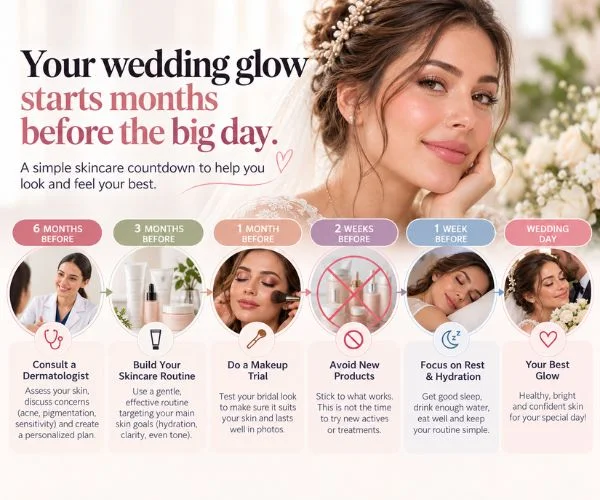
Your Pre-Wedding Skincare Timeline: 6 Months to the Big Day
A successful wedding skin prep timeline focuses on gradual improvements rather than dramatic last-minute changes.
6 Months Before: Assess and Start Early
This is the ideal time to identify your skin concerns and establish consistent habits.
Start with:
- A gentle cleanser suited to your skin type.
- A suitable moisturizer.
- Broad-spectrum SPF 30 or higher.
- Targeted treatments for acne, pigmentation, or uneven texture when appropriate.
- A dermatology consultation for persistent acne, melasma, eczema, or scarring.
Depending on your concerns, a dermatologist may recommend ingredients such as azelaic acid, benzoyl peroxide, or retinoids.
Introduce treatments gradually and allow enough time to assess your skin’s response.
If you’re considering laser hair removal, begin discussing your treatment schedule early because multiple sessions are usually required.
3 Months Before: Build Consistency
By this stage, your routine should be established.
Many acne and pigmentation treatments require several weeks or months before noticeable improvement.
Focus on:
- Continuing your established skincare routine.
- Monitoring how your skin responds.
- Scheduling professional treatments well ahead of the wedding.
- Beginning consistent body moisturizing.
- Planning hair coloring or conditioning treatments.
- Arranging an early makeup trial when possible.
Professional chemical peels or laser treatments should be planned with a qualified dermatologist, allowing sufficient recovery time.
1 Month Before: Fine-Tune Your Routine
One month before your wedding is not the time for major skincare experiments.
Keep your routine consistent and focus on maintaining comfort.
Choose hydrating products you already tolerate, and review your makeup preparation with your makeup artist.
Test how your sunscreen, moisturizer, primer, and foundation work together.
Avoid introducing strong new active ingredients or booking unfamiliar procedures without professional guidance.
2 Weeks Before: The Golden Rule
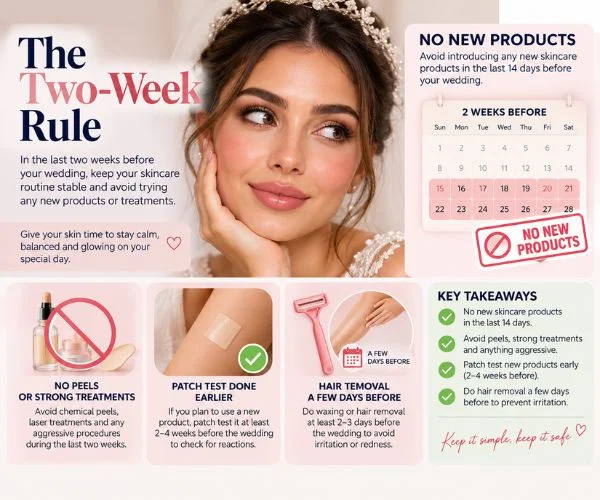
Avoid introducing new skincare products during the final two weeks.
This reduces the chance of unexpected irritation, breakouts, or allergic reactions close to your wedding.
During this period:
- Continue your familiar routine.
- Avoid new exfoliating acids or retinoids.
- Don’t experiment with unfamiliar facial treatments.
- Arrange hair removal with enough recovery time.
- Confirm the ingredients of henna and hair dyes.
- Reduce irritating treatments if your skin becomes sensitive, following professional advice.
This is the time to protect your progress, not restart your skincare journey.
1 Week Before: Calm and Protect
Focus on maintaining healthy-looking, comfortable skin.
Use gentle cleansing, suitable moisturizers, and daily sunscreen.
Avoid aggressive exfoliation, extractions, and new cosmetic procedures.
If you enjoy hydrating masks, use only products your skin has already tolerated.
Try to protect your sleep and delegate wedding tasks where possible.
The Day Before Your Wedding
Keep everything simple.
Cleanse gently, apply your usual moisturizer, and use lip balm.
Avoid new products, strong exfoliants, and last-minute hair removal.
If you use a hydrating mask, choose one you’ve tested previously.
Getting adequate rest is more valuable than adding another unfamiliar beauty treatment.
Your Wedding Day
Your wedding-day skincare should prepare your skin for makeup without causing irritation.
A simple routine may include:
- Gentle cleansing.
- A familiar hydrating serum if needed.
- Moisturizer suited to your skin type.
- Sunscreen for daytime UV exposure.
- Makeup products previously tested together.
Some sunscreen and powder combinations can produce a white cast in flash photography. Test your makeup in similar lighting beforehand.
Keep lip balm and blotting papers available for touch-ups.
Most importantly, enjoy your celebration rather than worrying about achieving flawless skin.
Pre-Wedding Skincare for Every Skin Type
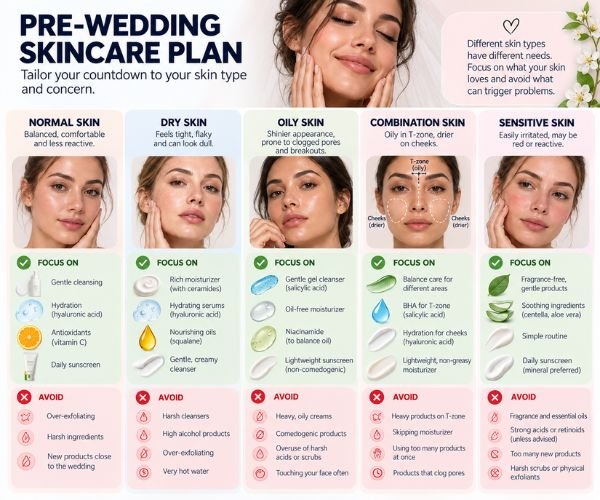
Your bridal beauty plan should address your specific concerns.
| Skin Type or Concern | Main Priority | What to Avoid |
|---|---|---|
| Oily or acne-prone | Lightweight hydration and early acne treatment | Heavy unfamiliar creams |
| Dry | Barrier support and moisturizing | Harsh exfoliation |
| Combination | Balanced hydration for different facial areas | Over-drying the T-zone |
| Sensitive | Fragrance-free products and gentle care | Strong peels and new treatments |
| Pigmentation or melasma | Sunscreen and appropriate targeted care | Aggressive last-minute treatments |
| Dull or uneven texture | Gradual treatment and hydration | Excessive exfoliation |
| Mature skin | Moisturizing, sun protection, suitable actives | Introducing strong treatments late |
How to Prevent Breakouts Before Your Wedding
Breakouts can appear during stressful periods, particularly if you’re already acne-prone.
To reduce avoidable triggers:
- Continue your established acne treatment.
- Avoid introducing multiple new products.
- Remove makeup thoroughly.
- Clean makeup brushes regularly.
- Avoid squeezing pimples.
- Maintain consistent sleep habits where possible.
Hydrocolloid patches may help protect suitable superficial pimples from picking.
If a large, painful breakout appears close to the wedding, a dermatologist may be able to recommend an appropriate treatment.
With Glow & Go, you can explore routine options designed around concerns such as acne, dehydration, pigmentation, and sensitivity, with choices across different budgets.
Egyptian Wedding Traditions: Skin-Smart Beauty Tips
Wedding preparations in Egypt often include henna celebrations, halawa, hammam treatments, and beauty appointments.
Planning these activities carefully can help prevent unnecessary irritation.
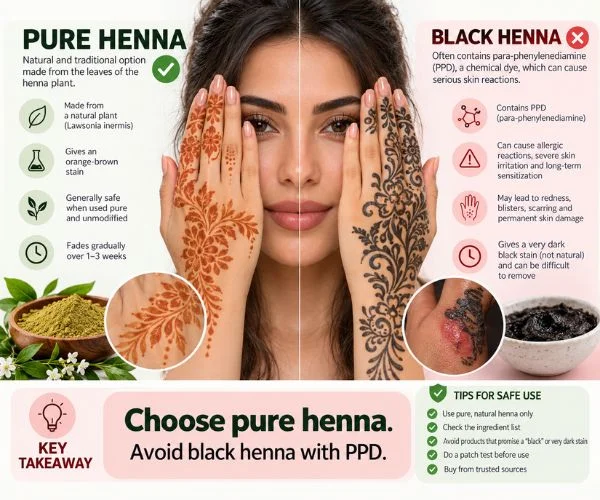
Henna Night: Choose Your Henna Carefully
Traditional henna is commonly associated with orange to reddish-brown staining.
However, products marketed as black henna may contain para-phenylenediamine (PPD), a chemical that can cause severe allergic reactions.
Possible reactions include redness, blistering, swelling, and scarring.
Avoid black henna products containing PPD, and don’t assume a product is safe simply because it’s described as natural.
A small patch test may help identify some reactions, but it cannot guarantee safety. Check the ingredients and avoid products with uncertain contents.
Schedule henna applications ahead of the wedding so the color has time to develop.
Hair Removal: Halawa, Waxing, and Threading
Hair removal can temporarily cause redness, bumps, or irritation.
If you’re planning halawa, waxing, or threading, schedule the appointment several days before the wedding rather than the day before.
Allow additional recovery time if your skin is sensitive or you’re using treatments that increase irritation risk.
After hair removal:
- Use a gentle, fragrance-free moisturizer.
- Avoid aggressive exfoliation.
- Keep the area clean.
- Follow professional advice about temporarily avoiding irritating active ingredients.
Hammam and Body Scrubs
Traditional hammam treatments can be relaxing, but aggressive scrubbing may irritate skin and contribute to pigmentation.
Avoid harsh exfoliation on sensitive areas, particularly underarms, knees, and elbows.
If you enjoy hammam treatments, choose gentle methods and schedule them well before the final wedding days.
Pre-Wedding Body, Hair, and Nail Care
Bridal beauty preparation extends beyond facial skincare.
Body Care
Begin moisturizing your body regularly, especially areas prone to roughness.
Ingredients such as urea or lactic acid may help rough texture when introduced early and tolerated.
If you have back or chest acne, seek treatment several months before the wedding.
Hair Care
Use conditioning treatments appropriate for your hair type.
Plan major color changes or chemical treatments early enough to address unexpected results.
Avoid experimenting with unfamiliar hair products immediately before the celebration.
Hands and Nails
Moisturize your hands regularly and care for your cuticles gently.
Schedule manicures with enough time to address any sensitivity or unexpected reactions.
Lips and Feet
Use lip balm consistently, especially if your lips become dry.
For rough heels, consider a suitable foot moisturizer containing urea.
Avoid aggressive last-minute scrubbing that could cause irritation.
Pre-Wedding Skincare for Grooms
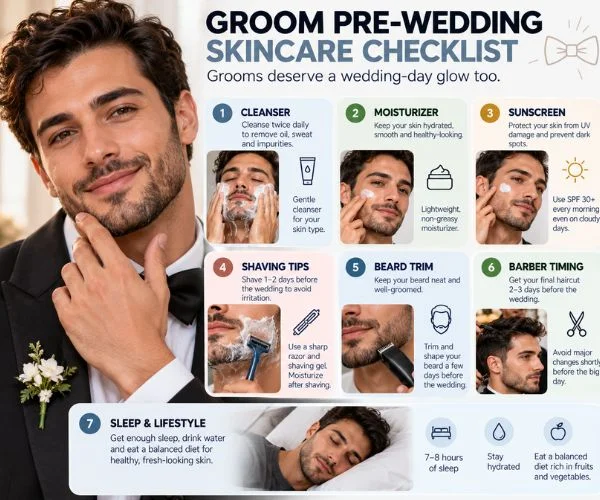
Grooms can benefit from the same thoughtful skincare preparation.
A simple groom skincare routine includes gentle cleansing, moisturizing, and daily sunscreen.
Three Months Before
Establish a consistent skincare routine and address concerns such as acne, excessive oiliness, or shaving irritation.
One Week Before
Avoid unfamiliar shaving products or major grooming experiments.
Arrange your haircut and beard shaping according to your usual preferences and how quickly your hair grows.
The Wedding Day
Cleanse gently, moisturize, and use appropriate sun protection.
If shaving, use a clean, sharp razor and avoid irritating techniques.
A simple, familiar routine is often the best choice.
Common Pre-Wedding Beauty Myths
Myth: A strong peel one week before the wedding creates instant glowing skin.
Reality: Chemical peels can cause redness, peeling, and irritation. Professional procedures should be scheduled with appropriate recovery time.
Myth: Using more skincare products gives faster results.
Reality: Too many products can increase irritation and make it difficult to identify what’s causing a reaction.
Myth: Black henna is just a darker version of natural henna.
Reality: Some black henna contains PPD, which can cause serious allergic reactions.
Myth: Waxing the day before the wedding is harmless.
Reality: Hair removal can cause temporary irritation, so planning several days ahead is safer.
Myth: Acne can always be fixed in two weeks.
Reality: Many effective acne treatments require approximately 8–12 weeks to show meaningful improvement.
Myth: Grooms don’t need skincare preparation.
Reality: A consistent basic routine benefits anyone preparing for an important event.
What Not to Do Before Your Wedding
Avoid common mistakes that can disrupt your skin just before the celebration.
- Don’t introduce unfamiliar skincare products in the final two weeks.
- Don’t schedule aggressive peels or extractions immediately before the wedding.
- Don’t use black henna containing PPD.
- Don’t squeeze pimples.
- Don’t wax sensitive areas at the last minute.
- Don’t use unidentified whitening or mixed bridal creams.
- Don’t ignore sunscreen.
- Don’t sacrifice sleep unnecessarily.
- Don’t expect overnight results from treatments that require months.
The final weeks should focus on stability and comfort.
How Long Does Pre-Wedding Skincare Take to Work?
Different treatments have different timelines.
| Skincare Goal | Approximate Timeline |
|---|---|
| Improved hydration | Immediately to several days |
| Better skin comfort | 2–4 weeks |
| Acne improvement | Around 8–12 weeks |
| Pigmentation improvement | Several weeks to months |
| Fine lines and texture with retinoids | Approximately 3–6 months |
Results depend on your skin condition, treatment, and consistency.
This is why starting early is more effective than relying on last-minute solutions.
Turn Your Wedding Countdown Into a Skincare Plan
Your wedding preparations deserve a skincare routine that works with your skin, not against it.
Whether you’re preparing six months ahead or refining your routine before the final celebration, understanding your skin type and concerns helps you make more confident product choices.
Discover the skincare approach that fits your needs and make your wedding countdown feel simpler, more organized, and more personal.
GiGi’s Bridal Beauty Tip
Your wedding glow isn’t created in the final week. It’s built through consistent care over time.
Start early, choose products suited to your skin, schedule professional treatments with enough recovery time, and avoid introducing anything unfamiliar during the last two weeks.
The goal isn’t perfect skin. It’s feeling comfortable and confident on your special day.
When Should You See a Dermatologist?
Consult a dermatologist early if you have persistent acne, melasma, eczema, rosacea, scarring, or another condition requiring treatment.
Professional advice is also important before chemical peels, laser treatments, or prescription skincare.
If you experience a severe reaction to henna, makeup, or another product, seek prompt medical attention. Facial swelling or difficulty breathing requires emergency care.
A dermatologist may also help manage a painful breakout close to your wedding without unnecessary experimentation.
F&Q
1. When should I start skincare before my wedding?
Ideally, start 3–6 months before your wedding. This allows time for treatments to work and for your skin to adjust.
2. Should I get a facial or peel before my wedding?
Plan professional treatments early with a qualified dermatologist. Avoid unfamiliar procedures close to the wedding.
3. How can I prevent breakouts before my wedding?
Maintain your established skincare routine, avoid new products, protect your sleep, and don’t squeeze pimples.
4. When should I remove body or facial hair?
Schedule waxing, halawa, or threading several days before the wedding to allow irritation to settle.
5. Is black henna safe?
Black henna may contain PPD, which can cause serious allergic reactions. Avoid products containing PPD or unidentified ingredients.
6. What should I apply on my wedding day?
Use a familiar gentle cleanser, moisturizer, and appropriate sunscreen. Make sure your skincare works well with your makeup.
Conclusion
Successful pre-wedding skincare is about preparation, consistency, and choosing treatments that suit your skin rather than chasing last-minute beauty trends.
A thoughtful bridal skincare routine can help improve comfort, support healthy-looking skin, and reduce the risk of avoidable irritation before your celebration.
At Glow & Go, we believe every bride and groom deserves a personalized approach to beauty. Start your preparations early, keep your final weeks gentle, and seek professional dermatological guidance whenever a skin concern requires more than everyday care.
Your wedding day is about celebrating a meaningful moment, not achieving impossible perfection.